FeatureSamantha Lee7 min read
Malaysia writes new Deepavali songs every year. India, Diwali's home, mostly doesn't
A radio station and a carmaker put their names on this year's Deepavali anthem in Kuala Lumpur. Malaysia sings every festival to its neighbours. India keeps Diwali indoors.
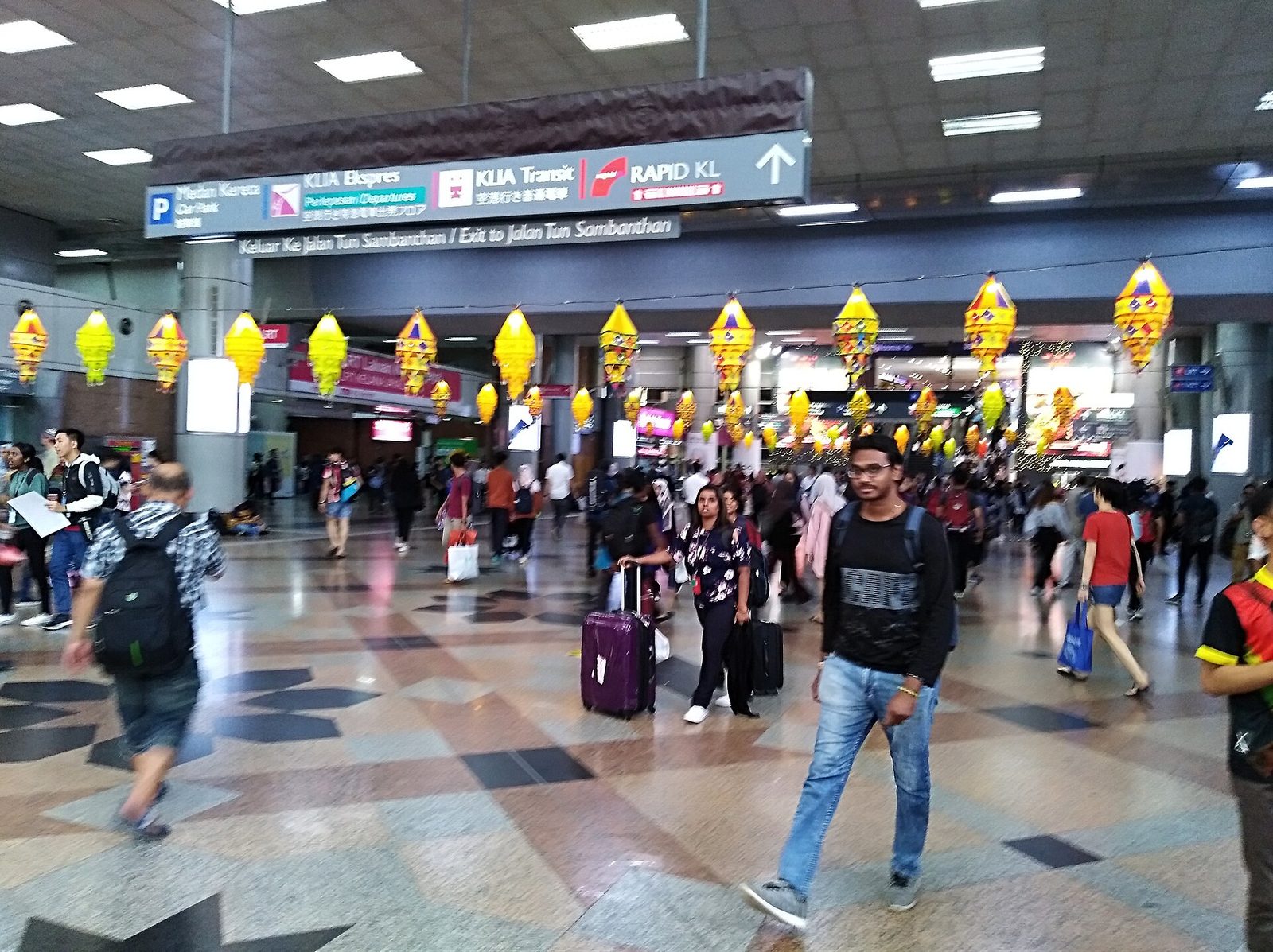
Photo: PulauKakatua19 / CC BY-SA 4.0 via Wikimedia Commons
Walk through KL Sentral, Kuala Lumpur's main rail hub, in the week before Deepavali and the concourse is hung with yellow paper lanterns over a crowd dragging suitcases toward the trains. Switch on the radio in the taxi queue and there is a good chance you hear "Dhaam Dhoom Deepavali", a song that did not exist two months ago. It was written for this year's festival, which falls today, by the composer Shameshan Mani Maran, sung by Santesh and Priya, and released by RAAGA, the Tamil-language station of the Malaysian broadcaster Astro. The music video carries a sponsor's name in its title: RAAGA x Toyota.
None of this is unusual in Malaysia. RAAGA put out "Deepavali Virunthu" in 2024, sung by its own announcers, and "Aattam Paattam Deepavali" in 2025. Astro's TV channels regularly commission their own track ("Ithu Namma Kondattam" was 2025's). The state broadcaster's Tamil station, Minnal FM, has made them too, and the national oil company Petronas has released one alongside its much-loved festive ads. Hindus are about 6.1 percent of Malaysia's population, according to the 2020 census, yet the country releases fresh Deepavali songs every single autumn.
India, where the festival was born and where most of the world's Hindus live, does not. Hindi cinema, which has a song for nearly every human occasion, has left Diwali a thin shelf, and many of the songs on it are sad. Our argument is simple: a festival gets new songs every year when it is celebrated in front of people who do not share it. Malaysia turns each community's festival into a public show for the whole country, so radio stations, broadcasters and brands pay for a soundtrack every season. India's Diwali happens behind the family door, among people who already know what to do, and a new song has very little work to do there.
A song season for every festival
Deepavali is the smallest of Malaysia's festival song seasons, not an exception to them. Hari Raya Aidilfitri, the celebration at the end of Ramadan, has the deepest roots. More than 80 new Raya songs came out in 2026, from Siti Nurhaliza's "Beraya Dengan Saya" to punk and retro pop. The tradition is old enough to have its own archaeology: collectors point to a "Selamat Hari Raya" by the bangsawan theatre singer Miss Aminah, recorded for HMV in 1936, as the earliest. Saloma's 1950s recording of a song with the same title is still sampled; this year's "Raya Macam Raya" by Alpha and Hael Husaini uses it.
Chinese New Year runs the other big season. Malaysian creators put out more than 400 new Lunar New Year songs for 2026, enough that Malaysia is now a hub for the genre across the Chinese-speaking world. The Chinese-language station 988 FM has made its own New Year songs since 2009. This year it released two, "The Warmest Moment" in Mandarin and "Abundant Fortune and Joy" in Cantonese, and sold them in an RM88 (about $20) gift box with a desk calendar and a USB drive. The genre's grandfather, "Gong Xi Gong Xi", composed by Chen Gexin and recorded by the siblings Yao Lee and Yao Min, was not even written for the New Year. The season adopted it anyway.
The pattern is the point. Every festival in the calendar gets a song season, and each season is driven less by record labels than by whoever wants to be seen standing next to the festival: a satellite broadcaster, a radio station, an oil company, a carmaker, a dried-meat brand.
Songs for the neighbours
The reason has a name: the open house, or rumah terbuka. At Raya, Chinese New Year and Deepavali, Malaysian families open their homes to friends, colleagues and neighbours of every background, and the government hosts national-level open houses of its own. This year's National Deepavali Celebration takes over Brickfields, Kuala Lumpur's Little India, on 14 November. The National Unity Ministry expects more than 10,000 visitors and Prime Minister Anwar Ibrahim is expected to officiate. The same ministry has made a short Deepavali film, "Cahaya Yang Menyatukan Kita" ("The Light That Unites Us"), airing on the state broadcaster RTM this week.
A festival performed for guests needs a soundtrack that guests can follow. Watch RAAGA's 2024 video and it plays almost like a guide for the curious neighbour: the house being cleaned, the oil bath at dawn, sweets being made, sparklers, new clothes, the festive meal. It is a celebration and an explainer set to a beat.
And the seasons cross over. In January 2022 the Malaysian label MVM put out "Dong Dong Qiang", a Lunar New Year song sung in Malay by six Malay artists; its producer called it likely the first original New Year song in the national language. The Malaysian YouTube group 3P, best known for New Year hits like 2023's "Wo de ma ya", has put out Raya songs as well: "Syawal Berseri" in 2025, "Setahun Sekali" in 2026. When a festival belongs to the whole country, anyone can write its song.
The best proof is a song that was never meant to be a festival song at all. Sudirman's "Balik Kampung", co-written with S. Atan and released on his 1984 album Lagu Dari Sebuah Bilik, is about a man in the city aching for the village he grew up in. His label slotted it into the Raya repertoire because of its theme, and radio has played it every Raya since. Its title is now the Malaysian word for the great festive exodus itself, used for the drive home at Raya, at Chinese New Year and at Deepavali alike. A Malay pop song gave every community's journey home its name, and nobody had to ask permission.
Why Diwali stays quiet in India
Now look at the subcontinent. Hindi cinema's festival songs belong overwhelmingly to Holi, the spring festival of coloured powder: "Holi Ke Din" from Sholay (1975), "Rang Barse" from Silsila (1981), "Balam Pichkari" from Yeh Jawaani Hai Deewani (2013). Holi is played in the street, with strangers, in crowds, with flirting and mischief. It already looks like a film song before anyone writes one.
Diwali in India is the house. You clean it, you light it, you leave the door open for the goddess Lakshmi and you spend the evening with family. The music of that evening is the aarti, the devotional hymn sung at the puja, which needs no new release because everyone in the room has known it since childhood. Nobody in the house needs to be told what Diwali is, so there is no audience for a song that explains it.
When Hindi film does reach for Diwali, it often reaches for absence. The best-remembered example may be "Aayi Ab Ki Saal Diwali" from Haqeeqat (1964), the film about the 1962 war with China: music by Madan Mohan, words by Kaifi Azmi, sung by Lata Mangeshkar, about a Diwali that arrives with blood smeared on its face, in a film about soldiers at the front. A private festival reaches the screen through the person missing from the room. In Tamil Nadu, the season's new music tends to arrive inside the big films that studios time for the Deepavali holiday, which is a different thing: the film is the event, and the songs come with it.
Malaysian critics complain every year that most new festival songs are instant and forgettable while the classics keep coming back, and they are often right. That is the price of a song season paid for by sponsors. But what those songs do is say, out loud and to the neighbours, that this festival is ours and you are invited. Indian Diwali has never needed to say that at home.
It is starting to need it elsewhere. New York State made Diwali a holiday for New York City's public schools in November 2023, which means a lot of children who do not celebrate it now get the day off and want to know why. Wherever Diwali becomes a public festival in a place where most people are guests, from Queens to Leicester, it will need what Kuala Lumpur already has: a new song every year, written for the neighbours. Indian Diwali music may yet be invented by the diaspora, for the people next door.
For more on how festivals choose their songs, read why garba's playlist hardly changes, and our list of warm-weather Christmas songs.
Share this story