FeatureEva Waxenberg7 min read
Detroit gave the world techno. At home, Juan Atkins's line runs through ghettotech
The obituaries traced Atkins from Detroit to Berlin. In his own city, his first sound, Cybotron's electro, lives on at 150 bpm under the feet of jit dancers.
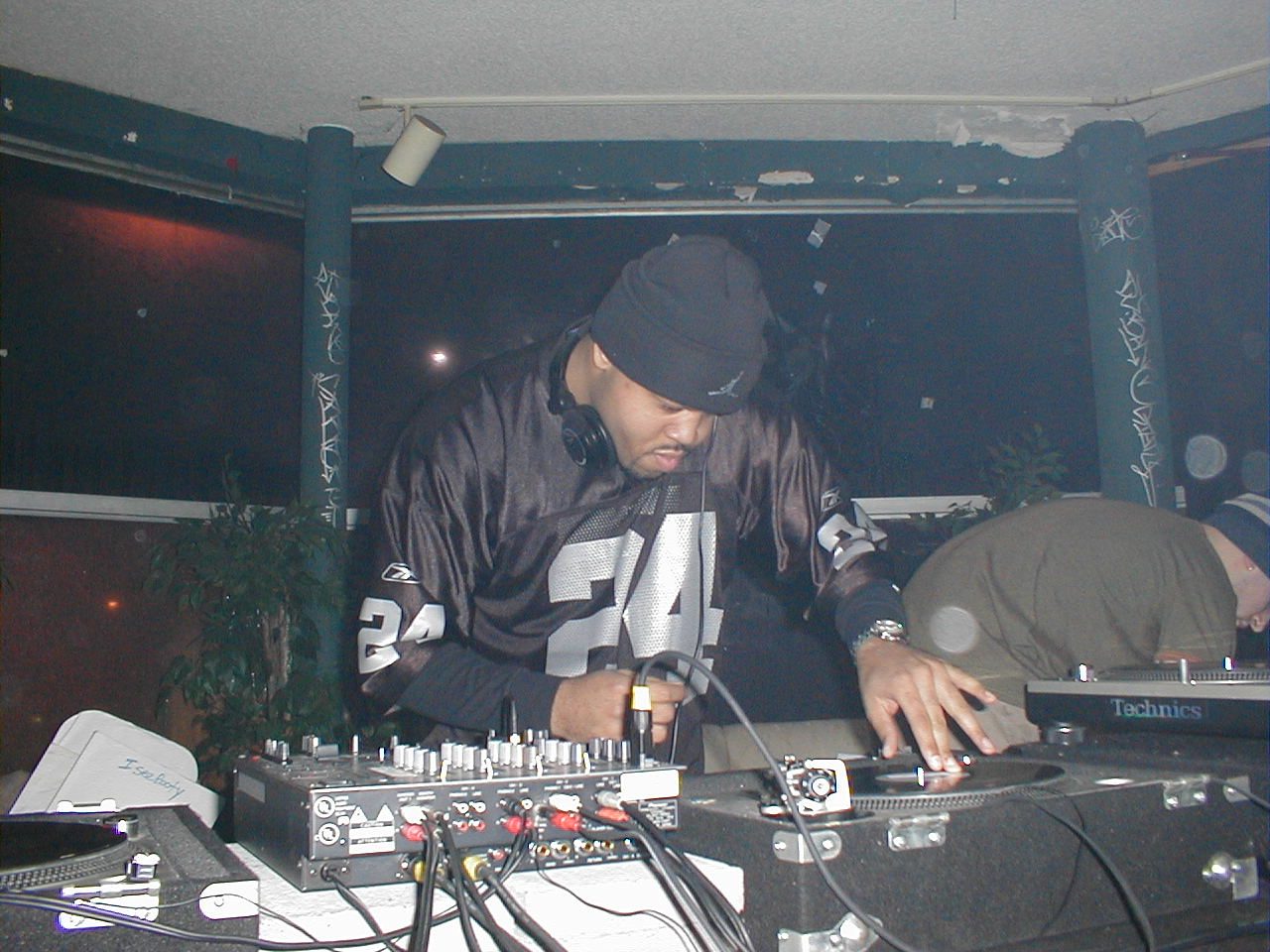
Photo: Alkivar / CC BY-SA 3.0 via Wikimedia Commons
Juan Atkins was booked for a long night in Mexico City on 31 October: 11pm to 5am at YuYu Cine Club, a room in the Doctores neighbourhood, with local DJs Maseriche and Jo Sep on the bill. He never played it. His agency, Greensmith Artists, confirmed on 1 November that he had been found unresponsive in his hotel room and pronounced dead in hospital. He was 64. We covered the news here.
The tributes that followed told one story, and told it well. A kid from Belleville, Michigan, names a genre, and the genre travels: to London, where a 1988 compilation called Techno! The New Dance Sound of Detroit fixed the word; to Berlin, where Atkins later made records with Moritz von Oswald as Borderland; to Amsterdam, where he played twice this year. Detroit techno, in that telling, is the city's great export, the way Motown was.
That story is true, and it leaves out the part of Atkins that never left. Before techno, there was Cybotron, and Cybotron was electro: funk played by machines, built for dancing and for the radio. Detroit never stopped dancing to it. It sped it up, made it filthy and called it ghettotech. If you want to know what Atkins's music meant to the people of his own city, not to a club in Berlin, that is where to look.
The record Detroit heard first
Cybotron started in 1980, Atkins and Richard "3070" Davis, putting out singles on Atkins's own Deep Space label. "Alleys of Your Mind" came in 1981, "Cosmic Cars" in 1982 and "Clear" in 1983, on the Berkeley label Fantasy, from the album Enter.
Listen to "Clear" now and it does not sound like the techno that Berlin would later canonise. It sounds like a cousin of Afrika Bambaataa's "Planet Rock": a drum machine with swing, a bassline you can pop to, a robot voice. It made Detroit's Black radio because of one man, Charles Johnson, the late-night DJ known as The Electrifying Mojo, who started on WGPR in 1977 and moved to WJLB around 1982. Mojo played Kraftwerk, Prince and the B-52s side by side, and he played Cybotron. A generation of Detroit teenagers learned what a synthesiser was from his show.
Atkins left Cybotron in 1985 over creative differences with Davis, who wanted to push the group towards rock. He set up Metroplex the same year and, as Model 500, released "No UFO's", the record usually filed as Detroit techno's first page. From there the story goes abroad.
"Clear" went somewhere else. In 2005 Missy Elliott built "Lose Control" on it, with Atkins and Davis credited as writers alongside Elliott, Ciara and Fatman Scoop. The record that Europe treats as a prelude became, in Black American pop, a hit in its own right. That tells you which tradition it really belonged to.
What the city danced to
Detroit had its own dance long before it had techno. Jit came out of the city in the 1970s, from crews like the Jitterbugs and the Mad Dancers: rapid footwork, drops, spins, floor work, done fast and done competitively. From 1988, R.J. Watkins put it on local television with The New Dance Show on WGPR-TV 62: Detroiters dancing to whatever the DJ played, house, techno, electro and all, broadcast from a small studio and still rerun in the city today.
What jit needed was speed, and in the 1990s the city's DJs gave it that. They took Chicago's ghetto house, Miami bass, electro and Detroit's own techno, mixed them at a punishing pace in the cut-and-switch style that Mojo and Jeff Mills had taught the city on the radio, and laid dirty, chanted vocals on top. A local writer, Hobey Echlin, gave it the name ghettotech. It usually runs at somewhere between 145 and 160 beats per minute, well above most techno.
The labels were small and local. Brian Jeffries, DJ Godfather, co-founded Twilight 76 in 1994 at the age of 18, and its imprint Databass became one of the genre's homes. In 1996 Craig Adams, DJ Assault, and the producer Ade' Mainor, Mr. De', started Electrofunk Records. That year Assault put out "Ass-N-Titties", first on an EP and then as its own 12-inch in 1997, and it became the genre's calling card.
Put "Clear" next to a ghettotech record and the family resemblance is plain: the 808 drums, the electro bass, the machine voice turned into a call and response. Techno took Atkins's machines and stripped the body out. Ghettotech kept the body and turned up the tempo.
Exported, and brought back home
Ghettotech was never only local, but it travelled on different terms from techno. In 2000 the London label Mo' Wax, the home of DJ Shadow and UNKLE, released DJ Assault's Belle Isle Tech, 38 tracks named after the island park in the Detroit River. The same year, Detroit staged its first Detroit Electronic Music Festival in Hart Plaza, free to enter, and ghettotech became a regular part of it, the sound that pulled a younger, hip-hop crowd into a festival built around techno's elders. The festival, now called Movement and produced by the Detroit company Paxahau since 2006, still happens in Hart Plaza every Memorial Day weekend.
Then, for years, ghettotech mostly stayed home: a sound for Detroit's own parties that the global club press filed under novelty. The revival came from the city too. HiTech, three Detroiters, King Milo and Milf Melly rapping and producing with DJ 47Chops, began by burning their tracks onto 15 CDs in 2021. One of those discs reached Omar S, the Detroit producer who runs FXHE Records, and he put out their self-titled debut in 2022 and DÉTWAT in 2023. They make tracks between 145 and 180 bpm because, as Milo has explained, they make them for people to dance to. In 2025 they released HONEYPAQQ Vol. 1 on Loma Vista, the label that also puts out Denzel Curry.
HiTech have since played Berlin, on a Panorama Bar night that the city's CTM festival programmed in February 2024. That date is worth a second look. Forty years after Berlin learned techno from Detroit, the Detroit act in the booth was playing the city's other sound, the one Berlin never bought in bulk.
At home the dance has organised too. The first Detroit JiT Festival was held free on 30 July 2022 at the Detroit Hispanic Development Corporation in Southwest Detroit, staged by the team behind Tec-Troit, a free techno festival that started in 2011. It was pitched as a showcase for the city's own dance and music veterans, and the names attached to it ran in one breath from Atkins and Drexciya to DJ Godfather and DJ Assault. A second edition followed in Corktown in 2023.
The line that runs through the city
Atkins was on the bill for Tec-Troit again this summer, 26 to 28 June 2026, a free, family-friendly weekend of techno in his home city. It was a small booking for a man who headlined festivals in Europe, and it was the right one.
The obituaries measured Atkins by distance: how far the word techno travelled from a Belleville bedroom. That measure flatters Europe, which got the abstract, futurist half of his work and built an industry on it. Detroit kept the other half, the electro funk of Cybotron, and has spent 40 years making it faster, cruder and more fun, mostly without anyone outside the city paying attention.
So here is a way to hear what Atkins left his hometown. Put on "Clear". Then put on a HiTech track and listen for the same drum machine under the jokes, running about 30 beats per minute faster. Then picture the floor at a Detroit party where someone is jitting to it, feet moving too quickly to follow. That is not techno's export market. It is the city keeping the first thing he gave it, and still dancing.
Share this story