FeatureVasu Khajuria7 min read
Kathmandu's rap scene put one of its own in power. Now it has to rap back at him
Nephop grew out of YouTube battles, arrests and protest songs. With Balen Shah as Nepal's prime minister, his own records are being turned against him.
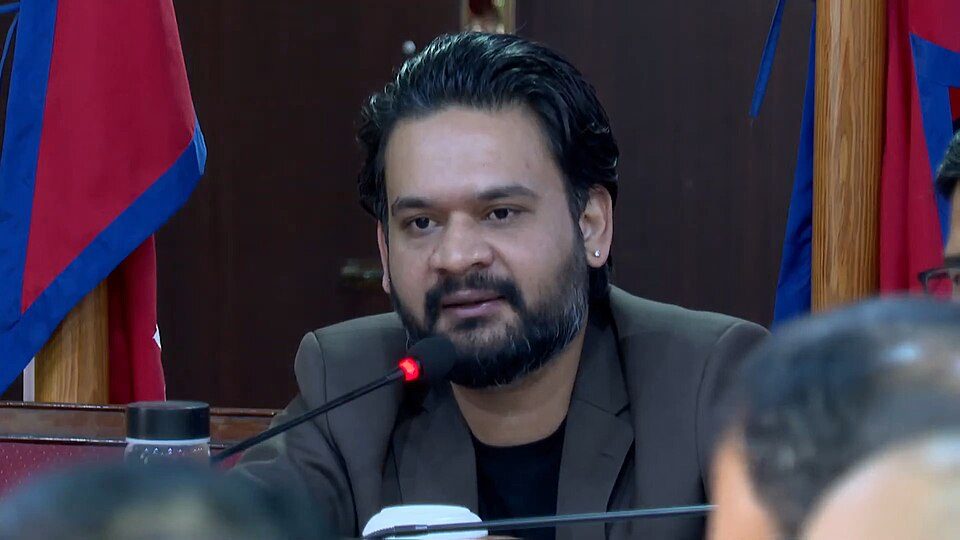
Photo: Metro News / CC BY 3.0 via Wikimedia Commons
On 19 April this year, a short video went round Nepali Instagram. Two girls cry as their family's home is demolished. The soundtrack is "Garibko Chameli", the old protest refrain at the heart of "Balidan", a rap song from 2020 that became one of the anthems of a generation. The man who rapped it had been sworn in as prime minister 23 days earlier.
That man is Balendra Shah, known to everyone as Balen: structural engineer, former mayor of Kathmandu and, since 27 March 2026, at 35, the youngest prime minister in Nepal's federal history. Most of the world met him as a headline, the rapper who became a head of government. Inside Nepal he is also the most successful graduate of a scene that, until now, had never had anyone in power to argue with but strangers.
That is the story worth telling about Nepali hip-hop, or Nephop, in 2026. For 15 years the scene ran on opposition: rappers against each other in battles, against the police in court, against the government in the street. Now one of its own runs the state, and the scene is passing its first real test. Its songs, his songs included, are being turned on him. That is not a betrayal of Nephop. It is proof that the music still works the way it was built to.
A scene built on YouTube battles
To understand Kathmandu rap you start with Raw Barz, the battle league that the rapper Yama Buddha and Kolin Rana got going in the early 2010s. Two rappers, a small crowd, a camera, and insults in Nepali traded a cappella. The format came from North American battle leagues, but the audience was distinctly Nepali, and much of it lived abroad. When the battles went up on YouTube they reached the millions of Nepalis working in the Gulf, Malaysia, India, the UK and the US, and Raw Barz broke out around 2013. The 2013 battle between Laure and Uniq Poet has passed 20 million views.
Balen came up in that room. His first single, "Sadak Balak" (Street Kid), arrived in 2012, about a child the system forgets, and his Raw Barz appearances in 2013 made his name. From the start his records were about things a state is supposed to fix: corruption, police heavy-handedness, and the young men who leave for labour migration because there is nothing at home.
The scene had a deeper history. Girish Khatiwada's "Meaningless Rap" from 1992 is usually cited as the first Nepali rap record, and he and Pranish Timilsina, as GP, spent the late 1990s marrying folk melodies to beats. But the YouTube generation is the one that turned rap into the country's loudest youth music. Yama Buddha, whose songs "Saathi" and "Aama" made him the scene's first real star, died in 2017. He did not live to see what his battle league produced.
What it sounds like, and who pays for it
Nephop today runs on two tracks. One is street rap in the battle tradition: dense Nepali verses over sparse beats, lyrics about money, family and leaving home. The other is trap, and its biggest name is VTEN, born Samir Ghising. In 2019 police arrested him over "Hami Yestai Ta Ho Ni Bro", a song they said promoted anti-social values, and the video, which had around 19 million views, came down. He answered with Superstar in January 2020, a 15-track concept album about his rise from a village and about the arrest itself. Its song "Yatra" became one of the most-watched Nepali rap videos on YouTube.
The scene's sound has also travelled further than most listeners know. Aasis Giri, a Kathmandu producer who works as Aasis Beats, made a loop years ago and uploaded it to a sample site. It became the backbone of Central Cee and Lil Baby's "BAND4BAND", which reached No. 18 on the US Billboard Hot 100 in 2024. A Nepali bedroom producer sits inside one of the biggest UK rap crossovers of 2024, and almost nobody in London knows his name.
Money at home comes mostly from television and brands. Nephop Ko Shreepech, a rap talent show on which Balen sat as a judge in 2022, opened auditions for its third season in November 2025, with Girish Khatiwada and Manas Ghale on the panel. In August this year a Nepali version of the Hustle rap reality format was announced, its organisers promising to keep the focus on Nepali artists and local stories. Women have had to build their own doors. Dmriti won the Wai Wai Dynamite Breakbars battle in 2021, the first woman to win a Nepali rap contest of that kind, and Skathi Records staged GOD IS A WOMAN, the country's first all-female hip-hop festival, in October 2024.
The song that turned
Now back to "Balidan". It is not entirely Balen's song. Its refrain comes from "Garibko Chameli", a leftist folk song from the cultural group Ralpha, first performed in the early 1970s, and recorded by the songwriter Raamesh in 1996. Balen put it on his YouTube channel in January 2020 with a rap about a country that sacrifices its poor. The official video sits above 14 million views.
In September 2025 the old government blocked 26 social platforms, YouTube, Facebook and X among them. The ban was the spark for the Gen Z protests that began on 8 September. Nineteen people were killed on the first day and more than 70 in all, and Prime Minister K. P. Sharma Oli resigned. Music filled the streets. Nepathya's "Gaun Gaun Bata Utha", a folk-rock song first sung against the Panchayat regime, was played over a loudspeaker at Maitighar Mandala, and Balen's "Nepal Haseko" circulated as a patriotic anthem.
Then came the election. On 5 March 2026 Balen's Rastriya Swatantra Party won 125 of the 165 directly elected seats, and he beat Oli in Oli's own constituency, Jhapa-5, by 68,348 votes to 18,734. The night before he was sworn in, Balen released "Jay Mahakaali", a unity song cut with the producers Foeseal and Chronic Beatz, as his first public word on the result.
Within weeks the government sent bulldozers to clear riverbank settlements of landless squatters, including at Thapathali in Kathmandu on 25 April. The music came back at him. On 1 May protesters sang a parody of "Garibko Chameli" at Maitighar Mandala, the same square where the uprising began. Activists from the youth network that had once backed street vendors against Balen's footpath clearances as mayor invoked the song as a reminder of his promises. Raamesh has said it is right to use his song as a warning to a leader not to change once he reaches power. Balen posted on X on 4 May that the clearances were about securing housing rights, not displacing anyone, and has otherwise said little.
The test
It would be easy to read this as a scene losing its hero. We read it the other way. Nephop's best records were always tools, songs written to be quoted at whoever holds the power. "Balidan" was built on a 1970s protest song, and it is now doing to its author what it was written to do to everyone else. A scene whose anthems can be turned on its most famous member is a scene that still belongs to its listeners.
The harder question is what the rappers coming up now will do with that. The easy road runs through television: talent shows, brand-sponsored battles and patriotic singles that sit comfortably with a government full of people who grew up on Raw Barz. The other road is the one Balen himself took in 2012, writing about the street kid and the migrant worker before anyone with power wanted to hear it.
Nepal's next great rap record will be about the Balen government, whether it praises him or takes him apart. The scene's health depends on someone being free to make the second kind, and on a prime minister from this scene remembering what happened to VTEN in 2019. For now, the most important thing in Kathmandu rap is that the protest square still knows the words.
Share this story