ListJane Shostak8 min read
Thirteen Caribbean ghost songs where the dead come back to settle a score
Jamaica has never made much of Halloween, yet its records are full of duppies. Across the Caribbean, song ghosts come to put power on trial, not to scare you.
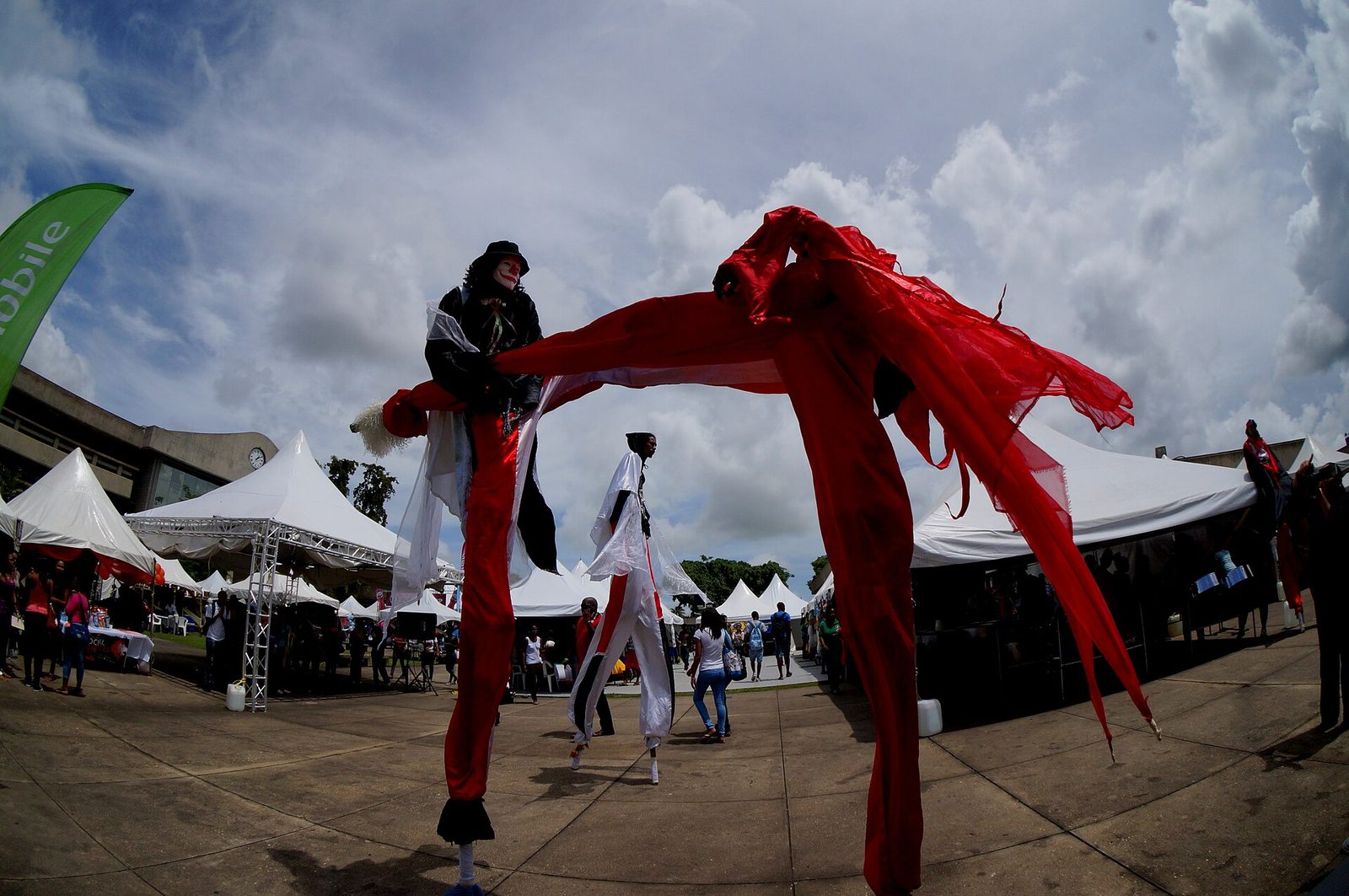
Photo: anax44 / CC BY-SA 2.0 via Wikimedia Commons
Tonight much of the world dresses up as something dead. Jamaica has never made much of the date, and Trinidad saves its devils, its stilt-walking moko jumbies and its oil-black jab masqueraders for Carnival, just before Lent. Yet the Caribbean has one of the deepest shelves of ghost songs anywhere: duppies in Kingston, jumbies in Port of Spain, lwa at the Haitian crossroads.
Listen to them in a row and something stands out. Almost none of them are trying to frighten you. The duppy arrives with a grievance. The jumbie is a way of talking about the police, the gunman, the soldier, the planter, or the rival on the other side of the sound clash. When these songs travelled north, the spirit usually turned into a novelty. At home it kept its job.
That is the idea behind these thirteen picks, all ours, in rough order of release: in Caribbean music, the dead come back to settle a score.
Exported, then taken back (1953 to 1966)
1. Lord Intruder, "Jumbie Jamberee" (1953)
The Tobagonian calypsonian Lord Intruder put this out as the B-side of a single called "Disaster With the Police", which tells you the company it kept. Credited to Conrad Eugene Mauge Jr., its jumbies are spirits that make people dance wildly, close kin to the protective moko jumbie of Carnival. Then it went north. By King Flash's 1956 version the jumbie had become a "zombie", and many versions moved the party to a New York cemetery. The Kingston Trio sang it in 1959; Harry Belafonte recorded it five times from 1962. A Caribbean spirit became an American novelty in under a decade.
2. Peter Tosh and The Wailers, "Jumbie Jamboree" (1965)
Twelve years on, a young Peter Tosh took the song back to Kingston. Recording with The Wailers, he kept the original "jumbie" words instead of the zombie rewrite and bolted on a new chorus built from the folk song "De River Ben Come Dung". It sounds like ska, not cabaret calypso. It is a small record, later collected on the 1996 compilation The Toughest, but it is the first time on this list that someone from the region refuses the export version of its own ghosts.
3. Mighty Sparrow, "Obeah Wedding" (1966)
Sparrow, who died in New York on 27 September at 91, won the 1966 Road March, Carnival's prize for the song played most on the road, with the tune that introduced Melda: a song about obeah and a wedding the singer wants no part of. The supernatural here is a domestic hustle, and Sparrow plays it for laughs. That is its own kind of score-settling: a calypsonian puncturing a power people really feared, in front of a whole island, to a tempo you can march to.
Kingston's ghosts (1970 to 1982)
4. The Wailers, "Mr. Brown" (1970)
A rumour had swept Jamaica: a duppy was riding through the countryside in a coffin on three wheels, with three John Crows, the island's vultures, one of which could talk and kept asking for a Mr. Brown. Glen Adams of Lee Perry's Upsetters turned the story into a song, Perry suggested The Wailers sing it, and they cut it at Randy's studio in Kingston. It sold around 15,000 copies at home. It is the purest folk ghost song here, and even so it is a song about a whole island talking at once.
5. Bob Marley and The Wailers, "Duppy Conqueror" (1970)
First cut with Perry, then re-recorded for Burnin' in 1973, this is where the duppy flips. Marley is not haunted; he is the one who conquers. The song's narrator is back on the street, and "the bars could not hold me, force could not control me". A duppy conqueror is someone who fears no ghost, and Marley points that fearlessness at whatever has been trying to keep him down. The ghost story becomes a release from jail.
6. Ernie Smith, "Duppy Gunman" (1974)
Smith, who died in Miami on 16 April at 80, cut this at Federal Records with the Now Generation Band and a Trinidadian trombonist, Jerome Francique. He later explained the title: he felt a presence, decided it must be a duppy, then thought about the times and said, or a gunman. That one question is the whole of 1970s Kingston. Two years later Smith left for Toronto after threats over his song "The Power and the Glory", and in 1980 an election campaign killed more than 800 Jamaicans. In 1982 Yellowman's first album was issued in Jamaica under the same question: Duppy or Gunman.
7. Max Romeo and The Upsetters, "Chase the Devil" (1976)
Recorded at Perry's Black Ark for War Ina Babylon, this is the devil as Babylon, the Rastafari word for the whole corrupt system. Romeo, who died in April 2025 at 80, puts on an iron shirt to chase him off the earth and into outer space. That line later gave The Prodigy "Out of Space" in 1992 and Kanye West the bones of JAY-Z's "Lucifer" in 2003. Neither kept the politics. In the original, the exorcism is the protest.
8. Scientist, Scientist Rids the World of the Evil Curse of the Vampires (1981)
The horror here is a joke with a point. Produced by Henry "Junjo" Lawes, played by the Roots Radics at Channel One and mixed by the young engineer Scientist at King Tubby's, the album came out on London's Greensleeves with track titles like "Dance of the Vampires" and "The Corpse Rises". The hero of the title is the man at the mixing desk. A dub engineer saving the world from monsters is the sound system's oldest boast, that the right bassline can clear any room, dressed as a B-movie.
Spirits against the state (1981 to 1992)
9. The Specials, "Ghost Town" (1981)
Coventry is a long way from Kingston, but this 2 Tone band, built on Jamaican ska and with two Jamaican-born members in Neville Staple and Lynval Golding, belongs here. Jerry Dammers wrote a ghost story without a ghost: the city itself is dead, the clubs shut, the young people out of work. It went to No. 1 in Britain in July 1981 and held it for three weeks while riots spread from Toxteth to Moss Side. The haunting is the economy.
10. Boukman Eksperyans, "Kalfou Danjere" (1992)
The band is named after Dutty Boukman, the vodou priest whose 1791 ceremony is widely seen as the start of the Haitian Revolution. In 1990 their Carnival song "Kè M Pa Sote" defied the military government of Prosper Avril. After the 1991 coup against Jean-Bertrand Aristide, they answered with "Kalfou Danjere", Dangerous Crossroads. In vodou, Kalfou is the spirit who rules the crossroads at night, where choices cost the most. The army banned the song. A spirit was the one thing the soldiers could not arrest.
The ghost as a weapon (2000 to 2025)
11. Tallpree, "Grave, Jail, Hospital" (2000)
Back to Grenada, where Sparrow was born. Its Carnival, Spicemas, runs in August around Emancipation Day, and its signature is the jab jab: "jab" is French Creole for devil, and the masqueraders who smear themselves in oil and molasses come from a mas born on the sugar estates. Tallpree, born Wilt Cambridge and first known as Mr. Evilus, built a career on jab music, and this was named the 2000 Road March. Its title reads to us like a list of the places a poor man ends up, which is exactly what the devils are dancing against.
12. Drake, "Duppy Freestyle" (2018)
Released on 25 May 2018, this was Drake's answer to Pusha T's "Infrared", which accused him of using ghostwriters. So a rapper accused of having ghosts named his reply after the Jamaican word for one, and Pusha replied days later with "The Story of Adidon". The duppy here is pure sound-clash logic: to make your rival a ghost. As our Drake birthday list argued, Toronto's Jamaican speech runs through his catalogue, and here it is used as a weapon, just as Kingston always did.
13. Lil Kerry, "Bury All" (2025)
The newest entry is the oldest idea. Lil Kerry's "Bury All" placed third at Grenada's Power Soca Monarch, then won the 2025 Spicemas Road March and spread to Trinidad's fetes. He has described it as a song about confidence and dominance. On the road it is jab music, made for thousands of black-oiled devils, and its title is a promise to put every rival in the ground. The spirits are still out in the street, still settling scores.
Who the ghosts are now
Three of the voices on this list have died in the last 18 months: Max Romeo, Ernie Smith and the Mighty Sparrow. By the logic of these songs, that does not take them out of the argument. A duppy, in the Caribbean, is someone who still has something to say. Play them tonight in place of the usual Halloween novelties, and listen to who they are talking about. It is rarely you, and it is never just a ghost.
Share this story