FeatureKatelynn Dan7 min read
A BTS stadium is HYBE's biggest earner and its thinnest margin. Here is why
HYBE's record quarter added 75.7 billion won in sales and kept 1.6 billion of it. How a K-pop tour splits its money, and why the profit sits with rookies.
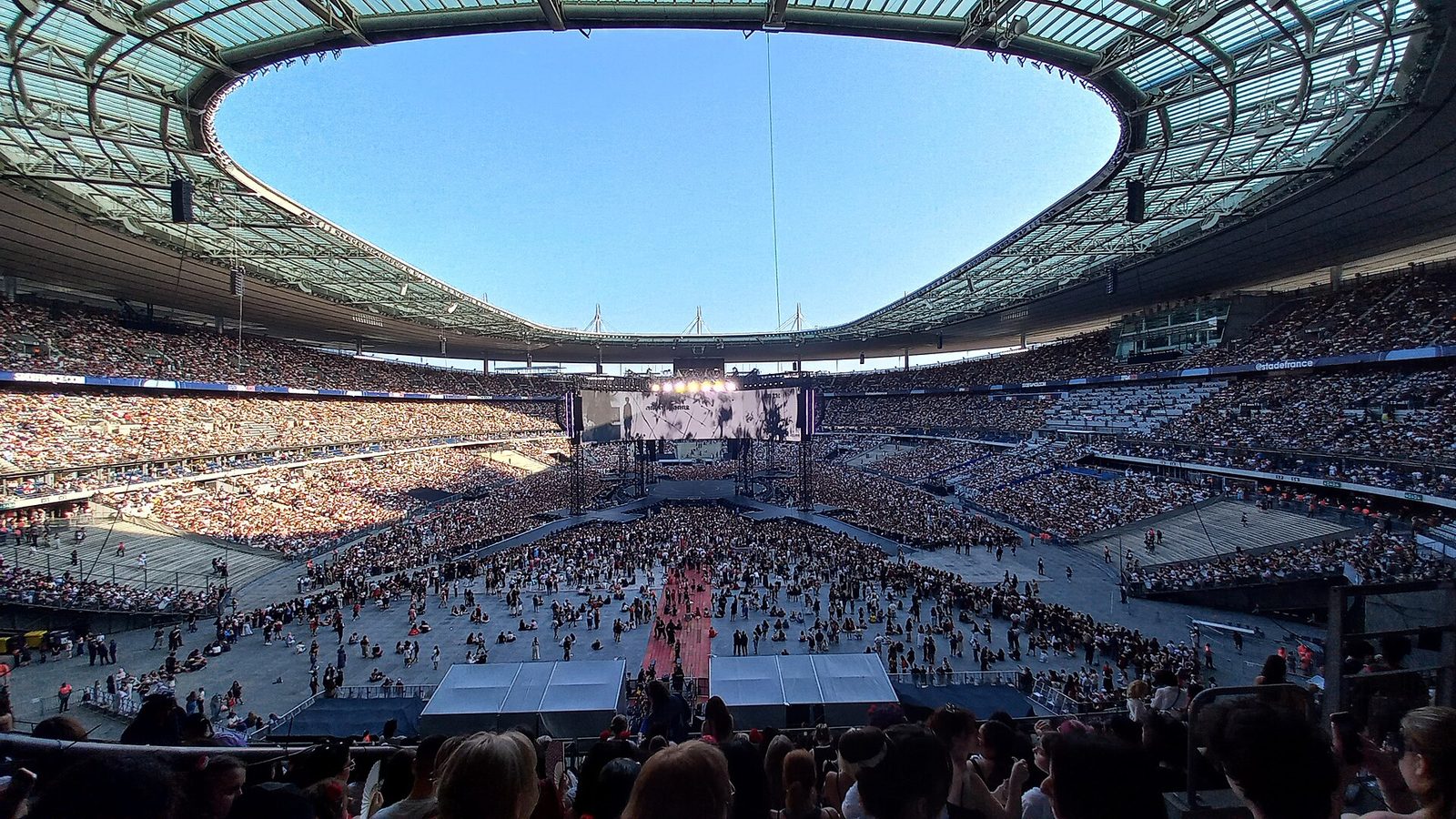
Photo: Chiyako92 / CC BY-SA 4.0 via Wikimedia Commons
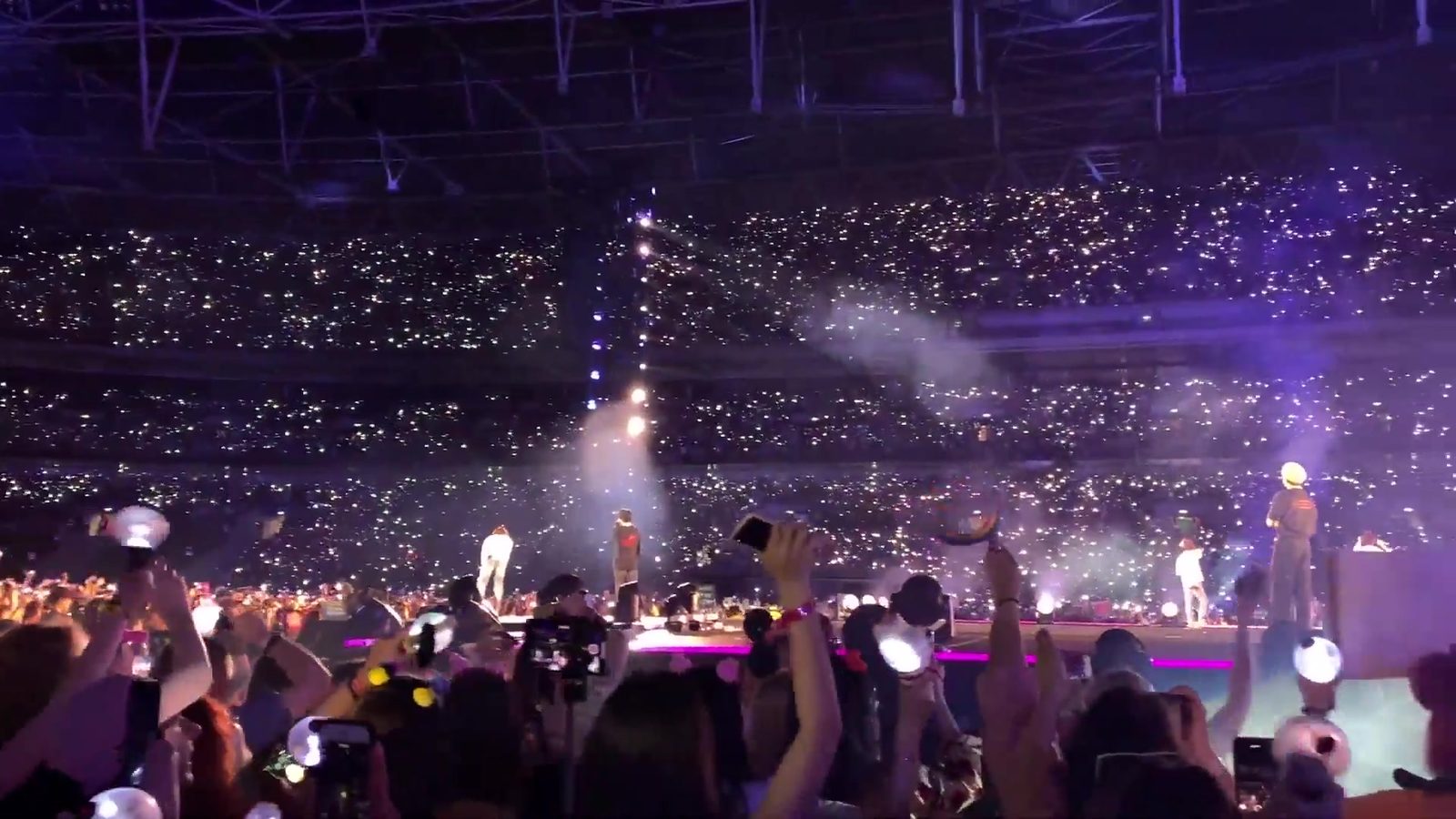
On 6 September, BTS closed the North American summer leg of the Arirang tour with a fourth night at SoFi Stadium in Los Angeles. It was the last of 24 stadium shows the group played between 1 July and 30 September, eight in Europe and 16 in North America, and HYBE says the average crowd that quarter was about 70,000 a night.
On 3 November the bill came in. HYBE, the Seoul company that owns BTS's label, reported its biggest quarter ever: 1.5257 trillion won in revenue, about $1.13 billion, with 726.8 billion won of it from concerts. Compared with the quarter before, sales rose by 75.7 billion won. The cost of making those sales rose by 74.1 billion. Gross profit, what was left after paying for the shows, the records and the merchandise themselves, went up by 1.6 billion won, about $1.2 million.
That is the number worth explaining. A stadium tour by the most popular act in K-pop is the biggest line on HYBE's books and the one the company keeps the least of. That is not a sign that something is broken. It is what a K-pop company looks like when its oldest act is paid like veterans, and it explains why HYBE's real profit plan has younger faces on it.
Two kinds of quarter
HYBE splits its revenue into two buckets. "Direct participation" is money that needs the artists in the room: albums, concerts, advertising and appearance fees. "Indirect participation" is money built on top of them: merchandise and licensing, video content, and fan club memberships, much of it sold through Weverse, HYBE's own fan app.
The mix swings wildly depending on whether the stars are in the studio or on the road, and gross margin swings with it. Here is HYBE's gross margin, the share of revenue left after the direct cost of sales, this year:
- Q1 2026, the quarter BTS released ARIRANG on 20 March but played no stadiums: 42.8%, with concerts at just 88.7 billion won
- Q2 2026, the tour opens in Goyang, Tokyo, Tampa and Las Vegas: 31.8%, concerts 647.7 billion
- Q3 2026, Europe and North America: 30.3%, concerts 726.8 billion
When BTS were selling a new album rather than tickets, HYBE kept about 43 won of gross profit from every 100 won of sales. In the two stadium quarters since, it kept 32 and then 30. Last year's busiest touring quarter, the third, when Jin of BTS, SEVENTEEN, TOMORROW X TOGETHER and ENHYPEN were all on the road, came in at 27.7%. Between the second and third quarters this year the swap happened in miniature: albums and music fell from 326.8 billion to 282.8 billion won while concerts rose by 79.1 billion. HYBE's chief financial officer, Lee Kyung-jun, told investors that fewer album releases and a business mix tilted toward large concerts weighed on the quarter's margin. In plain terms, high-margin records gave way to low-margin stadiums, and the company ran very hard to stand still.
Where a stadium ticket goes
A K-pop album is cheap to repeat. Once a record is made, every extra CD or stream costs little, and K-pop fans still buy physical albums in volumes the West stopped seeing decades ago: HYBE's acts sold 27.97 million albums in the first nine months of 2026, by the count of Circle Chart, Korea's national chart. A stadium night is the opposite. Every show needs the stage, the screens, the crew, the freight between cities, the venue's cut, the local promoter, the security, the insurance. Seventy thousand people is a lot of revenue, but none of it arrives without that machinery moving again.
Then comes the line that matters most in BTS's case: the artists' share. In a K-pop contract, the agency pays for training, production and promotion up front, and the members are typically paid their share of profits once those costs are covered. Korea's standard exclusive contract for singers, introduced in 2009, set seven years as the point an artist can walk away, which is why renewals are where the power shifts. BTS debuted in 2013, renewed with Big Hit for the first time in 2018, more than a year before their contracts ran out, and again in September 2023, when HYBE's board approved new deals for all seven members. A group that has been renewed twice is not on rookie terms.
HYBE does not publish its contracts, and it does not publish margins by business line. But on the second-quarter call in July, Lee said the cost-of-sales ratio had risen because artist settlement costs grow with concert revenue. When the biggest act in the company sells 1.7 million stadium seats in a quarter, a large slice of the gap between ticket revenue and gross profit is BTS being paid.
Shareholders read it differently. After the second-quarter results in late July, HYBE's shares fell sharply over the next two trading days, even though revenue and operating profit were both records. Investors had hoped merchandise, not concerts, would lead the growth.
The merch tent is the business model
The tour is also the biggest shop HYBE has ever run. On the third-quarter call, chief executive Lee Jae-sang said North American tour merchandise alone brought in 107 billion won, about $80 million. HYBE said roughly a million people came through its merchandise sales points across 12 cities over 45 days, buying more than two million items, with 100 to 150 new products rolled out along the way to match local demand.
Do the division and each visitor spent about 107,000 won, close to $80, on about two items. Merchandise and licensing for the whole company reached 334.6 billion won, more than double the 137.4 billion of the first quarter. HYBE says it now wants to run the same tour and merchandise model for its other artists.
The fan's wallet did not grow to pay for all this; it moved. Weverse is where BTS's paid ARMY Membership lives, and in the US that membership was the way into the presale for the North American dates, so the app doubles as the ticket line. In the third quarter, total paid spending on Weverse fell 19% from the quarter before and average revenue per user fell 10%, which Lee Kyung-jun put down to the major artists being out on large offline tours. In the second quarter, with BTS back on stage for the first time in years, paid spending had risen 12%. Money that would have bought digital memberships and livestream passes went on flights, tickets and tour hoodies instead.
If you want a single image of a K-pop tour's economics, it is not the stage. It is the merch line.
Why the profit plan has younger faces
This is where the rookies come in. A group in its first years is still paying back what the agency spent to build it, so its early settlement terms leave more of each won with the company. One Seoul brokerage, previewing the quarter in October, argued that HYBE's cost ratio would rise less than feared precisely because younger acts on early settlement rates were contributing more.
HYBE has been loud about those acts. In the third quarter, CORTIS, who debuted in 2025, pushed their second mini album past four million copies. ENHYPEN, who debuted in 2020, took their August album to No. 1 on the Billboard 200 and toured the Americas. KATSEYE, the group HYBE built in the US, starts an 11-city arena tour across Asia and Oceania in January 2027, and at the earnings call CFO Lee said CORTIS's next tour would look at bigger venues. Chief executive Lee told investors that the newcomers' growth is often hidden behind BTS's numbers, and that milestones that once took four or five years were now arriving in one or two.
So the company's margin story runs in a loop. A young group earns the agency its best margins while the members earn the least. If the group lasts, it renews, the split tilts toward the artists, and the act moves from albums to stadiums, where revenue is enormous and the company's share is thin. Then a new group has to come through to rebuild the margin. When ADMC looked at how MAMA scores its trophies last week, the formula counted a physical album for twice as much as every stream outside Korea. HYBE's own accounts show where that spending is worth most to the company: early, on records, from fans of acts whose contracts are still young.
What the Asia leg will show
BTS are not done. The Arirang tour reaches Kaohsiung on 19 November, then Bangkok, Kuala Lumpur, Singapore and Jakarta before the year is out, with Hong Kong, Manila, Melbourne and Sydney in early 2027 and more dates promised. HYBE has also said BTS's group and solo plans after the tour are being prepared, but has declined to give investors a schedule a year out.
That leaves an odd question hanging over the most successful touring act in Asian pop. The tour pays the members properly, fills stadiums on four continents and moves two million pieces of merchandise in North America alone. It also keeps HYBE's margin near 30%, while investors wait for the rookies to carry the profit. For a fan in the stands at BTS's Singapore shows in December, the ticket is the whole night. For the company that sold it, the ticket is the part that pays the band. The merch tent and the next debut are the parts that pay HYBE.
Share this story