FeatureRonit Singh7 min read
The Black Parade's late No. 1 is the album chart working, so keep old records in it
It lost with 240,074 copies in 2006 and won with 78,000 this week. Calls to wall old records off the chart blame age for what is really a vinyl variant problem.
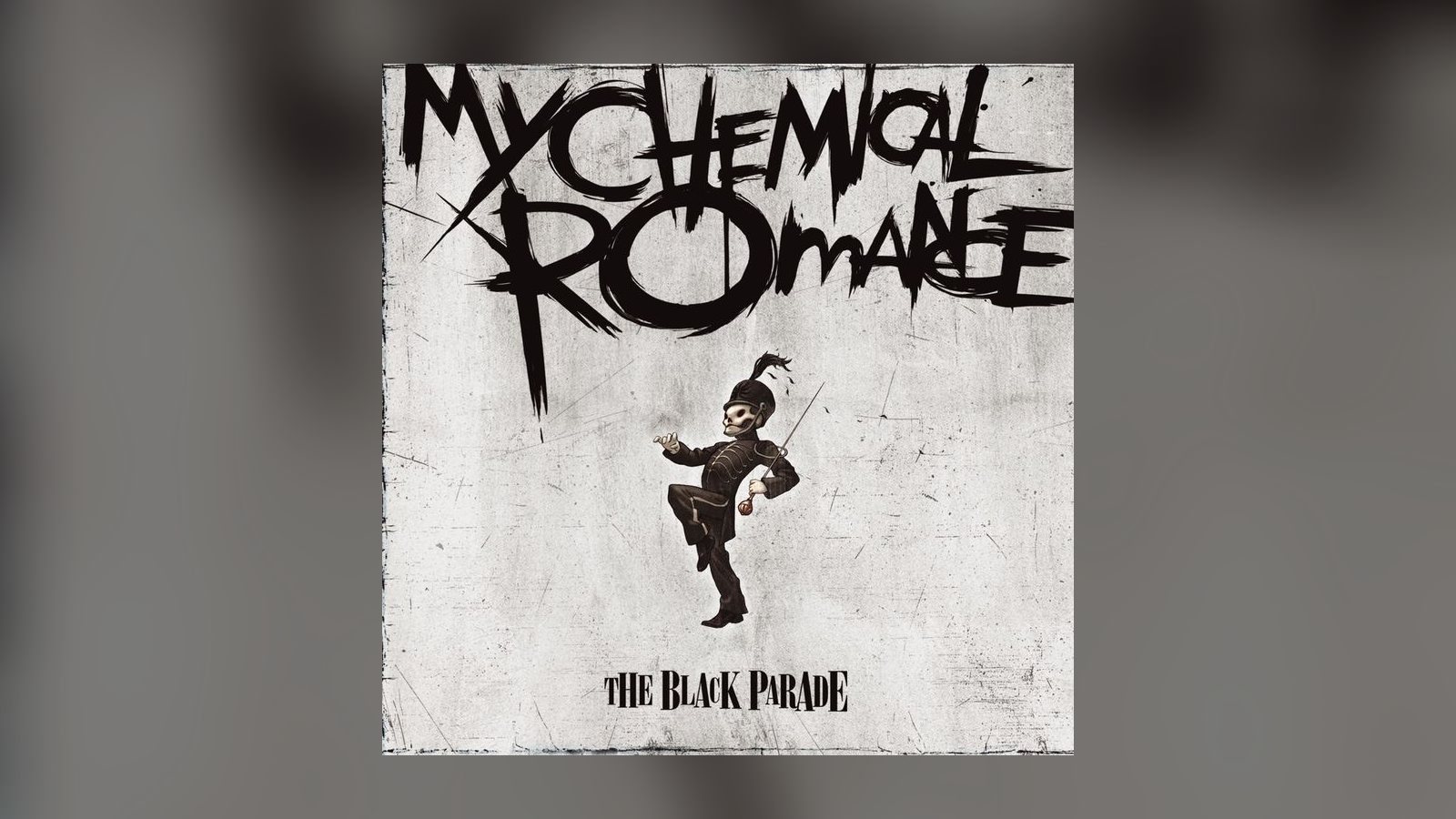
Artwork: Reprise Records
In the first week of November 2006, My Chemical Romance sold 240,074 copies of The Black Parade in the United States and finished second. The record that beat it was the soundtrack to Hannah Montana, a Disney Channel show about a schoolgirl with a secret pop career, on 281,000. In Britain it ran into Robbie Williams' Rudebox and peaked at No. 2 there as well.
Twenty years later, the New Jersey band have their first No. 1 album in both countries, with the same record. The 20th anniversary edition came out on 23 October with six extra tracks, three B-sides and three live recordings, and on the US chart dated 7 November it jumped from No. 139 to the top with 78,000 units, according to Luminate's tracking. Days earlier it had topped the UK albums chart. No album has taken longer to reach No. 1 in America.
The predictable response is that this proves the chart is broken: an old album with a new sticker should not be allowed to beat new music. We think that is wrong. The Black Parade's win is the album chart doing its job, and the argument for moving old records onto a chart of their own blames age for a problem that is really about vinyl variants, a problem new releases exploit far more than reissues do.
The case against, made fairly
The critics have a real history on their side. From May 1991 until late November 2009, Billboard's main albums chart barred catalogue titles, meaning albums more than 18 months old that had fallen below No. 100. That rule went on 5 December 2009, the year Michael Jackson's death made his compilation Number Ones one of the biggest sellers in the US and The Beatles' remastered catalogue flooded the shops while neither could appear on the main chart. The fix made sense in a year of sales spikes. Streaming then turned it into something else: old favourites now sit on the chart for hundreds of weeks, and a new artist's strong debut can land far lower than it would on a chart of current releases only.
There is a second, sharper objection. This was not a quiet, organic surge. Of the 78,000 units, 68,000 were album purchases and 42,000 of those were vinyl, the band's best vinyl week ever, sold across a long run of coloured pressings and shop exclusives. Strip out the collectors buying the same record in three colours, the argument goes, and Olivia Rodrigo's You Seem Pretty Sad for a Girl So in Love, which fell to No. 2 on 64,000, keeps its crown.
Both points deserve an answer. Neither one is an argument about age.
The record was already on the chart
Start with the number that matters most and gets mentioned least. The Black Parade was at No. 139 the week before the reissue. It did not need a box set to appear on the chart; it was already there, on an ordinary week, as it has been on and off for years. Its streaming total rose 34 percent in the reissue week to 10.14 million on-demand plays, which means that in the week before, with no new product and no promotion, Americans streamed a 20-year-old emo record about a dying cancer patient roughly 7.5 million times.
That is the honest case for keeping catalogue in the main chart. A chart is supposed to tell you what people are actually playing and buying, not what the industry released recently. Fencing old albums off would not have made the chart more truthful this week. It would have hidden the fact that a record from 2006, with a narrator who meets death as a marching band, is still part of how millions of people listen every week.
The 2006 loss is part of the same story. The chart that kept The Black Parade at No. 2 measured one thing only: how many copies left the shops in the first seven days. It was a chart of launches. Hannah Montana's soundtrack won that launch fairly, with an audience of children and parents still buying CDs for them. The 2026 chart counts a week of buying and listening together. It is a chart of lives, and an album still being played 1,000 weeks on has a life worth counting.
The variant problem belongs to new records too
Now the vinyl. The critics are right that 42,000 vinyl copies in a week, spread across colours and retailer exclusives, is a strategy, not an accident. Where they go wrong is in thinking it is a reissue strategy.
Look at the No. 1 albums of 2026 that came just before this one. Miley Cyrus went to No. 1 on the chart dated 3 October with Bass Persuades, a brand new album, on 61,000 units, 47,000 of them sales. It was sold in a long list of vinyl variants and CD editions, and it beat Ella Langley's Dandelion by about 70 units. The following week it fell to No. 157, the biggest second-week drop from No. 1 by a woman in the chart's history. That is what a variant-built No. 1 looks like: a launch week propped up by collectors and nothing behind it.
The Black Parade is the reverse. It had a living audience before the variants and it will have one after. And the most chart-shifting reissue of the year was not a vinyl one at all. Taylor Swift's The Life of a Showgirl returned to No. 1 on the chart dated 10 October with 173,000 units after a new edition added four tracks, and roughly 78 percent of that came from streaming, with no physical copies of the new edition on sale that week.
There is a neat symmetry here. Miley Cyrus, who played Hannah Montana, topped the chart this autumn with fewer units than the 78,000 My Chemical Romance needed in November, and about a quarter of the 240,074 copies that were not enough in 2006.
So if variant buying is what bothers you, the fix has to be format-neutral. Count variants of one album in a way that weighs a fan's first copy more heavily than their fourth, and apply it to every release, new or old. Billboard already publishes a separate Top Current Albums chart for anyone who wants new music only. Move catalogue off the main chart instead, and you leave the Bass Persuades model untouched while punishing the one record in this story that clearly did not need it.
What a No. 1 means now
There is one more thing the purists miss. A No. 1 in 2026 is much cheaper than it used to be. This year's chart-toppers have ranged from Miley Cyrus's 61,000 units to BTS's 641,000 for Arirang, and several weeks have been won with under 80,000. In 2006, 240,000 copies lost. Once the bar is that low, a week at the top tells you less about mass popularity and more about who can mobilise a committed audience at a given moment.
That is not automatically a bad thing. It means the chart now rewards depth of attachment over breadth of reach, and on that measure, a record that people have kept with them through school, through the band's 2013 split and their 2019 return, through a pandemic and into their thirties, is exactly the kind of album a No. 1 should be able to find.
My Chemical Romance lost a chart of launches in 2006 and won a chart of lives in 2026, with the same 14 songs at the heart of both. The first chart asked who could sell the most in seven days. The second asks who is still listening. That is the better question, and it is why old records should stay exactly where they are: on the same chart as the new ones, made to compete.
Share this story