FeatureNatalia Pedroza7 min read
Rio's soul dances were filed as a threat in 1976, and funk still lives in that file
Fifty years ago this month, Brazil's spies were still chasing Rio's Black soul dances. Jorge Ben's África Brasil answered them. Funk inherited the file.
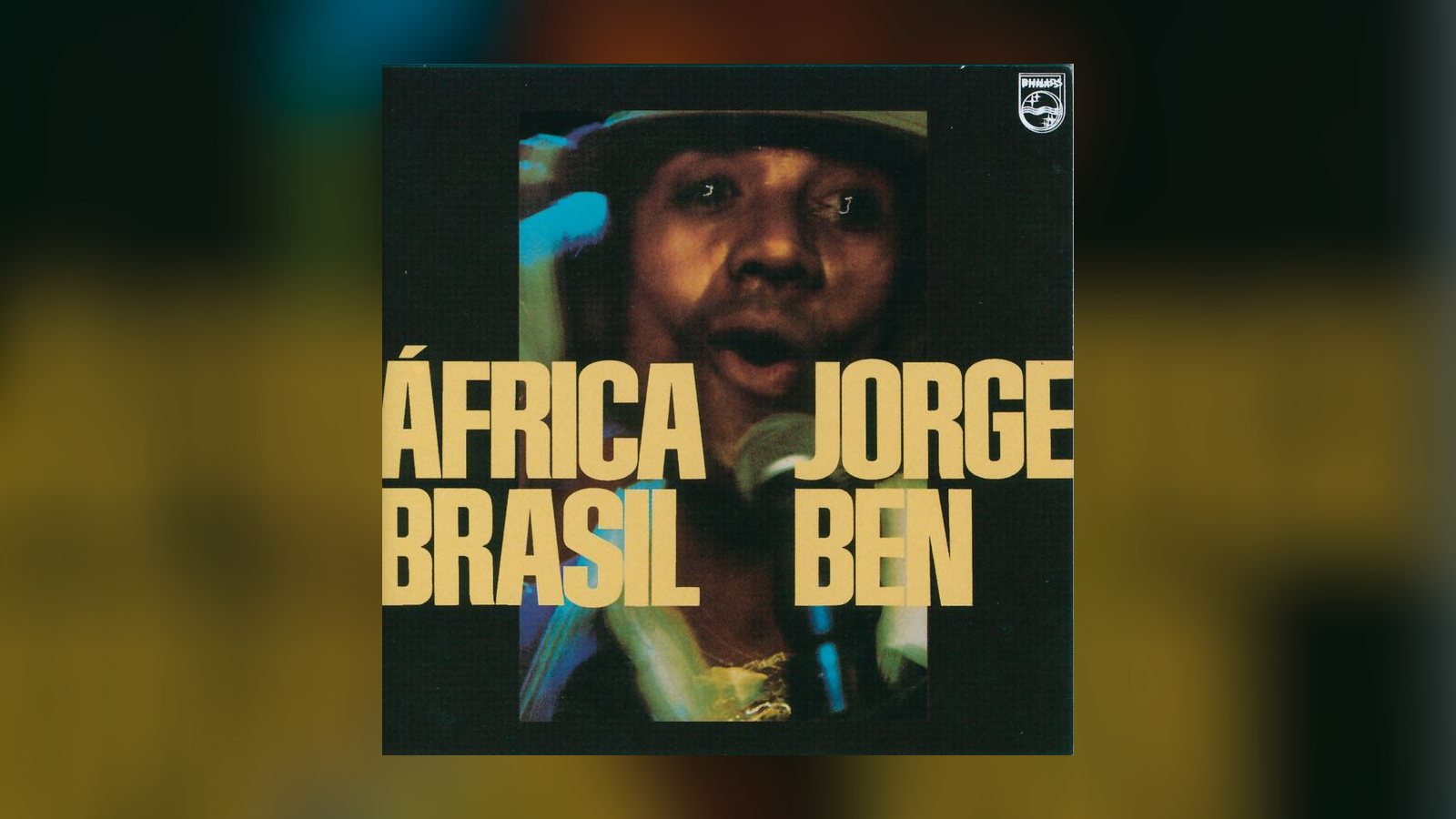
Artwork: Philips / Universal Music Ltda
On 19 April 1975, plainclothes police officers went dancing at the Portela samba school in Rio de Janeiro. Their report counted "cerca de seis mil pessoas de cor", about six thousand people of colour, and noted that tickets cost Cr$15 for white guests and Cr$10 for everyone else. The dancers, the officers wrote, shouted the names of Martin Luther King and "Jimmy Hendrix" over modern American music.
That report is now a public record. So is the rest of the paper trail, which the historian Lucas Pedretti reconstructed for Brazil's National Archive in Dançando na mira da ditadura, "dancing in the dictatorship's sights". In October 1976, fifty years ago this month, the Rio office of Brazil's national intelligence service sent a fresh search order about the dances to the Army, the Air Force's intelligence centre, the political police, the Federal Police and the Military Police. The subject line on an earlier file had been two words in English: Black Power.
Here is the argument. The suspicion that the military regime aimed at Rio's soul dances in 1976 never closed its file. It was handed on, almost word for word, to funk carioca, the music those dances became, and it is being written into law again right now. And the best reply to it was made the same year, on a record: Jorge Ben's África Brasil.
The dances the regime could not read
For readers meeting this scene for the first time: through the 1970s, the clubs of Rio's North and West Zones, far from the beaches of the postcards, filled every weekend with young Black Cariocas dancing to James Brown, Isaac Hayes and Brazilian soul. Sound system crews ran the nights and had English names: Soul Grand Prix, Black Power, Cash Box, Furacão 2000. One crew founder, the engineer Asfilófio de Oliveira Filho, known as Dom Filó, had started a Sunday night called Noite do Shaft at the Renascença Clube in 1974. One academic estimate puts the weekend crowds across the city at between 500,000 and 1.5 million. In 1976, when Soul Grand Prix launched its own LP at the Guadalupe Country Clube beside the Avenida Brasil, a room built for about 5,000 overflowed onto the footbridge and the highway.
The name came on 17 July 1976, when the journalist Lena Frias published a four-page report in the arts section of the Jornal do Brasil titled "Black Rio: o orgulho (importado) de ser negro no Brasil", the (imported) pride of being Black in Brazil. That bracketed word did a lot of work. The right read the dances as the Black Panthers arriving in Brazil. Parts of the left, and of the samba world, heard American imperialism with a backbeat.
The police files show how little the state understood what it was watching. One Army intelligence report claimed a group of Black intellectuals, led by an unnamed "North American" Black man with money from abroad, planned to kidnap the children of white industrialists. Pedretti points out that the report's own grading was A-4: a reliable informant passing on information that was probably untrue. It was investigated with urgency anyway, after a handwritten note asked for a "suitable" investigator, which Pedretti reads as a request for Black agents to go undercover. A later political police reply explained that Black Brazilians responded to soul "por atavismo", by atavism, and formed crews partly out of "emulation" and "snobbery".
Dom Filó got the sharp end of it. In testimony to the Rio de Janeiro State Truth Commission, he described being hooded outside a dance in the months after Frias's report, driven to the Army police barracks on Rua Barão de Mesquita that housed the DOI-Codi interrogation unit, and questioned under bright lights about a million dollars, communism and money from the CIA. No such money existed. What existed was thousands of young Black people in one room, which was the threat all along.
The record that answered "imported"
Jorge Ben was not a Black Rio act. By 1976 he was already a star, the man who wrote "Mas Que Nada" in 1963 and "País Tropical" in 1969. But África Brasil, released that year on Philips, reads like a reply to Frias's brackets.
He cut it in about ten days at Phonogram's studio in Rio, with his band Admiral Jorge V, fourteen extra players and five backing singers, and for the first time he swapped the acoustic guitar that had defined his sound for an electric one. Then he went back through his own catalogue and plugged it in. "Taj Mahal", a 1972 song, came back faster and harder. "Zumbi", from 1974's A Tábua de Esmeralda, came back as the closing title track, "África Brasil (Zumbi)", named for the leader of Palmares, the largest settlement of people who escaped slavery in colonial Brazil. "Xica da Silva" told the story of an 18th-century woman freed from slavery in Minas Gerais. The opener, "Ponta de Lança Africano (Umbabarauma)", is a song about an African centre forward.
The point is in the title and the tracklist. The groove the kids in Guadalupe were dancing to was not something Brazil had borrowed from Detroit. It had come to both places from the same ocean, and África Brasil filed it under Brazilian history: Palmares, Minas Gerais, the football pitch. Banda Black Rio, formed the same year, made the same case with horns on 1977's Maria Fumaça, samba rhythm played as funk.
The record's afterlife proves the groove travelled outward too, and not always with Ben's name on it. Rod Stewart heard "Taj Mahal" at Rio's Carnival in 1978. His "Da Ya Think I'm Sexy?", released that November, borrowed its chorus melody and spent four weeks at No. 1 in the US in February 1979. Ben sued; the case was settled, the song's royalties went to UNICEF, and in his 2012 autobiography Stewart called it "unconscious plagiarism". (Stewart, now 81, has just announced a final 2027 tour.) "Umbabarauma", ignored at home at first, reached the rest of the world through David Byrne's 1989 compilation Beleza Tropical.
Same dance floor, new charge sheet
The line from those clubs to funk carioca is direct. The crews stayed and the records changed. Through the 1980s the dances took up Miami bass and freestyle, the anthropologist Hermano Vianna published his study O mundo funk carioca in 1988, and DJ Marlboro's Funk Brasil in 1989 helped turn the habit of singing Portuguese over those drum machines into records. Furacão 2000, one of the crews on the 1976 lists, became one of the best-known labels in funk. In 2011 it signed a teenager from Honório Gurgel, in Rio's North Zone, who would become Anitta.
The suspicion moved with them, and only the paperwork changed. Rio state passed a law regulating the dances in 2000 and a tougher one, known by the name of its sponsor Álvaro Lins, in 2008. On 1 September 2009 the state assembly reversed course, recognising funk as a cultural movement and repealing the 2008 law the same day. In December 2019, nine young people died in a crush when military police moved in on a street dance in Paraisópolis, São Paulo.
Today the file has a new name. On 27 January 2025, the federal deputy Kim Kataguiri announced an "anti-Oruam" bill, named after the Rio rapper Oruam, son of the jailed Comando Vermelho leader Marcinho VP, to bar public money from shows that glorify organised crime. More than forty deputies signed it. Copies followed in city councils across the country, and on 11 September 2025 the state of Paraíba signed its own version into law after a unanimous assembly vote. In May 2025 Rio police arrested MC Poze do Rodo, one of funk's biggest names, at his home on suspicion of glorifying crime and links to the Comando Vermelho, arguing that his lyrics went beyond the constitutional limits of free expression. A judge released him on habeas corpus within days.
The sponsors say these laws target crime, not a genre. Fine. But read them next to the 1975 report. Both start from the music and work backwards to a criminal organisation. Both treat a crowd of young Black and poor fans as evidence. And the new laws arrive while Brazil sells the sound abroad: in March 2022 Anitta, the Furacão 2000 signing, became the first Brazilian act to top Spotify's global daily chart, with "Envolver". The country is glad to export the stars the bailes made.
The grade on the file
The Black Rio dances were never the Black Panthers, and they were never "imported" in the way Frias's brackets suggested. Jorge Ben said so on record in 1976, with an electric guitar, a centre forward and a song about Palmares. The regime's own agents eventually reached a similar conclusion: the dances were a business, crowded and loud, and the plot was not there.
What lasted was the method. A dance full of young Black people produces a file; the file looks for a leader, a source of money, a crime. Pedretti's archive even shows the grade the state gave its own first tip about Black Rio: reliable source, unlikely information. Fifty years on, that is still the most honest description of how Brazil writes about funk. The source of the worry is real enough. The information, that a beat is a crime scene, has not improved.
Share this story