FeatureSam Grizelj7 min read
Newcastle's jazz scene owns its own rooms, and still can't keep its players
Knats bring a Mercury-shortlisted album about Tyneside home this month. The city built them co-op venues and free jams. Then they left for London.

Photo: Ellie Slorick / Courtesy of Prescription PR
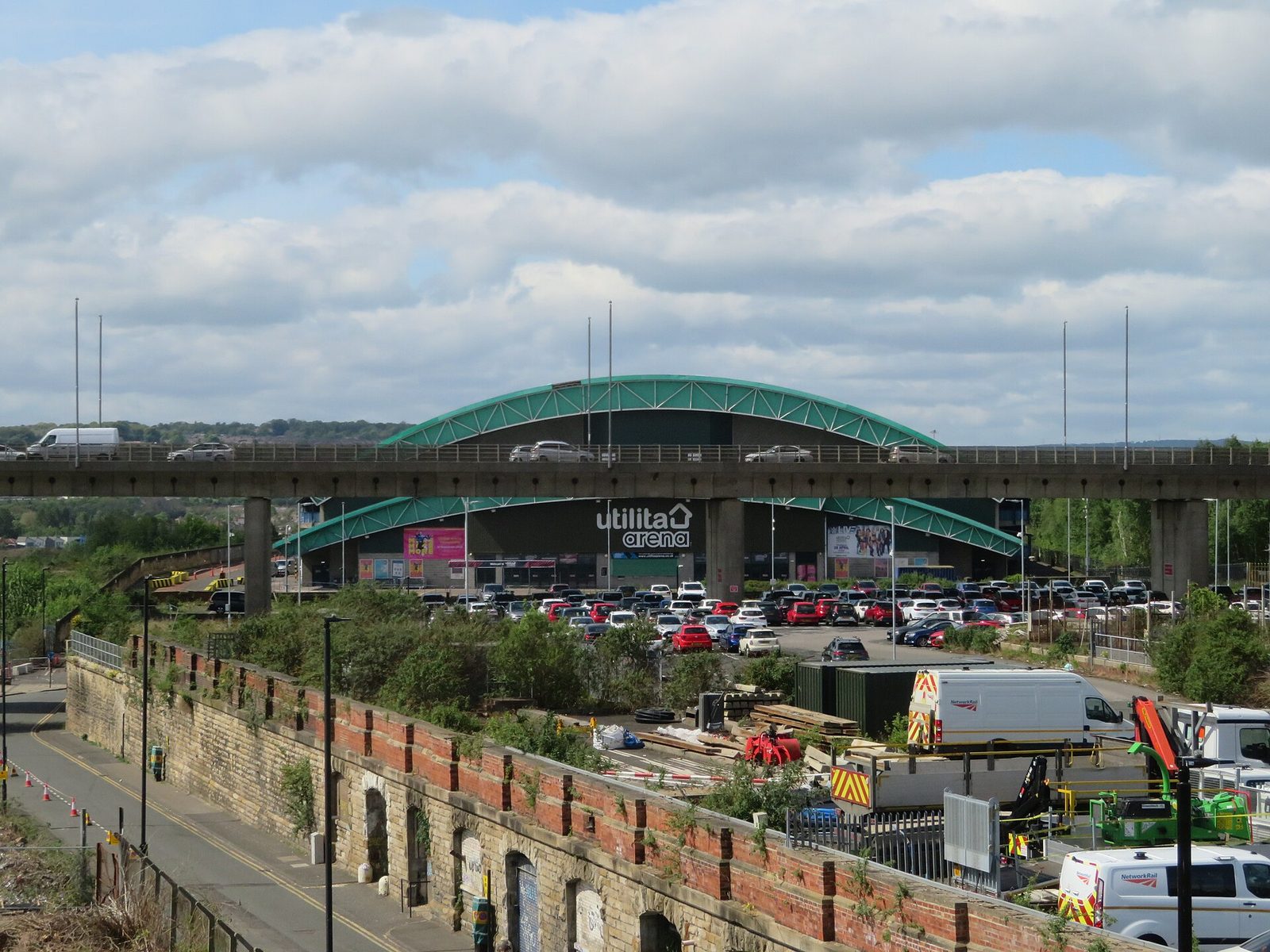
On Tuesday 20 October, two days before the Mercury Prize is handed out at Newcastle's Utilita Arena, the jazz band Knats will sit down in a 1930s school building in the city's West End and play their album to a home crowd. The building is the John Marley Centre, an art deco former school on Muscott Grove that now holds recording studios, ballet classes and a community garden. The album is called A Great Day in Newcastle. It is one of the 12 records on this year's Mercury shortlist.
There is a small catch in that homecoming. Knats are, on paper, a London band now. Drummer King David-Ike Elechi and bassist Stan Woodward studied jazz at Trinity Laban, the conservatoire in Greenwich, graduating this year, and trumpeter Ferg Kilsby is due to graduate from there in 2027. The most Geordie jazz record in years was largely written by people who had to leave Geordieland to keep making it.
That is the shape of Newcastle's jazz scene in 2026, and it is worth understanding before the cameras arrive. Newcastle has done something few music cities manage: its jazz players and fans own their own rooms and run their own nights, so the music sounds like the place and not like the industry. What it has not built is a ladder from those rooms to a living. Mercury week should be judged on whether it helps fix that, not on how the city looks on television.
The rooms the city bought for itself
Start on Pink Lane, a narrow street behind Newcastle Central station. In the early 1990s a promoter from Seaham named Keith Crombie opened the Jazz Café there, a small room he ran until he died on 29 December 2012. He had been working the North East's jazz clubs since the 1960s, and when he died, the people who drank and played in his room decided not to let the habit die with him.
In March 2013 they registered a co-operative, the Pink Lane Jazz Co-op, now trading as Jazz.Coop. Instead of asking for donations, it sold shares: £1 each, with a minimum stake of 50, so a fan could buy in for £50. More than 200 people put in a total of £125,000, and with a loan from an ethical lender on top, the co-op bought The Globe, a pub at 11 Railway Street, a short walk west of the station. It became the co-op's freehold property on 30 April 2014, which happened to be International Jazz Day. The co-op describes it as the first music venue in the UK owned by a co-operative, and it runs regular jazz and folk jams there for players of every level.
Crombie's old room did not close either. The Jazz Café reopened after a period dark and is now run by Newcastle Arts Centre, which also programmes the Black Swan, a courtyard venue on Westgate Road. Its jam runs on the first and third Tuesday of every month: a house trio, a list for anyone who wants to sit in, music from 7.30pm to 10.30pm. On the second Tuesday the Jazz Jam Sandwich swaps standards for afrobeat, funk and soul. Since January 2026, all of the Black Swan's jazz nights have been free to attend.
Behind both sits Jazz North East, a promoter founded in 1966, run by unpaid directors as a registered charity, which is spending 2026 celebrating its 60th year. In 2013 it folded in Schmazz, Tyneside's other main promoter of new jazz. Add it up and a teenager in Newcastle with a horn can walk into a jam on most weeks of the month, for nothing, in a room no landlord can take away.
What a scene like that sounds like
Knats are what comes out of those rooms. Elechi and Woodward started in 2020 as a two-person production duo, renting a studio to write together. About two years later they went looking for a trumpeter, and after months of searching found Kilsby in a video of a youth jazz orchestra. He was 15. He has recalled nearly turning them down, and his parents talking him into it. Before the move south, the band played weekly gigs in local pubs and venues, which is to say they learned in exactly the circuit described above.
The music sounds like it. Their 2025 debut, Knats, came out on Gearbox Records, recorded at Damon Albarn's Studio 13 and mixed by Hugh Padgham. The second, A Great Day in Newcastle, arrived on 1 May 2026 on Fontana, produced by Geordie Greep of black midi (a Londoner, despite the first name) and again mixed by Padgham. The rhythm section plays like a drum and bass record, the trumpet plays like it is picking a fight, and the poet Cooper Robson speaks over parts of it.
The song titles are a map of the city. "Gainsborough Grove" is a street of terraced houses in Fenham, in the West End. "Wor Jackie" borrows the nickname Tyneside gave Jackie Milburn, Newcastle United's great centre forward of the 1950s; "wor" is Geordie for "our". "Never Gonna Be A Boxer", the band said when they released it, "tells the story of a young lad who's been scrapping on the estate and boxing in the gym." The album closes on "Farewell Johnny Miner", a title it shares with Ed Pickford's folk song about the end of the pits, built around the words of Durham miners recorded for a broadcast interview in the 1960s. "A Great Day in Newcastle is an exploration through happy, sad and angry stories from Newcastle," Woodward said in the album's announcement. Even the title is a joke with roots: it nods to A Great Day in Harlem, Art Kane's 1958 photograph of 57 jazz musicians on a Manhattan stoop.
This is the case for scenes that own their rooms. A band that grows up in a pub jam, in front of people who paid £50 for a share of the building, does not learn to sound like a playlist. It learns to sound like the people in the room.
The ladder that isn't there
And then it leaves. The band went to London to study, and the reason is not hard to read: London is where the UK's jazz degrees, labels, agents and most of its paid gigs are. Kilsby has spoken about having school music lessons and school bands as a privilege, and about watching music education and youth provision like youth clubs wear away in the North East in recent years. He has also said, with some candour, that the Mercury coming to town brings business to the area but does little for the grassroots.
He has a point. Last year's winner, Sam Fender from North Shields, took the 2025 prize for People Watching at a ceremony in Newcastle on 16 October 2025 and then gave his entire £25,000 winnings to the Music Venue Trust, the charity that keeps small British venues open. Fender has said he would not be doing what he does without the North East gigs he played coming up, and that those venues are struggling. One generous artist is a gesture, not a system. The co-op venues are proof the rooms can be kept; nobody has yet built what comes after the rooms, the paid gigs, teaching posts and labels that would let a 22-year-old trumpeter stay.
The Mercury Fringe, run with Newcastle's music development agency Generator, is better aimed than the main event. It runs from 15 to 22 October with more than 30 events at almost 30 venues, and one of them, Mini Mercury x First Gigs at The Grove on 18 October, puts musicians aged 12 to 18 on a stage. That is the right age. It is the age Kilsby was when a band found him.
A miners' hall, a Saturday night
The best sign this week is 20 miles south. Durham Jazz Festival holds its first edition from 23 to 25 October, with shows at Redhills, the Durham Miners' Hall, and in Fabio's Bar. When Knats' Mercury nomination was announced, their Fabio's show on Saturday 24 October became the first of the festival to sell out. Two nights after the prize is decided, whatever happens, a band that ends its album on the voices of Durham miners will play in the same small city as the miners' own hall, to people who already knew the songs.
That is what a scene looks like when it works: not a trophy, but a full room close to home that would book the band again next year. Newcastle has the rooms, the jams and 60 years of volunteers. What it should want from Mercury week is simple and hard: that the next 15-year-old found in a youth orchestra video gets to make A Great Day in Newcastle in Newcastle.
Read our guide to who is playing the Mercury Prize on 22 October.
Share this story