FeatureSam Grizelj7 min read
ADE turns 30 in a city whose best clubs all live on borrowed time
Amsterdam Dance Event sells the city as dance music's capital. Its clubs live in schools, print works and dental labs waiting for the wrecking ball.
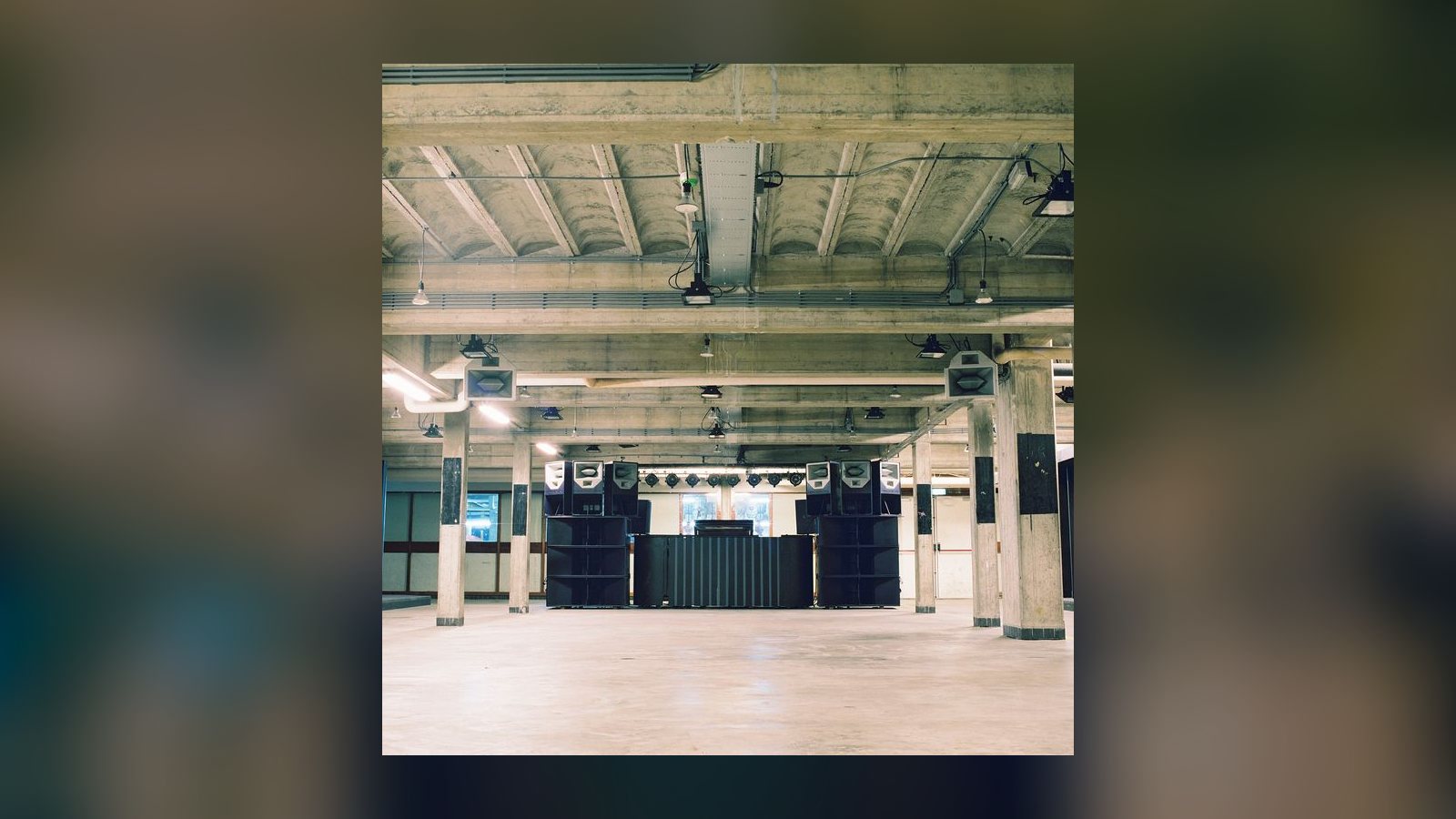
Photo: Martijn Savenije / CC BY-SA 4.0 via Wikimedia Commons
The best dancefloor in Amsterdam for most of the last decade was a bicycle shed. De School put its club in the basement where pupils of a 1960s technical school in the west of the city once parked their bikes: raw concrete pillars, a low ceiling, room for about 700 people and a licence to stay open around the clock. In January 2024 it threw a party called Het Einde, The End, which ran for about 65 hours from 12 to 15 January. Then the permits ran out, and the building was handed back.
Tomorrow the Amsterdam Dance Event opens its 30th edition, running from 21 to 25 October. Last year it counted a record 600,000 visitors, nearly 3,500 artists and more than 1,200 events in over 300 locations. For five days the whole city becomes a club, and the world's dance industry flies in to do business in it.
Here is what the visitors rarely see. Amsterdam's most admired clubs have almost all lived in buildings that were already scheduled for something else: demolition, flats, a hotel. That impermanence is not an accident of the market. It is how the city's night works, written into its permits, and it is both the reason the scene sounds so free and the reason it keeps losing its best rooms.
A scene that lives in other people's buildings
The habit is old. Paradiso, the city's most famous concert hall, opened in a former church in 1968. The Melkweg, the "Milky Way", took over an old dairy. In 1987 Peter Giele and his partners turned a disused porn cinema into the RoXY, one of the first rooms where house music took hold in the Netherlands. It burned down on 21 June 1999, the day of Giele's funeral, and never came back.
The modern pattern belongs to one team. The company behind De School is called Post CS, after the building where it started: the old post office near Centraal Station, where Club 11 ran on the eleventh floor until 2008 while the building waited for redevelopment. The same people then opened Trouw in the printing plant of a former newspaper building on the Wibautstraat. It was always meant to be temporary, closed with a final night on 3 January 2015, and the building became a hotel. De School followed in 2016 on a five-year basis that stretched to eight.
Three clubs, three borrowed buildings, one crowd that followed the team across the city each time the lease ran out.
The pattern continues this week. Radion, which hosts two nights of the local promoter Breakfast Club's ADE run on 24 and 25 October, has been in the old ACTA dental school building in Nieuw-West since 2014. According to the government's own case file on the building, it was built in 1971, has been owned by the housing corporation De Alliantie since October 2010, and was given a ten-year temporary use from 2012 before demolition and a new neighbourhood planned from 2020. Radion is still there, years past that date, on time it was never promised.
Garage Noord, a club in a former car repair shop in the Hamerkwartier across the IJ river, closes Breakfast Club's week with The Final Stretch, a 30-hour party. The city's own nightlife plan says that in the Hamerkwartier "the long-awaited construction" of a new district of homes and offices will start "in the near future".
What borrowed time sounds like
The upside of a building nobody plans to keep is that nobody minds what you do to it. Amsterdam's clubs could strip a school to its concrete, run a bass system in a bike shed and keep a party going for 30 hours, because the city decided, under its first night mayor Mirik Milan between 2012 and 2018, that a handful of venues outside the centre could have 24-hour licences. The argument was simple: let clubs close at different times and the streets never fill all at once.
That freedom shaped the music. A night with no closing time rewards the DJ who can play for eight hours, and it gives local residents a weekly room to grow in. The producer upsammy, who is based in Amsterdam, held a residency at De School; her 2020 album Zoom came out on Dekmantel, the Amsterdam label and festival that grew up alongside these rooms.
Olf van Elden, who records as Interstellar Funk, has been part of Dekmantel's world since it began, and released his debut album Into The Echo on the label in 2022, with the Spanish producer JASSS on "Northern Winds".
The downside is in the small print. In April 2023 the city granted nine 24-hour licences, five new and four renewals, bringing the total to 17 places, all outside the centre. Each licence runs for three years and can be renewed once, for three more. Even the permission to stay open is temporary. A club can build a following, a sound and a resident roster, and still find that both its building and its hours have an end date.
The city has written down the problem
Amsterdam is not blind to any of this. Its nightlife plan for 2023 to 2026 is unusually frank. It says the city lacks "both temporary and permanent space for night culture", that proven venues are "often insufficiently protected" when districts are redeveloped, and that within the city's own property portfolio there are "almost no available locations" suitable for clubs. It notes that the uncertainty stops clubs from paying for expensive soundproofing in temporary buildings, which in turn keeps neighbours wary of new ones. (The translations from Dutch are ours.)
The plan set aside €1 million for night culture and promised to explore an Amsterdam version of the "agent of change" rule, used in Toronto, London and San Francisco, under which whoever arrives last, a new block of flats or a new club, pays to fix the noise. It also floated giving clubs the protected status of cultural institutions, as Berlin has done; when the plan was written, only venues such as Paradiso and the Melkweg held a special category as "cultural hospitality".
But look at the solutions it offered for new space. In Nieuw-West it explored two new night venues "for a maximum of ten years". Its showcase example was De Tunnel, a concrete access tunnel for a future car park near the Johan Cruijff ArenA in Zuidoost, available for two or three years before four residential towers went up next door. An initiative called Club Echo, from the organisers Urban Sync and LITT Events, won the competition to run it, with 475 square metres indoors and 410 outside, and hoped to open during ADE.
It never opened. In July 2024 the city called it off: the tunnel needed fire-safety work, and the money could not be earned back in the short time the club would be allowed to stay. The city's flagship answer to the shortage of space failed for exactly the reason the shortage exists.
The capital and the lease
When De School closed, its founders said they were looking for a new home, probably smaller, about 2,000 to 3,000 square metres instead of the old 4,000 to 5,000, and somewhere they could get a 24-hour licence and keep the neighbours happy. Nearly three years later we could find no announcement of a new venue. The team behind three of the city's most celebrated clubs is, for now, without a room.
There is a romantic reading of all this: that Amsterdam's scene stays young because it keeps moving, that every closing party clears ground for the next idea. Sydney, which closed its doors by law for a decade, shows what happens to a city's dance music when the rooms vanish altogether, and its generation learned to dance in bedrooms. Amsterdam is nowhere near that. But each move costs years, and every building the scene borrows is one it has to give back just as it gets good.
ADE can rent an entire city for five days, and this week it will. The test of its next 30 years is smaller and harder: whether Amsterdam will let one club hold one room for longer than a permit.
Share this story