FeatureEmily Orchard7 min read
Sydney locked its clubs for a decade, so its dance music grew up in bedrooms
The lockout laws are gone and NSW counts 521 late-trading music venues. Ninajirachi's generation learned to dance on a laptop. Can Sydney give them a room?
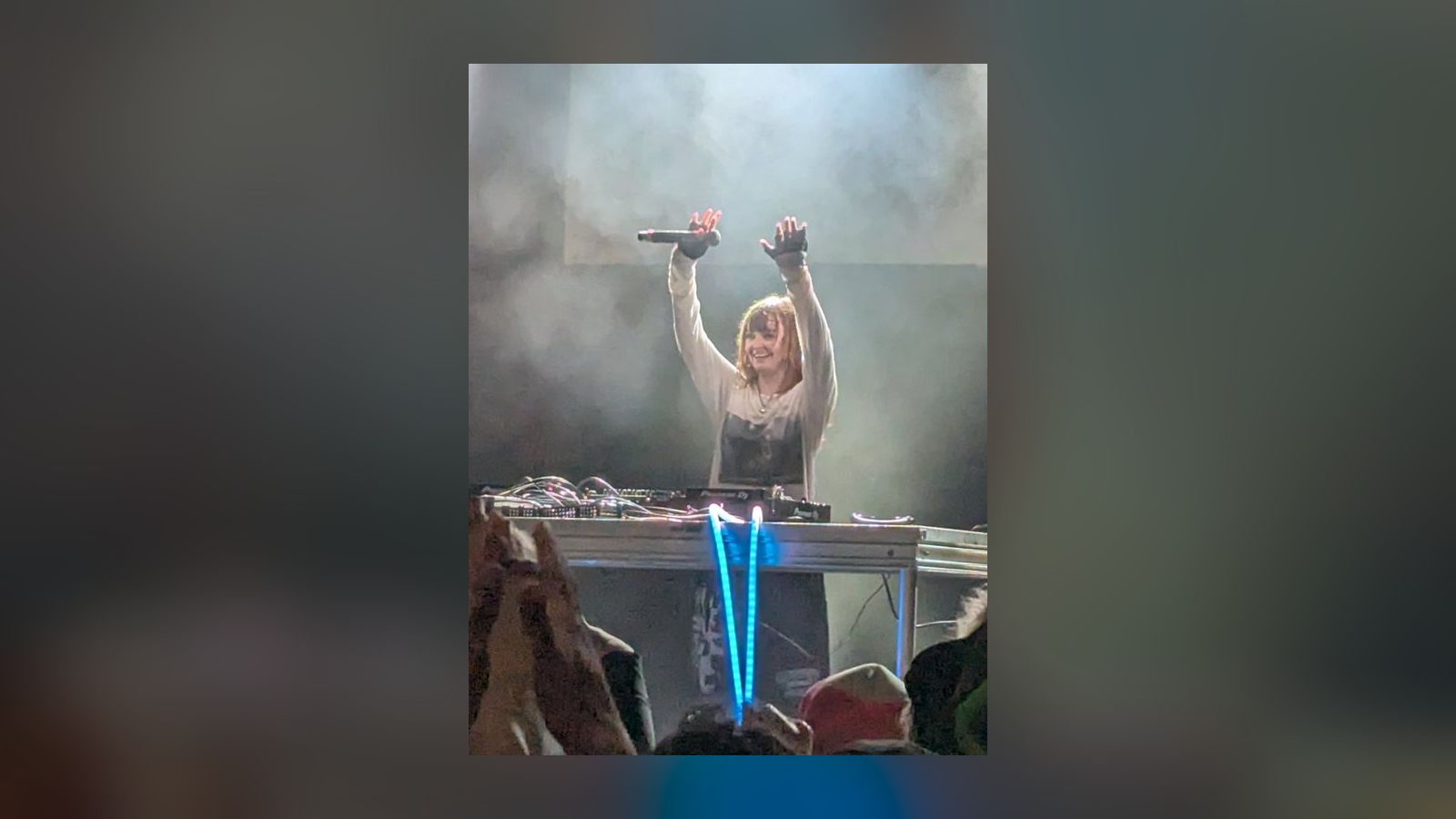
Photo: BakedPotatoLord / CC0 via Wikimedia Commons
In 1950, in a laboratory in Sydney, a machine the size of a room played a tune. CSIRAC, Australia's first digital computer, built at the CSIRO's Radiophysics Laboratory, is credited as the first computer to play digital music. Nobody recorded it. Five years later the CSIRO decided computing was not really its business and shipped the machine down the coast to the University of Melbourne, where it stayed.
Seventy-five years on, a producer who grew up an hour and a bit north of that lab wrote a song called "CSIRAC". It is track four on Ninajirachi's I Love My Computer, the album that won almost every music prize Australia hands out, and on 2 October 2026 it came back as a remix by Dylan Brady of 100 gecs. It is a song about a computer, made on a computer, by someone who never needed a nightclub to learn dance music.
That last part is the story of Sydney. For twelve years the city tried to legislate its nightlife into an early night, and its dance music did not die. It moved: out of the clubs, into bedrooms, onto SoundCloud and into the regional towns around the city. Now the laws are gone, the venues are coming back, and Sydney faces a question it has not had to ask in a long time. The generation that taught itself to dance on a laptop is ready for rooms. Will the city build them?
Twelve years of early nights
If you were not in Sydney in 2014, here is the short version. After two young men, Thomas Kelly in 2012 and Daniel Christie in early 2014, died after one-punch attacks in Kings Cross, the New South Wales government announced the lockout laws on 21 January 2014. From 24 February, venues across a large entertainment precinct covering the CBD, Kings Cross, Darlinghurst, The Rocks, Cockle Bay and Haymarket had to lock their doors to new customers at 1:30am and stop serving at 3am.
Assaults in the lockout areas did fall, and a majority of residents polled at the time supported the rules. The cost to music was just as real. Within about eighteen months, the Spice Cellar, Soho, Hugo's Lounge, The Flinders, Q Bar and Backroom had closed. Goodgod Small Club, a basement near Chinatown that had been a home for Sydney's electronic underground, went up for sale in September 2015. Pedestrian counts in Kings Cross at the Saturday-night peak dropped from 5,590 an hour in 2010 to 3,888 in 2015.
On 21 February 2016, thousands of people (counts ran from about 8,000 to 15,000) marched from Belmore Park to Hyde Park under the Keep Sydney Open banner. One of the speakers was Nina Las Vegas, the former triple j dance host from Wagga Wagga who had quit the national youth station to build a label called NLV Records. Hold on to that name.
The CBD and Oxford Street lockouts were lifted on 14 January 2020, and Kings Cross followed on 8 March 2021. By the state government's own count, more than half of the city's music venues closed during the lockout decade.
The scene moved onto the screen
Compare two ways of becoming a Sydney dance export.
The first is the old way. Future Classic began in 2004 when Nathan McLay and Jay Ryves started throwing club nights, including a party called Superpeople at Hotel CBD. A label grew out of those rooms, and in 2011 it signed a teenage producer from the Northern Beaches through an original-music competition. That was Flume, and the company went on to work with Chet Faker, SOPHIE, Flight Facilities and many more. The scene had a physical address before it had a catalogue.
The second is Nina Wilson's way. Born in 1999 in Kincumber, on the Central Coast, she taught herself to produce on GarageBand, then FL Studio and Ableton Live. She was a triple j Unearthed High finalist in 2016 and 2017, which put her music on national radio while she was still at school. Her 2017 single "Pure Luck" with Freya Staer went into high rotation, and in 2018 she signed to NLV Records, the label run by the woman who had stood on a stage in Hyde Park two years earlier.
She turned 18 in 2017, deep in the lockout years, and then the pandemic shut every club in the country. Her education was YouTube, SoundCloud and a decade of uploads under various names before she settled on Ninajirachi, half her own name and half a Pokémon. She has said it herself in the album's press materials: "I've spent more time with my computer than any one person, it helped me realise who I am and raised me for better or worse."
She is not the only artist whose route ran around the closed doors. Moktar, born in Cairo and raised in Cronulla in Sydney's south, built a club sound out of his Egyptian heritage, with his 2022 Immigrant EP facing the 2005 Cronulla riots head on, and he now works out of Melbourne, the city that kept its late nights while Sydney lost them. And Club Ate, the collective Bhenji Ra and Justin Shoulder formed in 2014, the year the lockouts arrived, turned queer Filipino club culture into performance and video that ended up in the Biennale of Sydney and the National Gallery of Australia. When the dance floor got harder to find, Sydney's club culture went into galleries, warehouses and hard drives.
What it sounds like when you learn from a laptop
I Love My Computer, released on 8 August 2025, sounds exactly like this history. It is bright, trance-tinted, unashamedly EDM in the 2010s internet sense, full of the complextro and electro-house that a kid in a coastal town would have found on YouTube rather than in a basement. The song titles tell you where it was made: "iPod Touch", "Fuck My Computer", "Battery Death", "Infohazard", "Delete". She calls the sound "girl EDM", the title of her 2024 EP. We wrote in June that it is brat's winter cousin, club music that walked in from the cold side.
The record went further than anyone outside her fanbase expected. At the 2025 ARIA Awards she had eight nominations, more than any other artist, and won Best Solo Artist, Breakthrough Artist and Best Independent Release. It also took the Australian Music Prize and triple j's Album of the Year. In 2026 she played Coachella, where Porter Robinson joined her to debut their song "WannaCry", released on 29 July, and she toured clubs across the US, the UK and Europe.
What matters for Sydney is that none of this depended on the city's nightlife. The music was made at a desk, discovered through national radio and the internet, and released by a label whose founder had spent 2016 fighting for the clubs that this music then had to do without.
The city reopens
On 21 January 2026, twelve years to the day after the lockouts were announced, the NSW government scrapped what was left of them: the 3:30am last-drinks rule, mandatory plastic cups, the drink limits per person and the bans on shots late at night. The music and night-time economy minister, John Graham, declared the laws "completely abolished".
The numbers since are striking. The government says 521 venues now use extended trading hours for live music, against roughly 130 when it took office, and 20 local councils are setting up Special Entertainment Precincts, zones where venues can trade later and stage small events without a council permit for each one. The first, on Enmore Road in Sydney's Inner West, was made permanent in mid-2024 after a trial that began in September 2022, and the Inner West Council is extending the idea to six more areas, from Marrickville to Balmain.
On 3 July 2026, Ninajirachi opened her biggest Australian headline tour at the Enmore Theatre, on that same street, to a sold-out room. Early dates on her Dark Crystal V tour sold out so fast that Melbourne and Brisbane each got a second night.
The room the music needs
Here is ADMC's argument. Reopening the old Sydney is not enough, because the old Sydney is not what this generation grew up with. The Future Classic model began with a residency at a CBD hotel. The Ninajirachi model began in a bedroom an hour up the coast, with a teenager whose first audience was national radio and a SoundCloud comment section. The rooms that serve that second path are smaller, cheaper to run, open to people under 18 and not all clustered in a single late-night precinct around Kings Cross. The Special Entertainment Precincts are the right instinct for exactly that reason: they spread permission out to the suburbs, where young producers actually live.
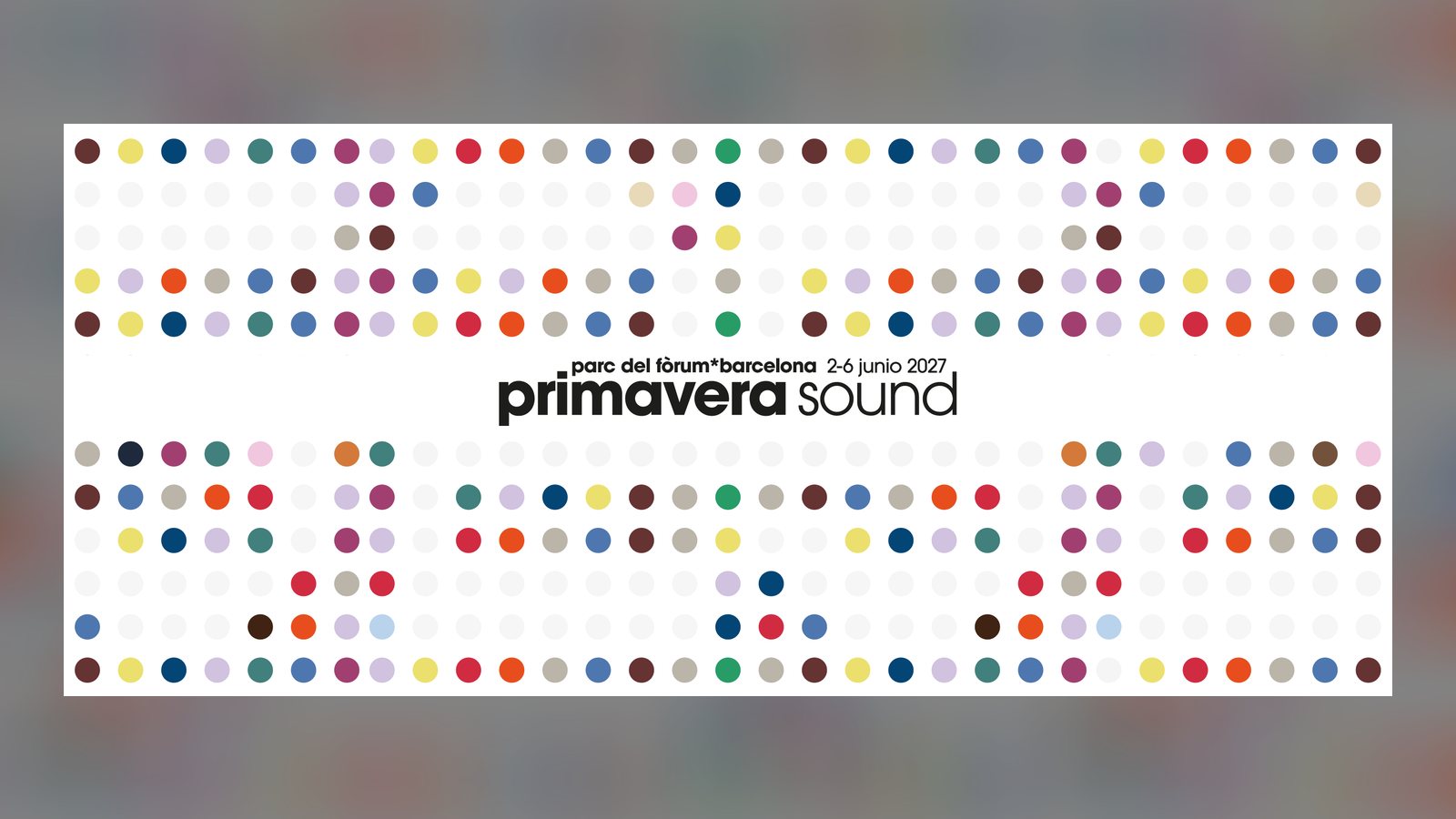
The test will be whether Sydney's next Ninajirachi plays her first show in Marrickville or Dulwich Hill, or still has to wait for a festival slot or a ticket to Melbourne. Ninajirachi herself is past needing a first room: next June she plays Primavera Sound in Barcelona, back to back with Skrillex.
In 1955 Sydney decided that the thing making music in its laboratory was somebody else's job, and let it go to Melbourne. It has spent the last decade making a similar mistake with its clubs. The laws are gone. Whether the city keeps the music this time depends on the rooms it builds next.
Share this story