FeatureKatelynn Dan7 min read
Korea and Japan show that touting laws only work once the ticket carries your name
Korea now fines touts up to 50 times the ticket price and Britain plans a face-value cap. The fix that actually works is a name on the ticket, and fans pay for it.
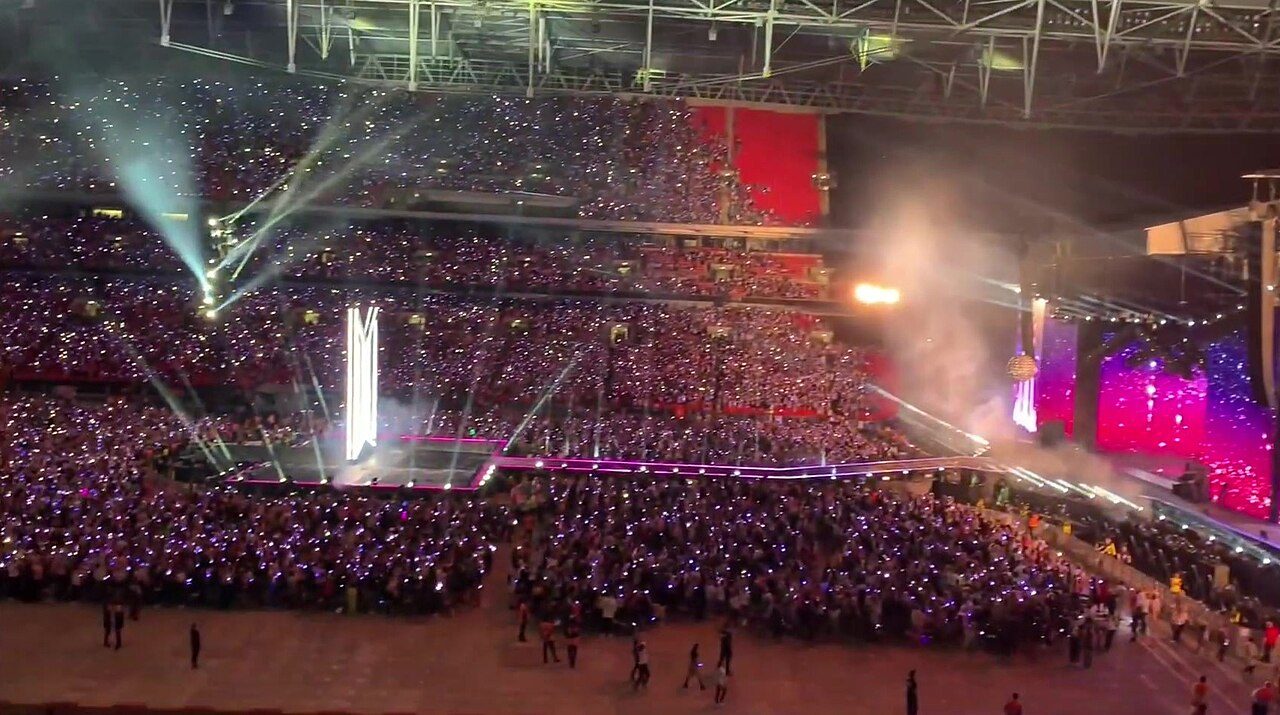
Photo: Sian Lilly / CC BY 3.0 via Wikimedia Commons
In 2019 a ticket to see BTS at Seoul's Jamsil Olympic Stadium cost 110,000 won, about $80. One man in Gyeonggi Province bought one and sold it for 3 million won. It was not a one-off. Between September 2018 and April 2026, police in Gyeonggi say, he bought and resold 8,967 tickets: a SEVENTEEN fan meeting (110,000 won in, 1.8 million out), a 2023 Bruno Mars show (250,000 won in, 1.2 million out), even a football friendly against Tottenham Hotspur. Total takings: 2.4 billion won, roughly $1.7 million. Police seized two commercial buildings, an apartment and 1.26 billion won in bank deposits when they announced his arrest in September.
The detail that matters is not the money. It is how he did it. He ran macro software, and he bought under the names of seven family members.
Britain is trying to solve the same problem from the other end. In November 2025 the government announced that reselling a gig ticket for more than its face value would become illegal. Asia has now run every version of that experiment, and the results point one way: a touting law only bites once the ticket carries the buyer's name. Everything else is a speed bump. And the name, it turns out, is something the fan pays for.
Three ways to stop a tout
There are really only three levers, and Asia has pulled all of them.
Ban the tool. South Korea's first move, written into its Public Performance Act, was to make buying tickets with macro programs a crime, punishable by up to a year in prison or a 10 million won fine. The United States did something similar with its BOTS Act in 2016. The weakness is obvious once you say it out loud: the crime is the software, not the resale. In a January 2024 report comparing seven countries, Korea's Record Label Industry Association argued that the country was close to ideal for touts, because only the method was illegal and Korean consumer law let buyers cancel tickets without penalty. The Gyeonggi case ran straight through that law for years.
Ban the price. Taiwan went further in 2023, amending its cultural industries law so that anyone reselling a performance ticket for profit faces a fine of 10 to 50 times the ticket price, with up to three years in prison for using bots. Korea copied the scale and widened it. Revisions passed by the National Assembly early in 2026 took effect at the end of August: resale above face value is now illegal however you bought the ticket, fines run from two to 50 times the resale price, profits are confiscated, and whistleblowers can collect up to half the fine, capped at 50 million won.
Britain's plan sits here too. Resale would be capped at the original price plus unavoidable fees, resale platforms would have their service fees capped and a duty to police listings, and the Competition and Markets Authority could fine a business up to 10% of its global turnover. The government's own numbers say the cap would save fans £112 million a year, about £37 per resold ticket, and move 900,000 tickets a year back to the primary market.
Bind the name. China took the blunt route. Since 2023, under a joint circular from the culture and public security ministries, any commercial show with more than 5,000 seats must sell and admit by real name: one identity document, one ticket, one show, and the name on the ticket has to match the person at the gate. At least 85% of tickets have to go on public sale, up from 70%, so promoters cannot quietly divert blocks to friends of the house.
Japan's version is subtler. Its Ticket Resale Prohibition Act, in force since 14 June 2019, punishes for-profit resale with up to a year in prison or a ¥1 million fine. But it only covers "specified tickets": ones the organiser has chosen to mark as non-resellable, fix to a date and seat, and tie to a buyer's identity. In other words, Japan wrote a price law that only switches on once there is a name.
Why the name does the work
A price cap is a rule about a transaction. To enforce it, someone has to see the transaction, and the touts' whole business model is making sure nobody does. Move the sale off the big platforms and into private messages, cash at the gate or a "free ticket, paid parking" listing, and the cap is unenforceable on its own.
Read Korea's new law closely and you can see legislators reaching for the name anyway. Ticket sellers and resale platforms now have to verify users' identities, keep reporting tools open, restrict suspicious listings and hand over records when asked, with fines of up to 5 million won if they do not. The headline is the 50 times fine. The engine is identity checking.
The Gyeonggi case shows why the check has to happen at the gate and not only at checkout. Seven family accounts meant seven real names, all of them legal on their own. A name on an order form stops nothing. A name that a steward compares with a photo ID, as China requires and as many Japanese arena tours now do, stops almost everything.
Britain has a working example in its own fields. Glastonbury has printed a registered photo of the ticket holder on every ticket for years, and only lets in the face that matches. On 4 October general tickets for 2027 sold out in 42 minutes at £408 each, and there is no meaningful tout market for them, because a Glastonbury ticket is worthless to anyone except the person in the picture. The only resale is the festival's own, in spring, at face value.
What the name costs
Here is the part the anti-tout campaigns tend to skip. Once a ticket is bound to a person, the ordinary fan who can no longer go has nowhere to take it.
Japan learned this the hard way. In 2017 three music industry bodies backed Chiketore, an official face-value resale service, as the legal alternative to touts. Sellers and buyers each paid fees of more than 10% of the ticket price, fans never really took to it, and it closed on 30 June 2025. That left Japanese fans with a strict anti-resale law, ID checks at the door, lottery-based sales that often run through paid fan clubs, and very few legal ways out of a ticket they cannot use.
The same machinery that stops touts also locks out foreigners. Big Japanese tours commonly require a Japanese phone number and address just to enter a ballot, which is why a J-pop fan in Manila or Mumbai can find a Tokyo arena show close to impossible to get into. Korea has its own release valve: that generous cancellation right the label association complained about is exactly what lets a genuine fan hand a ticket back.
And none of it touches what most angered British fans in 2024. The Oasis reunion fight was as much about the price set by the primary seller as about resale. A face-value cap protects face value. It says nothing about how high face value is allowed to go.
The ticket becomes a booking
Put the pieces together and you can see where live music is heading. A concert ticket is turning from a bit of property you own into something closer to an airline booking: issued in your name, checked against your passport, and changeable only through the company that sold it.
That is good news for fans who lose ballots to bots, and Korea's arrest of a man with 8,967 resold tickets shows the old system really was that bad. But it moves the fight. Britain's draft Ticket Tout Ban Bill was set aside in May's King's Speech for further consultation, while sport got a bill of its own. When it comes back, the question worth asking is not only how hard it punishes touts. It is who will run the official exchange where a fan can pass on a ticket in their name, and what that service is allowed to charge. Japan built one at more than 10% a side and watched it die. Whoever controls that exchange controls the secondary market, which is exactly the business the touts are in now.
Share this story