Deep DiveRonit Singh3 min read
10 Songs That Became Anthems for Change
As Delhi witnesses protests, we revisit ten songs that became the sound of resistance
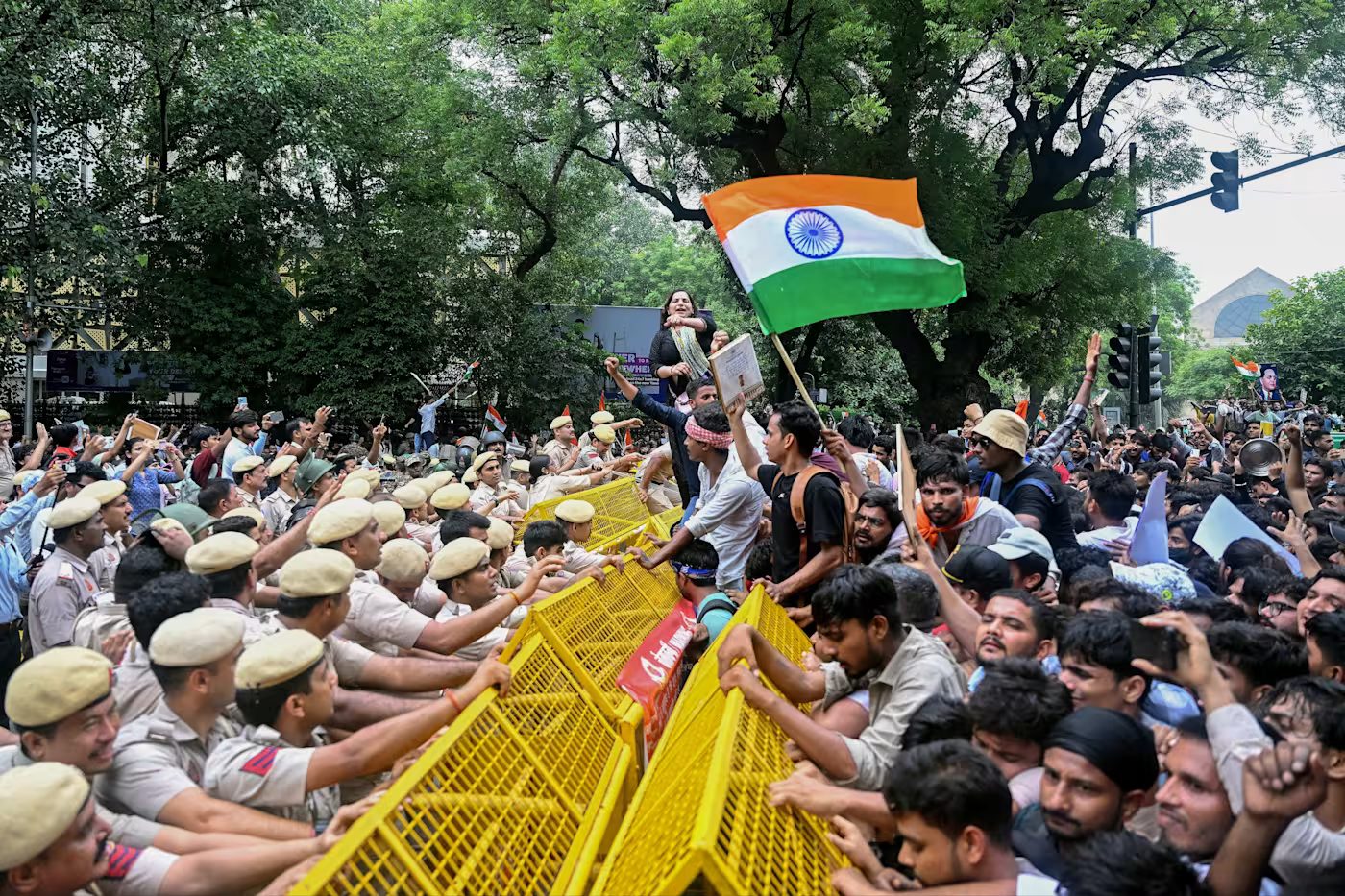
Protesters face lines of police across barricades in India’s capital © Arun Sankar/AFP/Getty Images
Today, as Delhi witnesses protests, it's hard not to think about the role music has played whenever societies find themselves at a crossroads. Across countries, decades, and generations, artists have turned uncertainty into poetry, frustration into rhythm, and hope into something people could sing together.
These songs weren't all written for the same cause. They don't belong to one ideology, one movement, or one country. What connects them is something much simpler: they became bigger than music.
Kendrick Lamar: "Alright" (2015)
By the summer of 2015, "We gon' be alright" had escaped the album it came from. It appeared at demonstrations, echoed through crowds, and became a phrase of resilience for a generation navigating grief, injustice, and uncertainty. Few songs in modern hip-hop have crossed that line from record to rallying cry so quickly.
Rage Against the Machine: "Killing in the Name" (1992)
Tom Morello once described Rage Against the Machine as a band that wanted to make music as politically confrontational as punk but as sonically massive as heavy metal. "Killing in the Name" did exactly that. More than thirty years later, its opening riff still feels like the sound of defiance before a single lyric is sung.
Divine & Dub Sharma: "Azadi" (2019)
Originally written for Gully Boy, "Azadi" quickly became something larger. Its central idea, freedom, was interpreted differently by different listeners. That's the hallmark of songs that endure: they create space for people to find their own meaning. It also marked a moment when Indian hip-hop moved from the margins into mainstream cultural conversation.
Marvin Gaye: "What's Going On" (1971)
Motown didn't want Marvin Gaye to release it. They thought it was too political, too unconventional, too risky. Gaye refused to back down, and the result became one of the greatest albums ever recorded. More than fifty years later, the questions he asked about violence, poverty, and compassion still feel painfully current.
Bob Dylan: "The Times They Are A-Changin'" (1964)
No artist is more closely associated with protest music than Bob Dylan, even though he often rejected the label himself. That's because the song isn't about one event. It's about the inevitability of change, which is why every generation seems convinced Dylan wrote it for them.
Indian Ocean: "Bandeh" (2001)
Indian Ocean never chased the mainstream. Instead, they built one of India's most devoted independent audiences through word of mouth and unforgettable live performances. "Bandeh" became one of the defining songs of that era, carrying themes of resilience, humanity, and quiet strength that continue to resonate today.
Public Enemy: "Fight the Power" (1989)
Commissioned for Spike Lee's Do the Right Thing, "Fight the Power" was designed to sound urgent. Chuck D once called rap "the Black CNN," and few tracks embody that idea better. It remains one of hip-hop's most influential statements on identity, power, and culture.
Bloodywood: "Dana Dan" (2022)
Long before Indian metal was receiving international attention, Bloodywood were building a global audience online. "Dana Dan" showed that heavy music could address corruption and social frustration without sacrificing its intensity. It also challenged stereotypes about what Indian music could sound like on the world stage.
Nina Simone: "Mississippi Goddam" (1964)
Nina Simone wrote the song after the murder of civil rights activist Medgar Evers and the bombing of the 16th Street Baptist Church in Birmingham, Alabama. Furious and heartbroken, she composed it in under an hour. Radio stations in parts of the U.S. refused to play it, but that only cemented its legacy as one of the boldest songs ever written.
Sam Cooke: "A Change Is Gonna Come" (1964)
Sam Cooke wrote the song after hearing Bob Dylan's "Blowin' in the Wind" and wondering why he hadn't written something that spoke so directly to the times. Inspired in part by his own experiences with racial discrimination, he created what many consider the definitive anthem of hope. Cooke never lived to see the song become iconic. He was killed just weeks before its release.
Why These Protest Songs Still Matter
Every generation inherits its own challenges. Every generation also creates its own soundtrack.
Some songs climb the charts. Others become part of history. They're sung in moments of celebration, uncertainty, grief, and hope. They remind us that music doesn't exist outside the world around it. It grows with it.
Years from now, people may forget the headlines. They'll probably still remember the songs.
Share this story