FeatureJane Shostak6 min read
Sweet Mother is 50, and Africa's favourite song still can't be counted
Its sales run from 3 to 15 million copies, depending on who you ask. On YouTube, an unofficial 2007 upload outdraws the label's own nearly 300 to one.
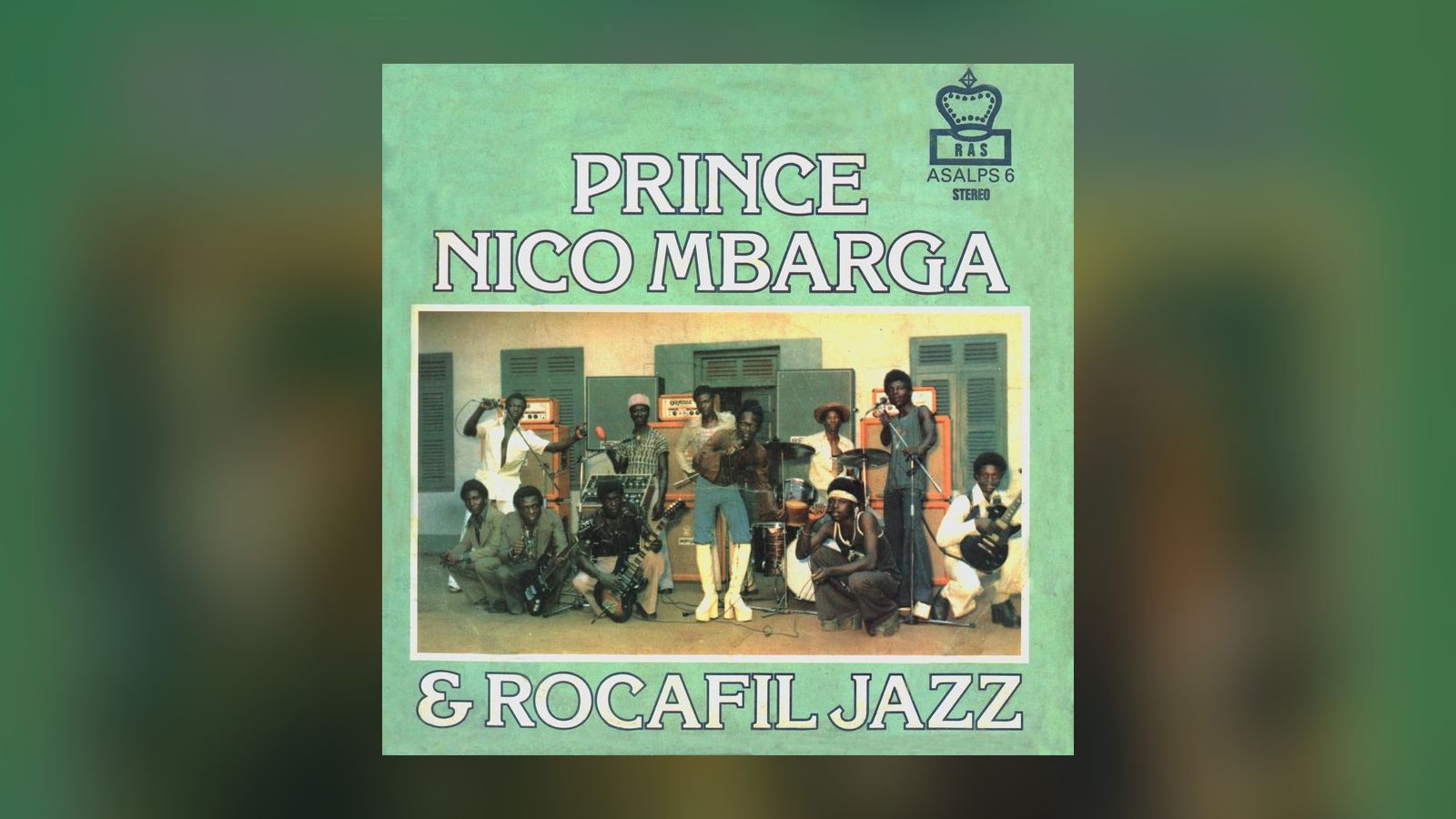
Artwork: Rogers All Stars
Ask how many copies Sweet Mother sold and you will get an answer somewhere between three million and fifteen million. Thirteen million is the number that gets repeated most, usually next to the claim that it outsold the Beatles. Nobody repeating it can show you where it came from, because nobody was counting.
Prince Nico Mbarga and his band Rocafil Jazz released Sweet Mother in Onitsha, the market city on the Niger in south-eastern Nigeria, late in 1976. Fifty years on it is still the song people across West and Central Africa play at birthdays, burials and Mother's Day, a son singing thanks in Nigerian Pidgin for "the suffer wey you suffer for me". At the end of 2004, a continent-wide listeners' poll run by the BBC's Africa service named it Africa's favourite song, ahead of Brenda Fassie's Vuli Ndlela, Fela Kuti's Lady and Franco's Mario.
The argument of this piece is simple. Sweet Mother became Africa's anthem through an economy of copies that nobody owned and nobody tallied, and that economy never really ended. It just moved. Half a century later the song's biggest counter still sits on someone else's upload, and the story of Nigerian pop since then, all the way to Afrobeats, is in large part the story of artists learning to own the counter.
A demo the majors called childish
Mbarga was born in 1950 in Abakaliki to a Nigerian mother and a Cameroonian father, and spent Nigeria's civil war years across the border in Cameroon, where he picked up the rolling, finger-picked guitar of Congolese rumba. That guitar is the hook of Sweet Mother: highlife's swing underneath, Kinshasa's sparkle on top, Pidgin English in the middle so that a listener in Lagos, Douala or Accra could follow every word.
EMI heard a demo of the song in 1974 and passed, finding it too childish. Other multinational labels working in Nigeria passed too. The record came out instead on Rogers All Stars, an independent label in Onitsha whose owner, known simply as Rogers, had heard Mbarga sing it live in town. The album's other songs tell you the band was a working dance outfit, not a novelty act: Aki Special, Christiana and Wayo In-Law all became West African party staples in their own right.
The irony is the whole story in miniature. The companies with the accounting departments said no. The company that said yes sat in one of the largest trading markets on the continent, where records were pressed, copied, resold and copied again faster than anyone could invoice them.
Everybody counted except the till
Sweet Mother spread the way cassettes spread in the late 1970s and 1980s: on market stalls, in bus parks, from shop counters with a dubbing deck behind them. As Nigeria's oil boom turned to bust, record shops made their money by copying tapes rather than selling pressed ones. Every one of those copies was a vote for the song, and almost none of them paid the man who wrote it.
Members of Rocafil Jazz later said they were underpaid and had never signed contracts. Mbarga himself took Rogers to court over royalties he believed were being held back; the case did not go his way, and the two men eventually made peace. Rogers has since acknowledged that he made mistakes trying to protect the song from bootleggers. With what did come in, Mbarga built a hotel called the Sweet Mother in Ikom, his home town near the Cameroon border, and played there on Sundays. He died in a motorcycle accident in Calabar in June 1997, aged 47.
So when someone tells you Sweet Mother outsold the Beatles, the honest reply is: maybe. The three million at the bottom of the range and the fifteen million at the top are not rival audits. They are guesses about a market that ran on trust and tape hiss, and the song's legend grew in exactly the space where the numbers should have been.
The counter moved to YouTube
Here is the part we did not expect when we went looking this week. On YouTube, the most-watched upload of the original Sweet Mother, with more than 9.4 million views, was posted in 2007 by an account called visualito. It is not Rogers All Stars and it is not the Mbarga family.
Rogers All Stars Records does run a channel, and it carries the song. Add up the five uploads of Mbarga's own recording that we found there and you get fewer than 33,000 views between them. The label has switched off embedding on its videos, so they cannot travel to blogs, forums or stories like this one, while the unofficial upload plays anywhere. The label channel's most-watched Sweet Mother, at almost ten million views, is not even Mbarga singing: it is a version by Louisiana Tilda, a former Rocafil member.
Streaming services tell a similar story in a different key. On Apple Music this week, Sweet Mother sits on at least six separate releases under four different rights lines: two marked ℗ 1976 Rogers All Stars, two more to Rogers All Stars Nig Ltd in 2016 and 2018, a 2022 single credited to a company called ABACUOS, and a 2011 compilation licensed through Sony Music in France. Every listener who presses play gets the same song. Every play gets counted somewhere different.
Meanwhile the family has started its own channel, PRINCE NICO MBARGA Official, where Mbarga's children perform the song their father wrote.
What the next generation fixed, and what it didn't
Set that beside Nigerian pop now. CKay's Love Nwantiti, a song that also travelled from Nigeria to the world on word of mouth, lives on CKay's own channel, where the official remix video has passed 641 million views. In the United States, where certifications are audited, the song was certified eight times platinum in March 2024. Its counter belongs to the artist and his label, and the numbers are public.
The wider figures point the same way. Nigerian artists earned more than ₦60 billion (about $44 million) in Spotify royalties in 2025 from 30.3 billion streams, Spotify's own annual payout figures show, and independent artists and labels took about 58% of that money. In 2025, Nigerian acts made up more than 80% of the tracks on Spotify's daily Top 50 in Nigeria. That is a market that can finally see itself.
It is not a solved one. As we reported this week, almost half of Nigerian artists in a recent survey earned nothing from their music last year. Collecting the money a song earns on radio and in public spaces has been its own long fight: the Nigerian Copyright Commission says the approval of one rival society, COSON, lapsed in May 2019, leaving the Musical Copyright Society of Nigeria as the only approved collecting body for music and sound recordings. A song played at a million weddings needs someone legally entitled to ask for the fee, and for years that question had two answers.
The anthem that belonged to everyone
There is an uncomfortable thought underneath all this. The cassette economy that cheated Mbarga is also why we know his song. No major label wanted Sweet Mother, so the market distributed it, copy by copy, across a continent where the record industry barely reached. The pirates did the marketing nobody paid for. A legally tidy Sweet Mother, sold only as licensed vinyl, would probably have stayed a regional hit, like I No Go Marry My Papa before it.
That is why the fiftieth birthday deserves more than another round of "it outsold the Beatles". The useful tribute would be a count: one catalogue, one set of rights lines, one channel that plays the original anywhere and pays the people it should. The song already belongs to everyone who has sung it at a funeral or a fortieth birthday. Fifty years on, it could also belong, on paper and in the royalty statement, to the family of the man who wrote it.
Up next
83% of Nigerian artists say streaming made their careers better. Almost half earned nothing last year
A five-country survey of working musicians found the world's most upbeat artists in Nigeria, and its poorest. The gap says a lot about what "better" means.
Share this story