FeatureNatalia Pedroza7 min read
The Latin Grammys decide what is Latin by counting words. Here is how the 60% rule works
Diljit Dosanjh plays the Latin Grammys on Thursday, yet his Punjabi verses could never compete there. A lyric count draws the line, not a beat or a passport.
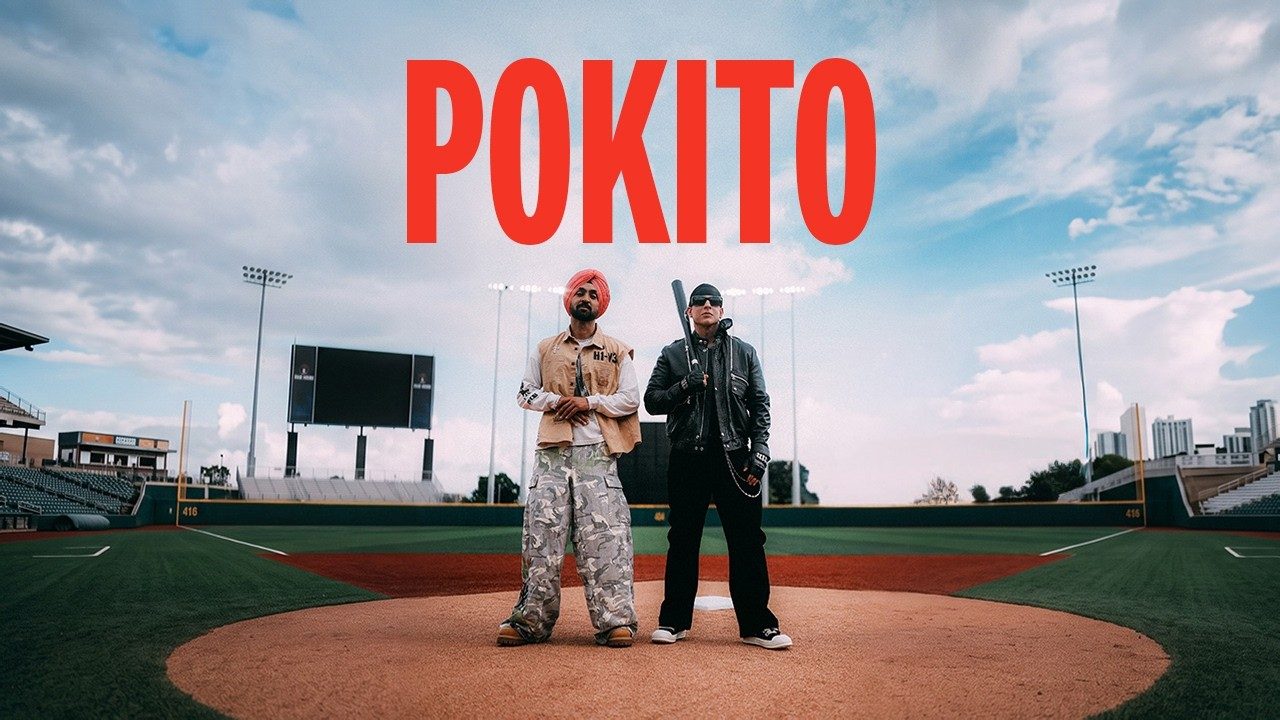
Image: Daddy Yankee, POKITO official video / YouTube
On 30 October, Daddy Yankee put out a song called "POKITO". It is a reggaeton record with a bhangra spine. Diljit Dosanjh, the Punjabi singer who has sold out BC Place in Vancouver and plays Ahmedabad's Narendra Modi Stadium on 21 November, sings his verses in Punjabi. Daddy Yankee answers in Spanish. The hook, "poquito a poquito", sits in the middle and belongs to both of them.
On Thursday 12 November, both men are on the bill at the 27th Latin Grammy Awards in Las Vegas. The Latin Recording Academy named Diljit among its final wave of performers on 5 November. He can sing there. Whether a song like "POKITO" could ever be nominated there is a different question, and the answer has nothing to do with how it sounds.
The Latin Grammys do not define Latin music by its rhythm, its genre or the passport of the person singing it. They define it by counting the words. The number that decides it is 60, and once you know how that count works, you can predict who gets onto the ballot and who only gets onto the stage.
The rule, in plain numbers
Everything below comes from the Academy's own rules and guidelines for this year's awards, a 102-page document that most fans never open.
The accepted languages are Spanish, Portuguese, and the "recognized languages, dialects, or idiomatic expressions of Ibero-America", which the rulebook says takes in the regional and indigenous languages of Latin America and the Iberian Peninsula. Read plainly, that covers Catalan and Galician as well as Quechua or Nahuatl. It does not cover English, Punjabi, Korean or Italian.
A song with lyrics qualifies if at least 60% of those lyrics are in accepted languages. Several accepted languages can be added together, so a verse in Spanish and a chorus in Portuguese both count.
Albums are tested track by track. At least 60% of the songs must pass the 60% test, and only the songs that pass count towards the minimum length of five tracks and 15 minutes, or 30 minutes for a shorter tracklist. A song that fails stays on the album. It just stops counting.
Instrumentals have their own version. A track counts as instrumental if at least 60% of its running time has no singing, and whatever vocals it has must themselves be 60% in an accepted language.
Who does the counting? Screening committees of music professionals, who meet after entries close. The rulebook is explicit that they do not judge quality. Their job is procedural: check release dates, check the language, move entries to the right category. Only after that do the voting members get their ballots, with up to 15 genre categories each plus the four big ones, all tabulated by Deloitte.
The bar has gone up. When the Academy announced its nominees in September 2022, its release described the minimum as 51% of the lyrics. This year the general standard is 60%, across 60 categories in 22 fields. In 2022 there were 53 categories.
Inside the club, the count gets stricter
Clearing 60% gets you through the front door. Many rooms inside have their own rules.
The pop, rock, alternative and tropical fields take only recordings in Spanish or the languages of Spanish-speaking America. The regional Mexican field takes only vocal recordings in Spanish. Portuguese has its own field, eight categories from samba and pagode to sertanejo and Portuguese-language urban music, each asking for 60% of the lyrics in Portuguese. The singer-songwriter field is the one that welcomes all the accepted languages at once.
That is how a single album can sit in several rooms at once. Rosalía's LUX, which she sings in 13 languages, from Spanish and Catalan to German, Ukrainian and Japanese, is nominated for Album of the Year and for Best Alternative Music Album. Its Portuguese duet with the fado singer Carminho, "Memória", is nominated separately for Best Portuguese Language Song. That nomination tells you something the screeners had to establish: at least 60% of its lyrics are Portuguese. The rest of the album was weighed song by song, and enough of it passed, in Spanish and the other accepted languages, to carry the whole record.
The same logic puts Anitta's EQUILIBRIVM, a record sung in Portuguese and built on samba, axé and funk, in this year's Album of the Year race next to Spanish-language records from Medellín, Hermosillo and Buenos Aires. Brazil gets in through Portuguese, not because anyone ruled that Brazilian music is "Latin" in feel.
Why a Punjabi verse cannot be counted
Now run "POKITO" through the machine. Its eligibility window would be next year's, since this year's closed on 31 May 2026. The beat does not matter. Daddy Yankee being reggaeton's best-known pioneer does not matter. What matters is the lyric sheet. If Spanish makes up at least 60% of the words, the song can be entered in Record of the Year and in the urban categories. If Diljit's Punjabi verses take more than 40%, it cannot be entered in any of them, however hard the bass hits.
Diljit himself has a second wall. The Best New Artist rules exclude any artist "whose public identity is primarily established in a language other than Spanish or Portuguese" or the other accepted languages. A Punjabi superstar, however new he is to Latin audiences, is shut out of that category by definition. He has also put out far more than the three albums or 25 singles the category allows.
None of this is unique to him. Diljit's January single with the Colombian star J Balvin, "Señorita", mixed Punjabi with Spanish and came out inside this year's window. It is not among the nominees. Kacey Musgraves offers a cleaner test. Her Middle of Nowhere Vol. 2: Tex Mex Tapes, out on 15 January 2027, has 16 songs, four of them sung entirely in Spanish. That is 25% of the tracklist against a requirement of 60%, so the album cannot be entered. Her Spanish re-recording of "Uncertain, TX" with the Texas norteño group Intocable, released on its own on 5 October, is a different matter. As a single it is tested alone, and on the rules as written it can be entered for Record of the Year.
The rule cuts the other way too. A Spanish-language song by an artist from anywhere can compete. The test is the words, never the singer's birthplace.
The Grammys count differently
The Recording Academy in Los Angeles, which runs the Grammys, is now writing language rules of its own, and its rulebook for the 69th Grammys, whose nominations arrive on 16 November, shows how much the number matters.
Its new Best Latin Song award asks for "at least 51% of the lyrics" in Spanish. Portuguese does not count, which drew complaints from Brazil when the category was announced in June. Its Latin pop album category goes further and accepts records with more than 50% Spanish lyrics or music that is "primarily of a Latin genre in style", but it adds "excluding Brazilian music" in brackets.
Its other new category, Best Asian Pop Music Performance, does not count at all. It asks for "meaningful use of one or more Asian languages", rules out "isolated words, adlibs, or brief phrases", rules out songs entirely in English, and says that "the musical style is determinative of eligibility, not the ethnicity or nationality of the performer(s)". There is no percentage. A screener decides what meaningful means.
So the same recording can land in different places depending on which academy is counting. In Miami's academy, Portuguese is Latin. In Los Angeles, for a Latin songwriting award, it is not. At the Latin Grammys, a style is never enough. At the Grammys, for Latin pop, style alone can carry a record in.
And at home, the American industry has its own split. As we showed when Bad Bunny won Album of the Year, the RIAA's Latin certification program covers records with more than half their lyrics in Spanish and pays out plaques on a scale 6% the size of the main one.
The count is the point, and it has a cost
It would be easy to call the 60% rule a fence. We think it is closer to a definition, and a defensible one. Latin music has no single rhythm. Bachata, tango, sertanejo, corridos tumbados, cumbia villera and Catalan art pop share almost nothing on the dance floor. What they share is language, so the Academy measures language. The alternative, a panel judging what "sounds Latin", would hand the decision to taste and to whoever sits on the panel. A word count is crude, but anyone can check it.
The cost shows up in exactly the records that are making Latin music global right now: the cross-language duets. "POKITO" is a Puerto Rican legend and a Punjabi star meeting halfway, and the rulebook asks them who sang more. Rosalía can wander through 13 languages because enough of her record stays home. A duet split down the middle does not have that cushion.
Tomorrow night, Diljit Dosanjh will stand on the biggest stage in Latin music. The Academy wanted him there. The rules decide, separately and without any malice, whether a song like his could ever be in an envelope. For "POKITO" the answer does not depend on the beat, the views or the turban in the video. It depends on whose verse is longer.
Up next
How to watch the Latin Grammys on 12 November, with the full performer list and two tributes
The 27th Latin Grammys air live from Las Vegas on Thursday. Here is the final performer list, the Willie Colón and José Alfredo Jiménez tributes, and when to tune in.
Share this story