FeatureBeliz Aytekin7 min read
Angèle's Instinct rides a Belgian line: French voices over Flemish dance machines
Out today, Angèle's third album was read in France as a pop star going techno. From Brussels it looks like a homecoming, on a line from new beat to Stromae.
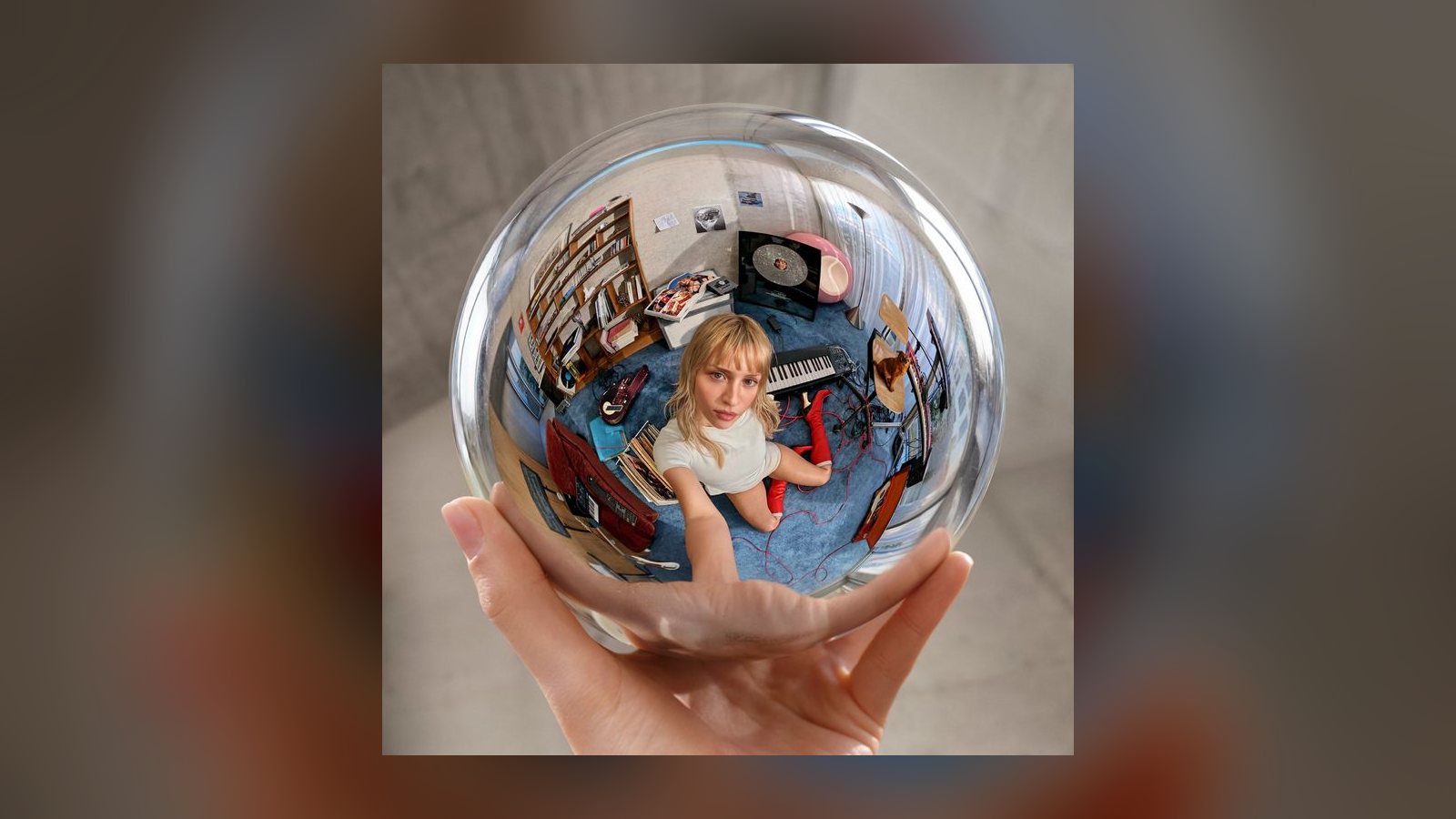
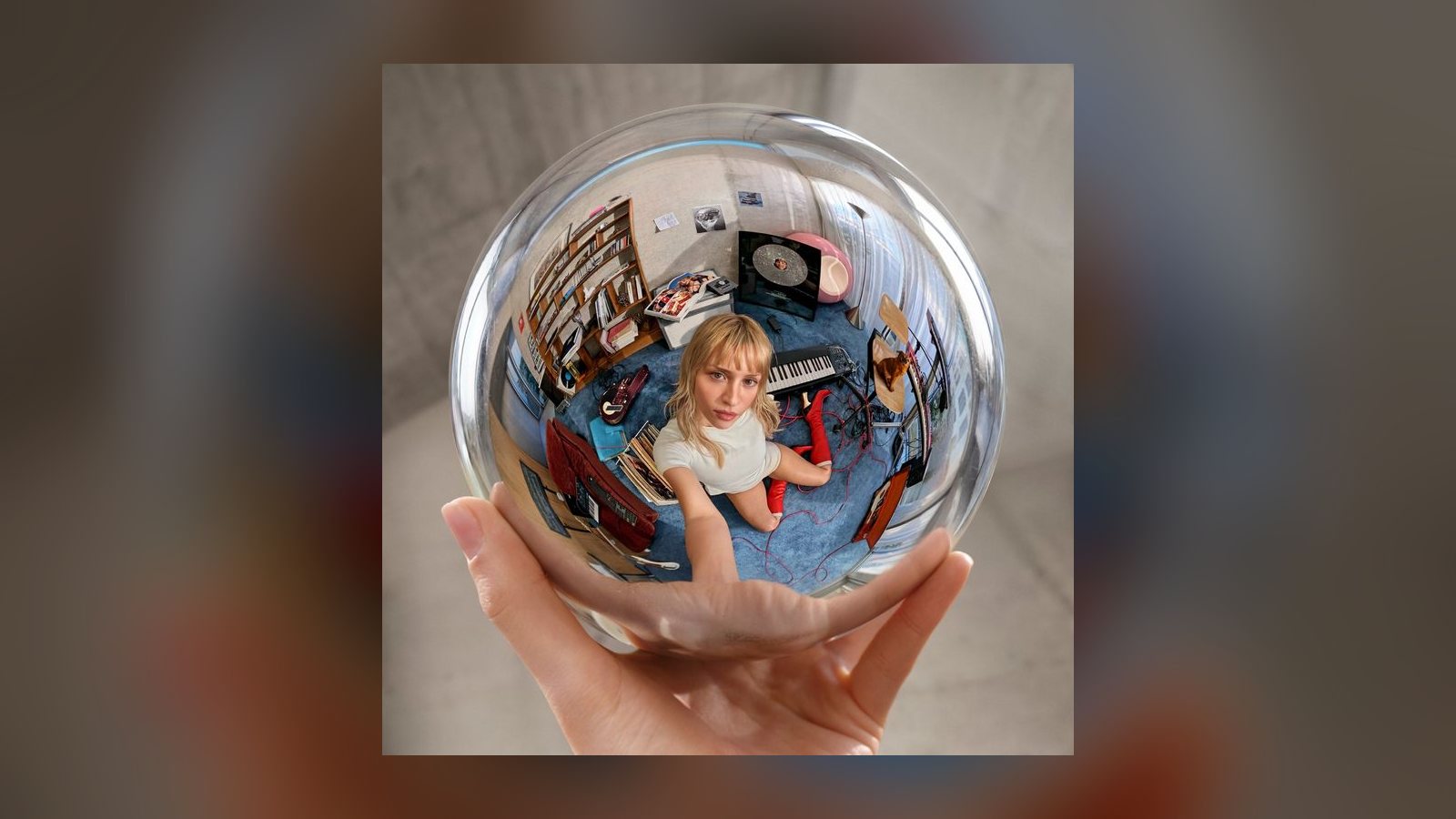
Artwork: Angèle / GGL Records
On the night of 26 February, about 10,000 people stood in the Place de la Monnaie in Brussels and watched a pop video play across the front of an opera house. The song was "What You Want", Angèle with the French duo Justice, and La Monnaie projected its premiere on its own façade. It is a loaded building for a Belgian. In August 1830 a performance there of Auber's opera La Muette de Portici spilled into the street and became the revolt that made the country.
Angèle's third album, Instinct, is out today, 16 October 2026. Thirteen tracks, her first full album since Nonante-Cinq in 2021, with Justice on "What You Want", Soulwax on "Trop", and Caroline Polachek and SebastiAn on "Love Triangle". We set out the full tracklist in our guide to the record.
Seen from Paris, the campaign has been read as a turn: the Brussels piano-pop star of "Balance ton quoi" going to the club. The video for "Dis-le" borrowed the look of free-party raves just as France was writing tougher penalties for unlicensed ones into law, up to two years in prison and a €30,000 fine for organisers, and the clip drew criticism there. Our argument is that the French reading has the direction wrong. Instinct is not Angèle leaving home. It is Angèle stepping onto the oldest line in Belgian pop, the one where French-speaking voices ride dance machinery built on the Flemish side of the language border.
A record played at the wrong speed
Belgium is split by language: Dutch-speaking Flanders in the north, French-speaking Wallonia in the south, and Brussels, mostly francophone, in the middle as a bilingual island. For forty years the country's most famous clubs have mostly been in the north, and they have been loud.
The founding story every Belgian DJ tells goes like this. Around 1987, at the Ancienne Belgique club in Antwerp, a DJ known as Dikke Ronny put on "Flesh", a 45 rpm electronic body music single by the Belgian group A Split-Second, at 33 rpm with the pitch pushed up. The result was slow, heavy and strange, and the floor took to it. That accident became new beat. Clubs like Boccaccio, in Destelbergen just outside Ghent, made it a weekend religion, labels like Antler and its offshoot Subway pressed it by the crate, and the compilation New Beat Take 1 sold around 40,000 copies in Belgium alone.
New beat burned out fast, but its people did not. Jo Bogaert, a producer from Aalst in East Flanders who had made new beat records under other names, formed Technotronic in 1987. In September 1989 he released "Pump Up the Jam", and it went to number two in both the US and the UK.
The detail that matters is whose voice it was. The face on the sleeve and in the video belonged to Felly Kilingi, a Congolese-born model. The rap belonged to Ya Kid K, a Congolese-Belgian teenager who was not credited at first. Belgium's first worldwide dance hit was a Flemish machine looking for a voice from somewhere else, and finding it in Belgium's Congolese diaspora.
Ghent's record room
The second station on the line is a family. David and Stephen Dewaele grew up in Ghent as the sons of Zaki, a radio and TV presenter, surrounded by his records. They formed Soulwax in Ghent in 1995, and as 2manydjs they turned DJing into an argument that any two records could be made to speak to each other.
Their 2002 mix As Heard on Radio Soulwax Pt. 2 shows the method and the cost. They asked rights holders for 187 tracks. 114 were cleared, 62 refused, 11 could not be traced, and 45 made the finished album. That is a studio's patience applied to pop, and it is the patience the brothers later built a building around: DEEWEE, the label they founded in 2015, runs out of their Ghent studio, where a conference room doubles as a library of more than 60,000 records.
What comes out of that building is usually a francophone or multilingual voice over Flemish machinery. Charlotte Adigéry, a Ghent-based singer of Martinican heritage, made Topical Dancer with Bolis Pupul there; it came out on DEEWEE on 4 March 2022, co-written and co-produced by Soulwax, and she sings it in French, English, Dutch and Creole. It reached number two on the Flemish album chart. Soulwax's name on an Angèle track is not a cameo from the club world. It is the house that has been building this exact kind of record for a decade.
Brussels in the middle
The third station is Stromae, and he is the proof that the trick could go to number one everywhere. Paul Van Haver was born in Brussels in 1985 to a Rwandan father and a Flemish mother, grew up francophone, and named himself by flipping "maestro". In September 2009 he released "Alors on danse", a hip-house record sung in French about work, debt and dancing because there is nothing else to do. It went to number one in Flanders and Wallonia at once, then in France, Germany, Italy, the Netherlands and across most of Europe.
That double number one is the whole idea in one chart. A song with French words and a dancefloor beat was the one thing both halves of the country agreed to buy.
Angèle came up inside the same arrangement. She was born Angèle Van Laeken in Uccle, a Brussels commune, in 1995, the daughter of the singer Marka and the actress Laurence Bibot, and the sister of the rapper Roméo Elvis. She trained at the Jazz Studio in Antwerp, a Flemish city, before joining her father's band. Her first two album titles are Belgian words that a French listener has to look up: Brol (2018), Brussels slang for a happy clutter of stuff, and Nonante-Cinq (2021), which is how Belgians, not the French, say 95. "Tout oublier", her duet with her brother, sat at number one in Belgium for nine weeks, breaking a record Stromae had held for a Belgian artist.
So the French framing of her as a Paris pop star who happens to come from Brussels was always slightly off. She has been signalling where she is from in the titles of her records since the first one.
Instinct on the line
Look at how this album was rolled out and the map is plain. In July 2026 Angèle walked on unannounced during Amelie Lens's set at Dour, the festival in Wallonia's Hainaut province, to preview "run". Lens is the Flemish techno DJ and producer from Vilvoorde, born in 1990, who released her first track in 2016 and now runs her own EXHALE label. "run" came out on 7 August, and Angèle is the only featured guest on Lens's debut album AURA. Then the album itself: Soulwax from Ghent on "Trop", and the whole record self-produced with her longtime collaborator Tristan Salvati.
Justice and SebastiAn are the French part of the story, from the Paris dance scene that grew up around the Ed Banger label in the 2000s, and they matter. But Belgium heard "What You Want" first as one of its own. The single held number one on the francophone Ultratop chart for more than two months in the spring and spent 26 weeks on it. "Dis-le" and "Une seule vie" have done less, and Belgian radio has played them less. The live audience has not wavered: her two Instinct Tour nights at the ING Arena in Brussels on 20 and 21 March 2027 are sold out.
We are not reviewing Instinct here; it has been out for hours. What we can say from its credits and its rollout is where it sits. Its guest list reads like a Belgian dance history in miniature: a new beat descendant in Lens, a Ghent studio in Soulwax, and a Brussels singer doing what Ya Kid K and Stromae did before her, carrying French words over a northern beat.
The border as a supply line
In Belgian politics the language border is a wound. It decides which schools, which broadcasters, which governments a citizen gets, and it has left the country without a federal government for long stretches. In Belgian music it has worked the other way. Flanders built the clubs, the labels and the machines; Brussels and Wallonia supplied voices that could sell in France, the biggest French-language market in the world. Neither half could have exported much alone.
That is why the rave controversy around "Dis-le" landed so oddly at home. In France, a pop star in rave clothes looked like a costume. In Belgium, a pop star singing over a techno kick is the national product, and has been since someone in Antwerp played a record at the wrong speed. Angèle has not gone looking for the club. She has gone back to the room her country's pop was built in, and brought the opera house crowd with her.
Share this story