FeatureSam Grizelj7 min read
Airwaves sells Iceland in English. At home, the island raps, and streams lullabies
As Iceland Airwaves opens, the scene Iceland's 396,500 people actually play: rap in Icelandic, a boy band born on TV, and a 2012 lullaby album on top.
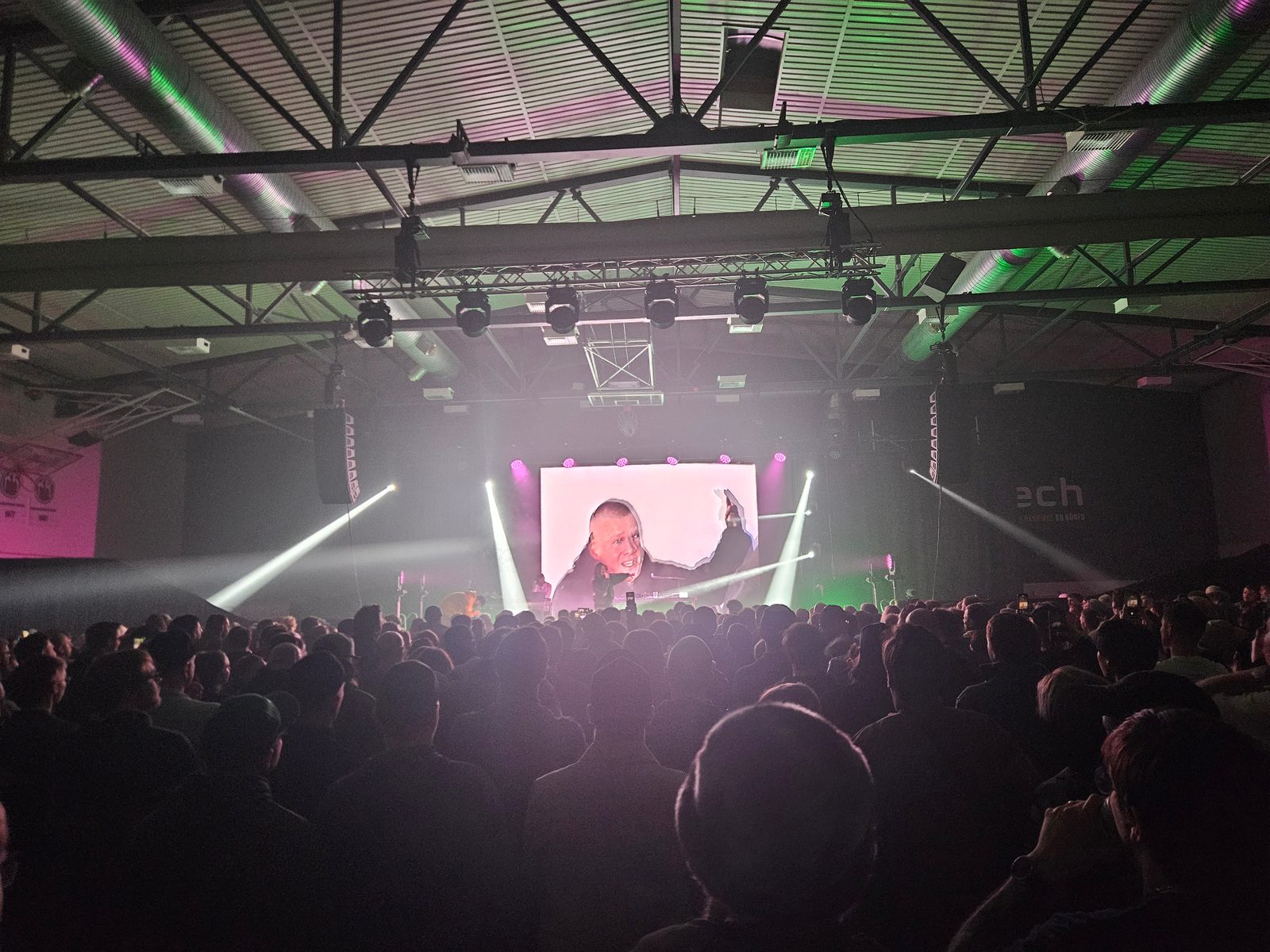
Photo: Cinquantecinq / CC0 via Wikimedia Commons
On 1 November, the most played song on Spotify in Iceland was "Dvel ég í draumahöll", a lullaby. So was the second, the third, the fourth and the fifth. Fifteen of the top 20 places on the country's daily chart belonged to one record: Vögguvísur, a collection of old Icelandic cradle songs that Hafdís Huld released in June 2012. Tate McRae was sixth. Mariah Carey, warming up for December, was 16th.
This week the world's idea of Icelandic music flies in for Iceland Airwaves, which fills downtown Reykjavík from 5 to 7 November with 107 acts, plus Shygirl, Daði Freyr and The Streets as special shows at Harpa and City Hall. Most visitors arrive with a picture built from Björk, Sigur Rós, Of Monsters and Men and, lately, Laufey: glacial, cinematic, and mostly in English. That Iceland is real. It is just not the one Icelanders play when nobody from abroad is listening.
At home, Iceland is a rap country that sings its children to sleep in Icelandic, and both habits come from the same place. A language spoken by fewer than 400,000 people cannot be exported, so the music made in it answers to nobody but the people who speak it. That is why the home scene looks so different from the export one, and why it is the more interesting of the two.
The lullaby that outplays everyone
Start with the numbers, because they are strange. Tónlistinn, Iceland's official chart, counts physical and download sales plus Spotify plays converted into units, and Spotify carries up to 95% of the country's digital music revenue, by the record industry's own estimate. In the analysis of the 2025 year-end chart published in January by Iceland Music, the country's music office, Vögguvísur was the best-selling album of the year, and it outsold the next three acts combined.
On Spotify's own weekly Iceland chart, kept since April 2013, "Dvel ég í draumahöll" has piled up just under nine million streams in its chart weeks alone. Statistics Iceland counted 396,500 residents at the end of June. That is about 23 plays for every person on the island, from one song, most of them pressed at bedtime by parents with a phone in one hand and a baby in the other. The record now has a 20-track tenth-anniversary edition from 2022, and 15 of its songs sit in those all-time chart totals above "Shallow", "Blinding Lights" and every KALEO song.
The detail that makes it an Icelandic story is who sings it. Hafdís Huld joined GusGus at 15, when the Reykjavík collective was founded in 1995, and toured the world with them: about as export-facing as Icelandic music got in the 1990s. Her biggest work turned out to be the opposite, a quiet album of songs every Icelandic grandparent knows, which no playlist abroad was ever going to pick up. It did not need to. It needed the roughly 4,400 babies born in Iceland each year, and their parents.
A rap scene built on postcode 110
The rest of the chart belongs to rap. In the same 2025 analysis, 15 of the year's top 20 songs were by Icelandic artists, and every one of those 15 was in Icelandic and was rap or featured a rapper. Seven were rap duets. More than half of the Icelandic albums in the top 20 were rap albums, and of the Icelandic songs in the top 100, 92% were in Icelandic. English-language Icelanders, Laufey and KALEO among them, are a small minority on their own home chart.
It was not always this way. Through the 1990s Reykjavík rap was mostly delivered in American English, and the act that went furthest abroad, Quarashi, kept rapping in English all the way to a Columbia Records album, Jinx, in 2002. The turn came from a crew named after a postcode. As 110 Rottweiler hundar, after the 110 Reykjavík district they came from, they won Músíktilraunir in 2000, the national battle of the bands that also launched Mammút in 2004, Agent Fresco in 2008 and Of Monsters and Men in 2010. Renamed XXX Rottweilerhundar, they put out a self-titled debut in 2001, rapped in Icelandic, and it sold like nothing in the genre had. The scene followed the language, not the other way round.
Twenty-five years later the line runs through Emmsjé Gauti, Úlfur Úlfur, Herra Hnetusmjör and Birnir. Herra Hnetusmjör (the name means Mr Peanut Butter) has two songs, "Upp Til Hópa" and "Elli Egils", among Iceland's 30 most streamed chart hits since 2013. "Elli Egils" came out in August 2024 on KBE kynnir: Legend í Leiknum. Birnir's "Já ég veit" sits just above them. The photo at the top of this page shows where this music actually lives: Birnir on 24 March this year at KR-heimilið, the clubhouse hall of a Reykjavík football club, packed to the back wall.
ICEGUYS, and a scene small enough to know itself
Nothing explains how compact this scene is better than ICEGUYS. In 2023 five famous men formed a boy band: the rappers Herra Hnetusmjör and Aron Can, the pop singers Friðrik Dór and Jón Jónsson, and Rúrik Gíslason, who was in Iceland's squad at the 2018 World Cup. Their debut single "Krumla" landed on 21 July 2023. In October a comedy series about the band trying to become stars began on Sjónvarp Símans, the TV service of the telecoms company Síminn, created by Hannes Þór Halldórsson, the national team goalkeeper who saved a Lionel Messi penalty at that same World Cup and also directs film.
A joke band became a real one. ICEGUYS have three songs on the 2025 year-end song chart, their 2024 album 1918 sits on the album chart, and they have sold out three nights at Kaplakriki, a sports hall in Hafnarfjörður. In a country this size, the rapper, the footballer, the goalkeeper and the TV audience are a few degrees apart, and the music industry is concentrated to match. Alda Music, founded in 2016 by the musicians Sölvi Blöndal and Ólafur Arnalds and bought in 2022 by Universal's distribution arm Ingrooves, released or distributed 87.5% of the Icelandic albums in last year's top 20, Hafdís Huld's lullabies included.
That concentration has a cost, and Iceland Music's own figures say so plainly. No song by an Icelandic woman reached the 2025 top 20. Of the Icelandic albums in the top 100, 20.7% were by women, and Hafdís Huld was the only woman in the top 10. Rap made Icelandic young again, but on the chart it has mostly done so in men's voices. And only 7.5% of the Icelandic albums in the top 100 were released in 2025; every one of those was rap, which tells you where the new energy is and how narrow it has become.
Two Icelands, one week
There is one more number that makes sense of all this. Icelandic music accounts for about 19% of what Iceland streams. The other four fifths is the same global pop everyone else hears. So the home scene is not a wall against the world; it is a thin, loud layer on top of it, the songs a small country chooses to keep in its own words: what you rap at a football club on a Tuesday night, and what you sing to a baby at 3am.
Airwaves does let some of that layer in. Birnir, Emmsjé Gauti and Úlfur Úlfur are on this year's bill, alongside Mammút and Agent Fresco, both old Músíktilraunir winners. A visitor who only follows the English-language names will go home with the Iceland they came for. One who walks into a rap set will hear something stranger: a crowd shouting every word of a language almost no one outside the room can follow, and not missing the rest of the world at all.
The export Iceland was built to travel. The home Iceland was built to stay, and it turns out a scene that only has to please 396,500 people can afford to be itself, right down to topping the charts with a lullaby.
Share this story