FeatureBeliz Aytekin7 min read
Kanye's Power runs on a 1969 song about napalm. Its drummer died this week
Michael Giles co-wrote 21st Century Schizoid Man, the scream inside Power. With him gone, Robert Fripp is the last of its five writers, and the song still means two things.
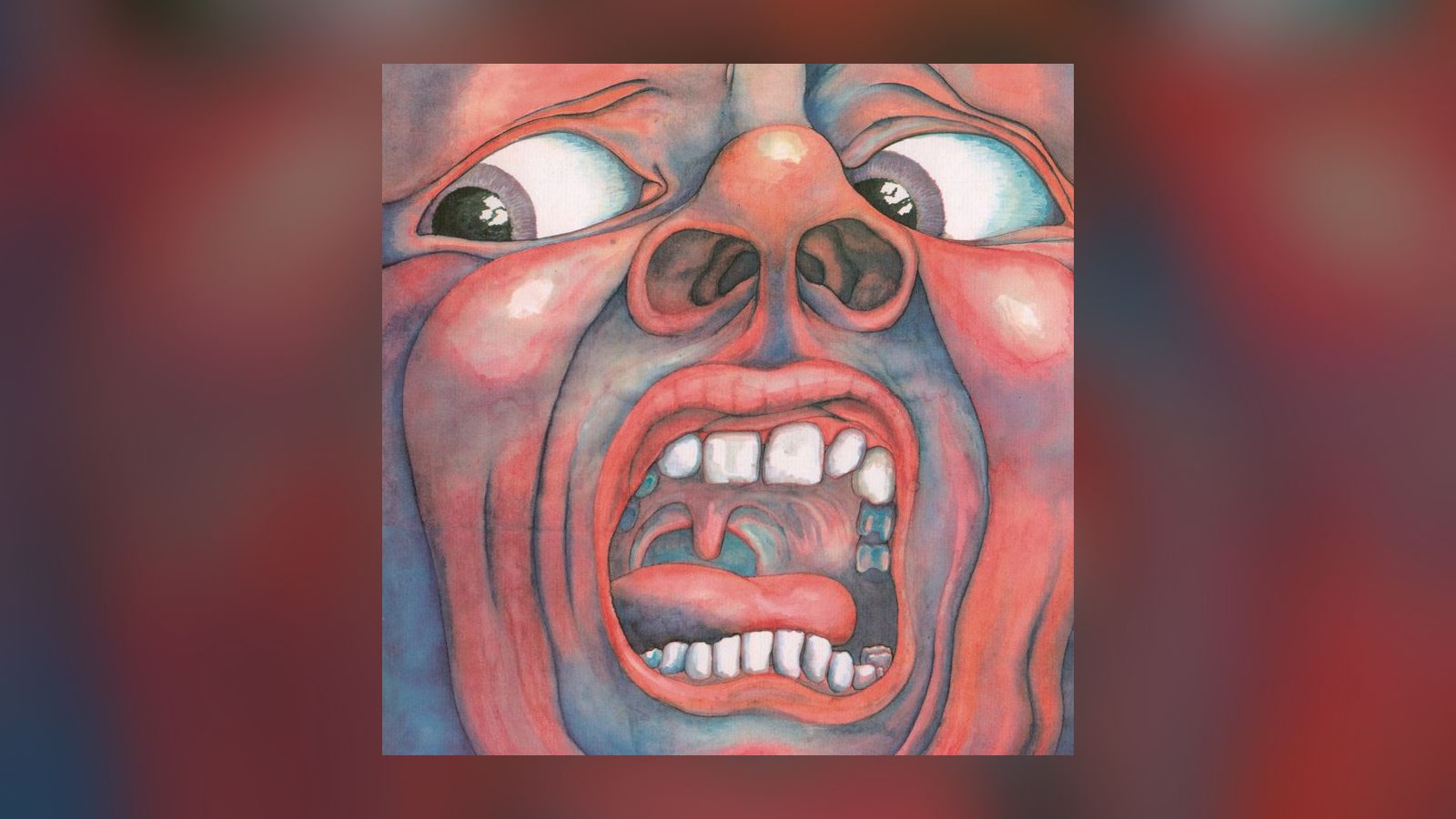
Artwork: Barry Godber / Discipline Global Mobile
For a few seasons, AFC Bournemouth's players walked out to the same record. Eleven men in red and black, a Premier League crowd on its feet, and over the top a distorted English voice from 1969 shouting five words: "21st century schizoid man." Most people in that ground knew it as Kanye West's Power. Very few knew they were singing a line from a song about napalm.
The man who drummed on that song died on Monday. Michael Giles, a founder of King Crimson, died on 23 November 2026, aged 84, the band's label Discipline Global Mobile announced. He was a full member for barely a year. That year was enough to put his name on one of the biggest rap singles of the 2010s.
Here is the thread we want to pull. 21st Century Schizoid Man was written by five people as a scream against a war. Power took five words of it and turned them into the sound of winning. With Giles gone, Robert Fripp, now 80, is the last of those five writers alive, and the song is still pulled between the two meanings: the one its writers gave it, and the one a sample gave it.
Five names on one scream
King Crimson grew out of a trio. In 1968 Michael Giles, his brother Peter on bass and a young Dorset guitarist called Robert Fripp put out a whimsical, barely noticed album as Giles, Giles & Fripp. Within a year the trio had become something else: Ian McDonald on saxophone, flute and keys, Greg Lake singing and playing bass, Peter Sinfield writing the words and running the lights, Giles and Fripp at the core.
They broke through before they had a record out. On 5 July 1969 King Crimson opened the Rolling Stones' free concert in Hyde Park, two days after the death of Brian Jones, in front of a crowd that estimates put somewhere between a quarter and half a million. They started with Schizoid Man. A month later, across sessions on 1, 4 and 20 to 21 August, they cut it for their debut, and In the Court of the Crimson King came out on Island Records on 10 October 1969. It went to No. 5 in the UK.
Listen to what the band actually built. It is seven minutes long. The riff is played by guitar and saxophone in unison, heavier than almost anything else in London that year, and then the middle section, Mirrors, turns into a race: a jazz rhythm section running at full tilt while the whole band slams into stop-start breaks together. That is Giles's song as much as anyone's. A drummer who can hold that together while it changes direction every few bars is the reason it sounds like a machine about to come apart.
The words are Sinfield's, and they are not subtle. "Politicians' funeral pyre / Innocents raped with napalm fire." This was 1969, with the US at war in Vietnam and the evening news full of it. The credit says what the band believed: music by Fripp, McDonald, Lake and Giles, words by Sinfield. Five people, one scream.
Hawaii, 2010
Forty years later the song turned up in a very different room. The producer Symbolyc One, known as S1, had made a beat on King Crimson's vocal hook, first meant for the Chicago rapper Rhymefest. Kanye West heard it and kept it. S1 has described being flown out to Hawaii, where West was making My Beautiful Dark Twisted Fantasy after the storm over his interruption of Taylor Swift at the 2009 VMAs, and finding a version already recorded, then a month later the beat changed again. He has said there were eight or nine versions of the song.
What came out, first on US radio on 28 May 2010, was a collage. Under West's verses sit three records: King Crimson's hook; a piece of It's Your Thing, the Isley Brothers' 1969 hit, in a cover by the funk band Cold Grits; and Afromerica, a French disco single by a group called Continent Number 6. Two of the three songs under Power were written in 1969. The official writing credit runs to 21 names, and five of them are King Crimson's.
West has called Power superhero theme music, a song meant to make you feel invincible. That is the flip. Lake's voice in 1969 was describing a man broken by the century he lived in: paranoid, poisoned, part of a machine that burned children. In 2010 the same five words became a boast, the cry of a man who had been knocked down and was coming back bigger. The sample does not quote the napalm. It quotes the scream, and a scream can be filled with anything.
Power reached No. 22 on the Billboard Hot 100 and has since gone six times Platinum in the US. My Beautiful Dark Twisted Fantasy, the album it opened the way for, turned 16 on Sunday.
Where the five words went next
Once a sample turns a song into a feeling, the feeling travels on its own. Power went into film trailers, including the one for Limitless in 2011, and into adverts for American Airlines in 2013 and Ford's Mustang Mach-E in 2019. Sports teams took it as an entrance song: Bournemouth, Texas A&M football and others. None of those uses had anything to do with Vietnam. All of them wanted the same thing West wanted: arrival, force, a crowd getting louder.
The writers watched this happen in different ways. Greg Lake spoke warmly about the sample and said it made the song feel like a bridge between past and present; by 2012 he was opening his solo shows with Schizoid Man. King Crimson closed night after night of their 2014 tour with it. And for a long stretch, a streaming listener had an easier road to the five words than to the song itself: King Crimson's studio albums only arrived on Spotify in June 2019, nine years after Power, tied to the band's 50th anniversary.
So for a generation, the order ran backwards. You met the hook in a stadium or a trailer, then found the rap song, and only then, if you were curious, the seven-minute original. That is how most crate digging works now. Sampling is the most powerful discovery engine older music has ever had, and it does not ask the writers what the song should mean.
Paper, and who controls the meaning
Two things in 2022 showed who actually holds a sampled song.
The first was money. Declan Colgan Music, which holds the mechanical rights to 21st Century Schizoid Man, sued Universal Music Group in the High Court in London, claiming that West's camp had first used the sample without a proper licence and that streaming royalties on Power had been underpaid compared with what CD sales once paid. The case was settled in May 2024, days before it was due to go to trial, on terms that were not made public. Even a 53-year-old song's writers had to go to court to be counted in the streaming era, and as with the 1957 Cairo love song under Big Pimpin', the paperwork settled who gets paid, not what the song is allowed to mean.
The second was meaning. In October 2022, after West's antisemitic remarks, Bournemouth stopped playing Power before home games, and Texas A&M dropped it too. The protest song left the stadium, and nothing its writers did had sent it there or taken it away. A 1969 song against cruelty was pulled from the speakers because of what the man who sampled it said 53 years later. When your five words live inside someone else's record, your song's reputation travels with theirs.
The last writer
Greg Lake died on 7 December 2016. Ian McDonald died on 9 February 2022. Peter Sinfield died on 14 November 2024. Now Michael Giles, who kept playing the old songs long after he left the band: in 2002 he co-founded the 21st Century Schizoid Band with former members, and his last solo record, Shadows/Solo, came out this year. Robert Fripp is the only one of the five still here.
That leaves the song with two lives and no one left to argue for the first one except the record itself. Power is not going anywhere, and it should not. It is one of the best things West ever made, and it introduced millions of people to a band they would never have found otherwise.
But Power took five words. The other seven minutes are the reason those words were worth taking: Giles's drums holding a runaway band together, Sinfield's napalm, a young group in London playing like the world was on fire because, to them, it was. If you only know the stadium version, play the 1969 one start to finish this week. It sounds less like winning and more like a warning.
Up next
Rap crowds keep getting blamed. This week, the danger came from outside the pit
A DJ sent New York fans rushing to a merch table by the exit. Tear gas emptied Don Toliver's Manchester show. Neither started in the pit.
Share this story