FeatureRonit Singh7 min read
Rap crowds keep getting blamed. This week, the danger came from outside the pit
A DJ sent New York fans rushing to a merch table by the exit. Tear gas emptied Don Toliver's Manchester show. Neither started in the pit.

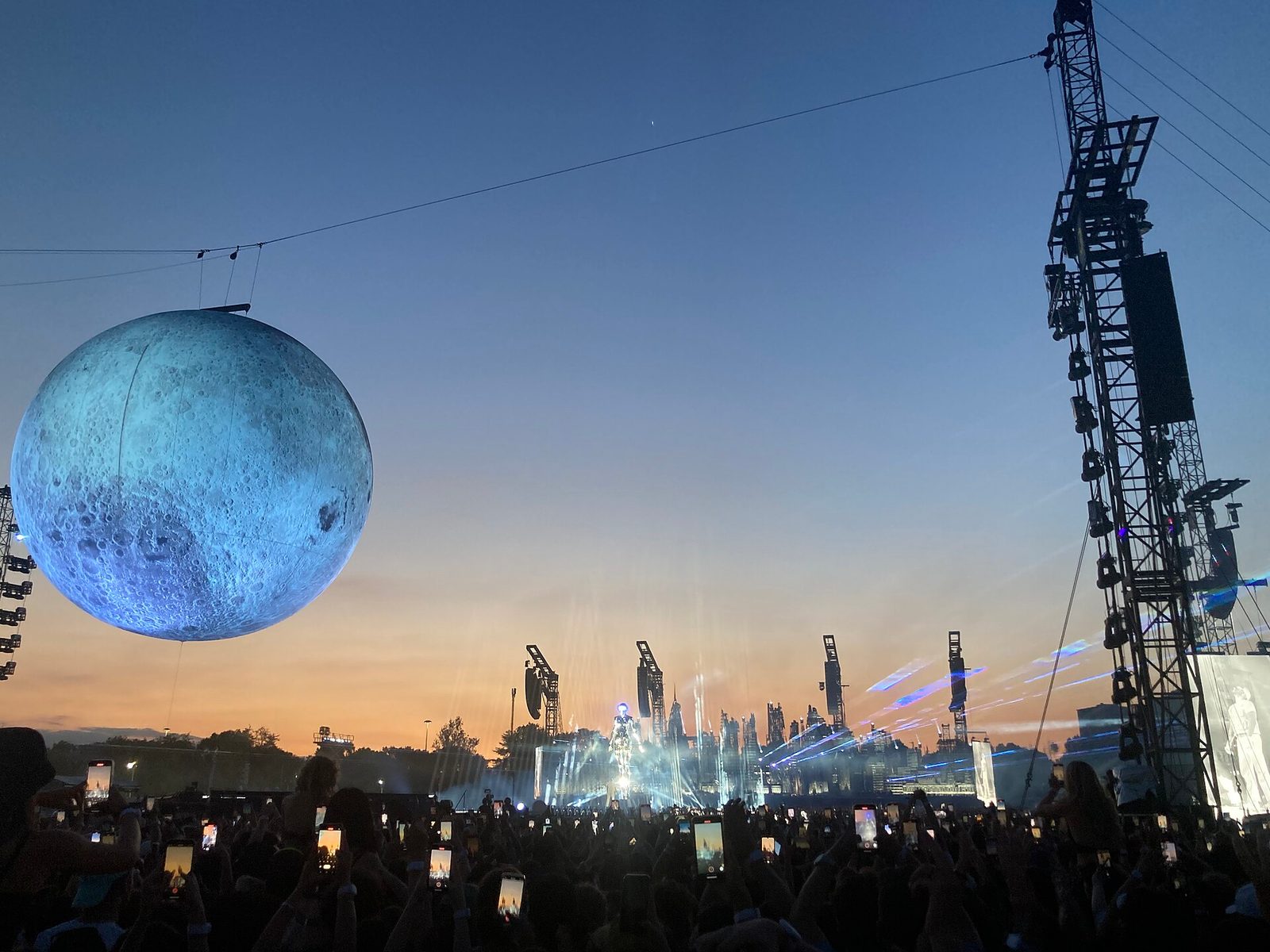
Photo: Sanchez Productions / CC BY-SA 4.0 via Wikimedia Commons
At about 10 pm on Sunday, near the end of Don Toliver's set at Co-op Live in Manchester, something that police believe was tear gas went off in the crowd. An announcement on the arena screens told everyone the show was over "due to unforeseen circumstances". Thousands of people walked out coughing, and Greater Manchester Police declared a major incident. Nobody was seriously hurt.
Three days earlier in New York, at an OsamaSon show at Terminal 5 staged with Jordan Brand, the rapper's DJ told the room to rush the merch booth for a giveaway. The booth sat next to the exit. The NYPD says four people were hurt and two went to hospital. On Saturday, at the Cherry Blossom Festival outside Shillong in north-east India, someone threw a beer at Swae Lee as "Black Beatles" was about to start, and later in the night a T-shirt hit Khalid in the face.
Three countries, four days, and the same reflex in the comments: rap fans cannot behave. ADMC thinks that gets this week exactly backwards. None of these scares started in the mosh pit. Each one started at a point the people running the show control, a microphone, a merch table, a gate or a bag check, and that is where the fix has to go.
The case against the kids, made fairly
The other side has real evidence, and it deserves a straight hearing. Rage is the selling point of a modern rap show. Travis Scott built a live reputation on asking crowds to go harder, Playboi Carti sets are sold on chaos, and the pit at a Don Toliver show is part of what people pay for. When ten people died at Travis Scott's Astroworld festival in Houston on 5 November 2021, the youngest of them nine years old, it was natural to ask whether the culture itself was the hazard.
Then there are the throwers. A drink in the face is not a crowd crush, but it is the same complaint: that some fans treat the stage as a target. Swae Lee has been hit by thrown objects before, and so have plenty of artists across every genre since 2023. If rap fans want to be trusted with standing tickets, the argument goes, they should stop giving promoters reasons not to.
All of that is fair as far as it goes. It just does not describe what went wrong this week.
A pit makes space. A crush takes it away
Here is the distinction the "rage fans" argument skips. A mosh pit needs room. People run into an open circle, bounce off each other and, by a rule as old as hardcore punk, pick up whoever falls. It is rough, it is consensual, and it only works because there is space to move.
A crush is the opposite: the absence of space. Crowd scientist G. Keith Still's guidance on standing density treats five people per square metre as the upper limit for a standing crowd, and his research warns that around that density the risk of crushing, falls and shockwaves through the crowd climbs sharply. Nobody at that density is choosing anything. The Harris County medical examiner found that all ten Astroworld victims died of compression asphyxia. That is what too many bodies in too little room does, whatever music is playing. On 29 June 2023, a Harris County grand jury declined to indict Travis Scott or five others over the deaths, after a 19-month police investigation.
Look at where the danger came from this week with that distinction in mind. In New York, the room did not tip over because a pit got rowdy. It tipped over because one man with a microphone pointed an entire sold-out crowd at one spot at the same moment, and that spot was the way out. The DJ, Nino Andretti, apologised on Instagram, saying he had not known the merch was next to the exit or how much power his words had in that room. That apology is more honest than most, and it is the whole argument in one line. A call from the stage is crowd management, whether the person making it knows it or not.
In Manchester, the cause is a crime under investigation, and how a substance got into an arena that holds up to 23,500 people is a question for the police and the venue, not for us to guess at. But the night also shows the other half of the case. An arena full of people was emptied in the dark, while a gas was in the air, without a serious injury. That is what planning looks like when it works: stewards, exits, a show-stop call, a police response. Nobody in that crowd had to become more polite for it to work.
In Shillong, security picked out the man who threw the beer and handed him to the police, and Swae Lee dried his face and finished the set. Khalid stopped, asked people to stop throwing things, told them he loved them, and carried on. A rule, enforced on the person who broke it. Everyone else in that field did not need a lecture.
The pressure points are always the same
Go back through the rap-show scares of the last few years and the same places keep turning up. Gates. Exits. Barriers. Merch. In July, large groups without tickets pushed past fans queuing for the last of JAY-Z's three nights at Yankee Stadium in New York, got through security, and the venue went into lockdown. Fans got in around 10 pm, two hours late, and JAY-Z went on at about 12:20 am. Again, not a pit. A gate.
Merch is the newest of these pressure points, and the most avoidable. A rap show in 2026 is often a product launch with a stage attached: a sneaker partner, a limited drop, a pop-up. Announce a drop from the stage and a crowd becomes a queue in seconds, with no queue's barriers. Shops and brands learned years ago to run releases with raffles, timed slots and wristbands, precisely because a free-for-all at the door gets people hurt. Concerts that double as drops should use the same tools, and keep the table well away from any exit.
Why this matters more in India now
This is not a far-away American problem for ADMC's readers. The international rap circuit has arrived in India at a speed nobody planned for. Shillong's organisers said they expected around 40,000 people. Rolling Loud India is back at Loud Park in Kharghar, Navi Mumbai, on 12 and 13 December, with Gunna making his India debut on the second day. Fred again.. plays race courses and open grounds in December. Many of the people in those crowds will be at their first big rap show, and the circuit at this size is only a few years old.
So the useful question for an Indian promoter is not whether the fans will behave. It is the list New York and Manchester just wrote: where the merch tent sits, what the DJ is allowed to announce, who checks the bags and how, how fast the show can stop, and whether the exits work in the dark. A first-time crowd will follow instructions, which is exactly why the instructions matter.
The microphone is safety equipment
The easiest story after a week like this is the one about kids today. It costs nobody anything, and it leaves every decision that actually caused harm untouched. The pit has its own etiquette, built by fans over forty years of punk, metal and rap shows: make space, watch your footing, pick people up. The fans in front of the stage this week mostly kept it.
The people with the microphones, the merch deals and the floor plans need an etiquette of their own, and Andretti wrote its first line for them: put safety ahead of excitement. Every DJ, host and headliner who has ever shouted "rush the front" or "run to the booth" should read his apology as a job description. When one sentence can move a sold-out room at once, the person saying it is running crowd control, and should be trained like it.
Up next
Toro y Moi always wrote the words last. Unusua, out today, leaves them out
Chaz Bear's piano record arrived on Bandcamp with no press release. From a 2009 car break-in to Travis Scott and Don Toliver, his line runs under the words.
Share this story