FeatureSamantha Lee7 min read
Japan's sports anthems are picked by high school brass bands, and Kōhaku follows
Koshi Inaba of B'z ends 2026 on Kōhaku with a 1985 anime theme that outlived Japan's World Baseball Classic exit. Koshien's school bands got there first.
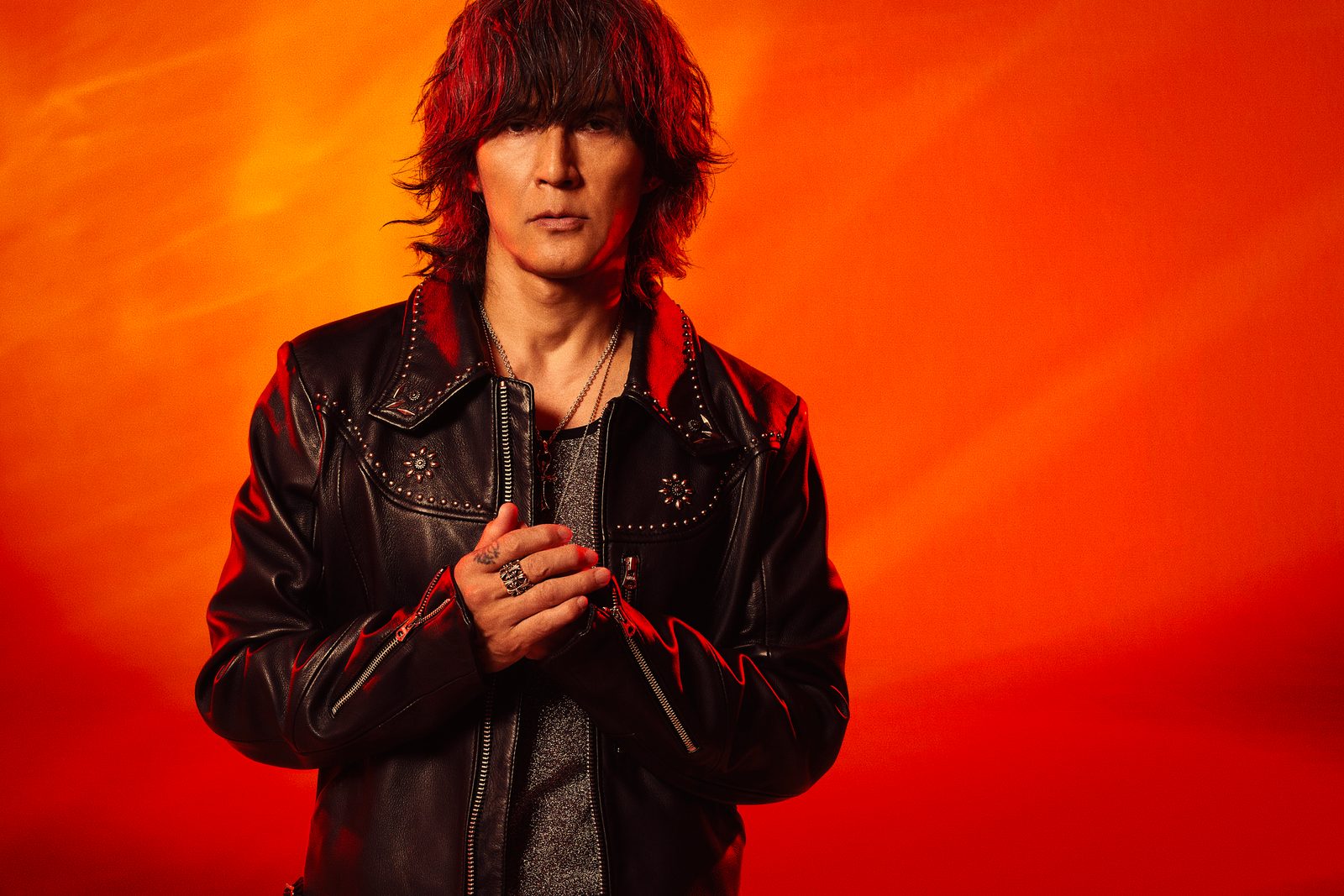
Photo: Courtesy of Netflix
On 14 March, Japan went out of the World Baseball Classic. The holders lost their quarterfinal 8-5 to Venezuela, who went on to beat the United States 3-2 in the final for their first title. The team was done. Its song was not.
That same week, Koshi Inaba, the voice of B'z, one of the best-selling acts in Japanese history, had the No. 1 song on the Billboard Japan download chart. It was his cover of "Touch", released on 6 March as the cheer song for Netflix's coverage of the tournament, which the streamer carried exclusively in Japan. It sold 42,231 downloads in the week of 9 to 15 March, about 27,000 clear of No. 2, and reached No. 2 on the all-format Japan Hot 100. On 13 November, NHK named Inaba as the special guest on this year's Kōhaku Uta Gassen, the Red and White Song Battle that Japan has watched on New Year's Eve since the 1950s. It will be his first appearance there on his own, and he will sing "Touch".
So a 1985 anime theme will close Japan's year on its biggest stage, nine months after the team it was meant to carry went home. That is not an accident, and the credit does not belong to a label, a league or a streamer. In Japan, the songs a whole country shouts at sport are chosen by teenagers with trumpets, in the stands of a high school baseball tournament. More and more, the national pop canon follows where they lead.
A song baseball already owned
"Touch" was written by Chinfa Kan and Hiroaki Serizawa and sung by Yoshimi Iwasaki as the opening theme of the 1985 anime of Mitsuru Adachi's manga Touch. The story follows twin brothers and a girl next door, and the promise at its heart is to take her to Koshien. For Japanese readers that one word needs no explanation. For everyone else: Koshien is Hanshin Koshien Stadium, between Osaka and Kobe, and the name of the two national high school baseball tournaments played there, the spring Senbatsu and the summer championship.
When Netflix announced the cover in February, it said the song was chosen for its appeal to baseball and its long history of being loved. Inaba, in his statement, said he had sung it "with respect for the original" while pouring his own passion into it. The respect was owed partly to Iwasaki and partly to the school bands that had been playing "Touch" from the stands for years. Netflix did not make "Touch" a baseball song. It rented one.
The Alps stand is the A&R department
The scale is the first thing an outsider misses. This summer, 3,662 schools entered the regional qualifiers for the 108th summer championship, playing as 3,363 teams; 49 made it to Koshien. Every one of those schools brings a cheering section to the Alps stands along the baselines, and at its centre is the school's wind band, playing whenever its team comes up to bat.
The bands choose their own music, and the choices outlive everyone in the band. The most famous is "African Symphony", a sweeping instrumental from Van McCoy and the Soul City Symphony's 1974 album Love Is the Answer, a year before McCoy's "The Hustle" became a worldwide disco hit. Rearranged for brass, it reached Koshien through the band of Chiben Wakayama, the school credited with first playing it there, and it has since spread to stands all over the country. In America the record is a footnote. In Japan, half a century later, it means a chance to score.
Chiben Wakayama has its own signature too: "Jock Rock", a chant saved mainly for late scoring chances, so tied to comebacks that fans call it a demon song. That is the band's real power. It does not just play songs. It assigns them a meaning, a moment and a feeling, and then repeats that assignment to tens of thousands of people, in a stadium and on national television, every spring and every summer.
The band that plays for Okinawa
The clearest proof that the bands, not the teams, own this music sits in Amagasaki, the city next door to Koshien's home of Nishinomiya. Okinawa's schools are a long flight away and can rarely bring a full band. So since 1997, the wind band of Amagasaki Municipal High School has played for whichever school represents Okinawa, a tradition its special adviser Yasutaka Hajima, who was born on Okinawa's Miyako Island, started in 1981 with a junior high band after Okinawans living in the area asked for help.
The song at the centre of that cheering is "Haisai Ojisan", Shoukichi Kina's cheerful song in the Okinawan language about the old man next door, which Kina wrote as a young teenager and released as a single on Okinawa's Marufuku Records in 1972. The bounce hides a heavier story: Kina has spoken of the man who inspired it as someone marked by the Battle of Okinawa. When Okinawa Shogaku won its first summer title in August 2025, eighty years after the war ended, Kina publicly thanked the school's coaches and the Amagasaki band, and said he hoped his song would keep being played for Okinawa's players. On 5 November 2025, Okinawa's governor, Denny Tamaki, went to Amagasaki in person to present the band, now 150 students strong, with a letter of thanks.
In 2021 the arrangement briefly became the whole tournament. Covid rules barred live bands from the stands at that spring's Senbatsu, and the Amagasaki band recorded 20 cheering songs that 11 schools used in their place. That summer, when an emergency declaration barred bands from the stands from 22 August, schools without recordings of their own could use Amagasaki's, supplied by the national federation. For a season, one public school's band was the sound of Japanese baseball.
From the stands to New Year's Eve
The spring tournament has written this into its rules. Since 1962, when the organisers chose Kyu Sakamoto's "Ue o Muite Arukō", the song the rest of the world would come to know as "Sukiyaki", the Senbatsu opening march has usually been a hit of the year before, arranged for band. (We wrote about how that song crossed over without its words in our list of songs the world sang anyway.) In 1984 it was "Cat's Eye" by Anri. In 2024 it was Aimyon's "Ai no Hana", in 2025 Omoinotake's "Ikuoku Kōnen", and in March 2026, M!LK's "Ii Jan".
Now read this year's Kōhaku lineup against that list. Anri is back for her fourth appearance. M!LK return for a second straight year. And among the seven acts making their debut is CUTIE STREET, the idol group whose "Kawaii dake ja dame desu ka?" ("Is being cute not enough?") was played in March by the band of Hanasaki Tokuharu, a school from Saitama that went on to reach the spring quarterfinals for the first time in 23 years. Idol songs used to be rare in the Alps. This spring several schools played the same ones.
To be fair to NHK, nobody at the broadcaster is phoning band teachers before drawing up its list. The overlap is not a pipeline. Both are measuring the same thing: whether a song belongs to everyone, not just to its fans. The difference is the test. Kōhaku asks whether a song was big this year. The Alps stand asks something harder: whether it still works with no singer, no lyrics and no video, played by 16-year-olds on borrowed horns, loud enough to reach a batter. A song that passes that test does not need a chart. It gets handed down by the seniors to next year's band.
What happens to "Touch" next
Other countries leave this job to someone else. In America, a ballpark's music is chosen by the club's own DJ or organist. In English football, the terraces pick their songs and nobody writes them down. Japan put the terrace inside the school system, and gave it sheet music and a teacher. That is why its sports songs last: they are rehearsed.
On 31 December, Inaba will sing "Touch" at NHK Hall, and millions will hear it as a rock singer's New Year's Eve moment. The more lasting version comes later. Next August, at a regional qualifier somewhere in a country of 3,363 teams, a school band will play the arrangement the stands were using long before Inaba recorded his. Japan lost the World Baseball Classic in March. Its song is going back to the Alps, where it was always going to win.
Up next
Toro y Moi always wrote the words last. Unusua, out today, leaves them out
Chaz Bear's piano record arrived on Bandcamp with no press release. From a 2009 car break-in to Travis Scott and Don Toliver, his line runs under the words.
Share this story