FeatureNatalia Pedroza7 min read
Argentina's rappers win abroad. At home, the country dances to Córdoba's cuarteto
While Milo J won in Las Vegas, 40,000 people danced to Q' Lokura at Vélez. A scene report on cuarteto, Córdoba's 1943 dance-hall music, and why it wins at home.
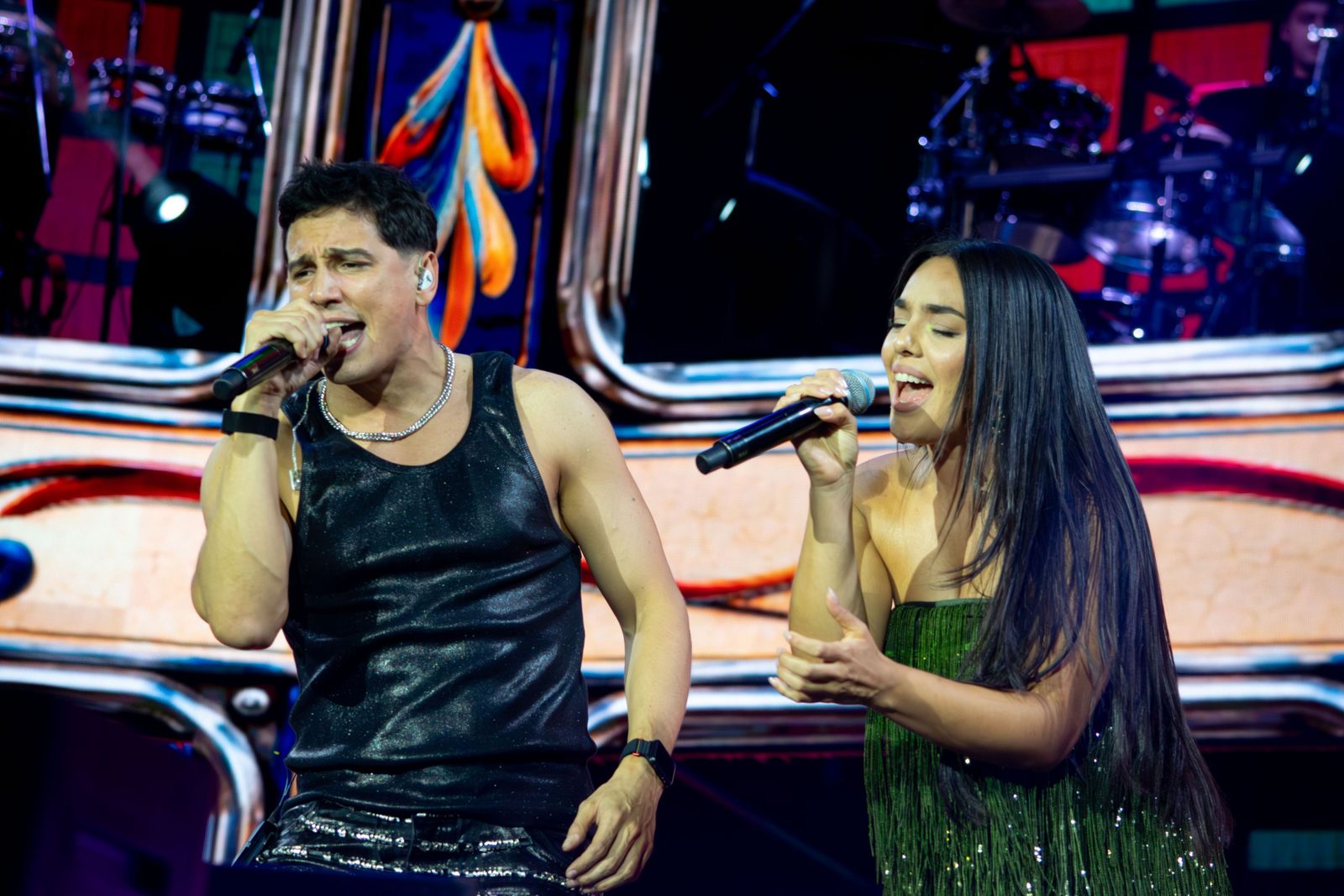
Photo: Cecilia Bello / Crónica
On Thursday 12 November, Argentina had two big nights. In Las Vegas, Milo J, a young rapper from Morón on the edge of Buenos Aires, won Record of the Year at the Latin Grammys for "Niño", one of several trophies he took home that night. That is the Argentina the world knows: the rappers, the Bizarrap sessions, a scene that sends its hits abroad.
That same Thursday night, nearly 40,000 people filled Vélez Sarsfield's stadium in Buenos Aires for a show billed as La República del Cuarteto. On stage for three hours were Nico Sattler and Facundo "Chino" Herrera, the two singers from Córdoba at the front of Q' Lokura. Near the end, Luck Ra came on and sang "La Morocha", and the whole stadium sang it back.
Most music fans outside Argentina have never heard of cuarteto. They should. On Spotify's own 2025 Wrapped list for Argentina, Q' Lokura came in as the fourth most-streamed act in the country, ahead of Emilia and Milo J. Luck Ra was eighth, with two albums in the year's top ten. Argentina's rap generation wins abroad, but some of the music Argentina actually played most last year came from Córdoba, a city about 700 km from Buenos Aires, and it is winning because of the one thing streaming was slow to capture: the baile, the all-night dance.
A sound from 1943, built for a dance floor
Cuarteto was born in Córdoba, Argentina's second city, in 1943. The pianist Leonor Marzano and her father Augusto led the Cuarteto Característico Leo, and their radio debut on 4 June is why Argentina now marks that date as the Día del Cuarteto. The name comes from those early four-instrument line-ups: piano, violin, accordion, double bass and a singer out front. The beat they settled on is a jumpy, galloping two-step that locals call the tunga-tunga, and it has outlasted every line-up since.
It is music made for one place: the baile. When UNESCO added cuarteto to its intangible heritage list at its December 2025 meeting in New Delhi, its description focused on that room more than the records. Orchestras of eight or more players, a crowd dancing in a big circle that turns around the hall, and fans flashing hand signs that tell the band which neighbourhood they came from. A cuarteto night is not a gig with a front row. It is a wheel.
The genre's king is still working. Carlos "La Mona" Jiménez turned 75 in January and opened his 2026 season with a sold-out baile in Córdoba on 14 February, more than 90 albums into a career that began in the 1960s. Its tragic prince is Rodrigo Bueno, who in the 1990s took cuarteto to Buenos Aires and its middle-class audiences. He died in a car crash on 24 June 2000, aged 27, and his songs are still streamed by a generation born after he died. Start with this one from his last year:
For decades, that was cuarteto's map: a provincial sound with one or two stars who made it to the capital, then went home. Buenos Aires had its own party music in cumbia, and the rest of the world never really looked.
The rapper who changed lanes
Luck Ra is the clearest sign of what changed. Born Juan Facundo Almenara Ordóñez in Córdoba in 1999, he started out uploading covers to YouTube in 2017 and putting out trap and reggaeton singles. One early track was remixed with a trap rapper. He sang the official song of the 2021 Copa América. In other words, he came up in the same urban lane as the rappers who went to Las Vegas.
Then he turned back to the music of his own city. "La Morocha", his 2023 song with BM, mixed the tunga-tunga with a pop hook and spent weeks at the top of the Argentine charts. His debut album, Que nos falte todo, was Spotify's most-streamed album in Argentina in 2024, and his "Hola Perdida" was the most-streamed song in the country that year.
The moment that sealed it came on 27 December 2024. Bizarrap, whose studio sessions turned Shakira, Quevedo and a dozen Argentine rappers into global streaming events, released Session #61 with Luck Ra, and he made it a cuarteto, with accordion, horns and a nod to Rodrigo. It charted in Bolivia, Chile, Paraguay, Uruguay and Spain. Ten months later, on 4 October 2025, Luck Ra sold out Vélez on his own.
That is the reverse of the usual story. Córdoba kids used to leave cuarteto behind to go urban. Now the biggest urban producer in the country goes to Córdoba.
Why the baile wins at home
Q' Lokura's story shows how it happened. Sattler and Herrera spent more than a decade singing in another Córdoba band, Chipote, before starting their own in January 2018. Their first show was that February in Oncativo, a small town about 75 km from the city of Córdoba. By 2021 they were selling out the Gran Rex theatre in Buenos Aires. Between 2024 and 2026 they played the 15,000-capacity Movistar Arena ten times. In December 2025 they drew about 25,000 people to Tecnópolis, the big open-air grounds just outside the capital, for a show called El Baile Inolvidable. Then came Vélez.
Look at what Argentina actually streamed in 2025 and the reason is clear. The second most-streamed act in the country, behind only Bad Bunny, was not a singer. It was Un Poco de Ruido, a streaming show that films cumbia and cuarteto bands playing long live sets, called zapadas, with guests dropping in. The fourth biggest album of the year in Argentina was one of those sets, Q' Lokura's. Spotify also counted cumbia streams in Argentina up 237% since 2020.
That is the baile, recorded. A cuarteto band does not make singles and then tour them. It plays for hours to a room that never stops moving, and the hits come out of that. For years, the format did not travel well, because a three-minute single could not hold it. Long live sessions on YouTube, and Bizarrap's one-take studio videos, finally could. Our view: the rappers won Latin Grammys with records made to be judged. Cuarteto won Argentina's year with nights made to be danced.
This does not mean the rappers lost. Milo J's own award-winning record is a turn toward Argentine folk music, so even the export side of the scene is reaching back into the country's older sounds. But the arrow has flipped. For a decade, Argentina's story was Buenos Aires rap going global. In 2025, the country's own ears pointed back at a city 700 km inland. We wrote earlier this month about how the Latin Grammys decide what counts as Latin. The bigger question for Argentina is what counts as its pop, and Córdoba has an answer.
Where to go in, and where it goes next
The door is opening further. Q' Lokura are booked for Cosquín Rock 2027, one of Argentina's biggest rock festivals, held in the hills outside Córdoba. That stage went 21 editions without a single cuarteto act, until the band Monada broke the run in 2022. Q' Lokura's 2026 tour took them to the United States and Spain, and La K'onga, another of the big Córdoba bands, took their 2026 Cuartetour to Europe, with dates in Madrid and Barcelona. At home, the province now teaches cuarteto in its schools.
If you listen to Bad Bunny and Rauw Alejandro and want the Argentine version of a party, Luck Ra's Que nos falte todo is the easiest door in. If you want the real thing, find a full live set by Q' Lokura or La Mona Jiménez, put it on loud and give it 40 minutes, not three. Cuarteto is not a song you finish. It is a circle you join, and the best clue to where Argentine music goes next is that 40,000 people in Buenos Aires just joined it.
Up next
Rap crowds keep getting blamed. This week, the danger came from outside the pit
A DJ sent New York fans rushing to a merch table by the exit. Tear gas emptied Don Toliver's Manchester show. Neither started in the pit.
Share this story