FeatureEva Waxenberg7 min read
Ghostface's Ironman turns 30, and rap now pays people to make the soul it used to dig
Ironman was built from Al Green, the Jackson 5 and a live Delfonics. Three decades on, the sound survives because hip-hop learned to commission the past.
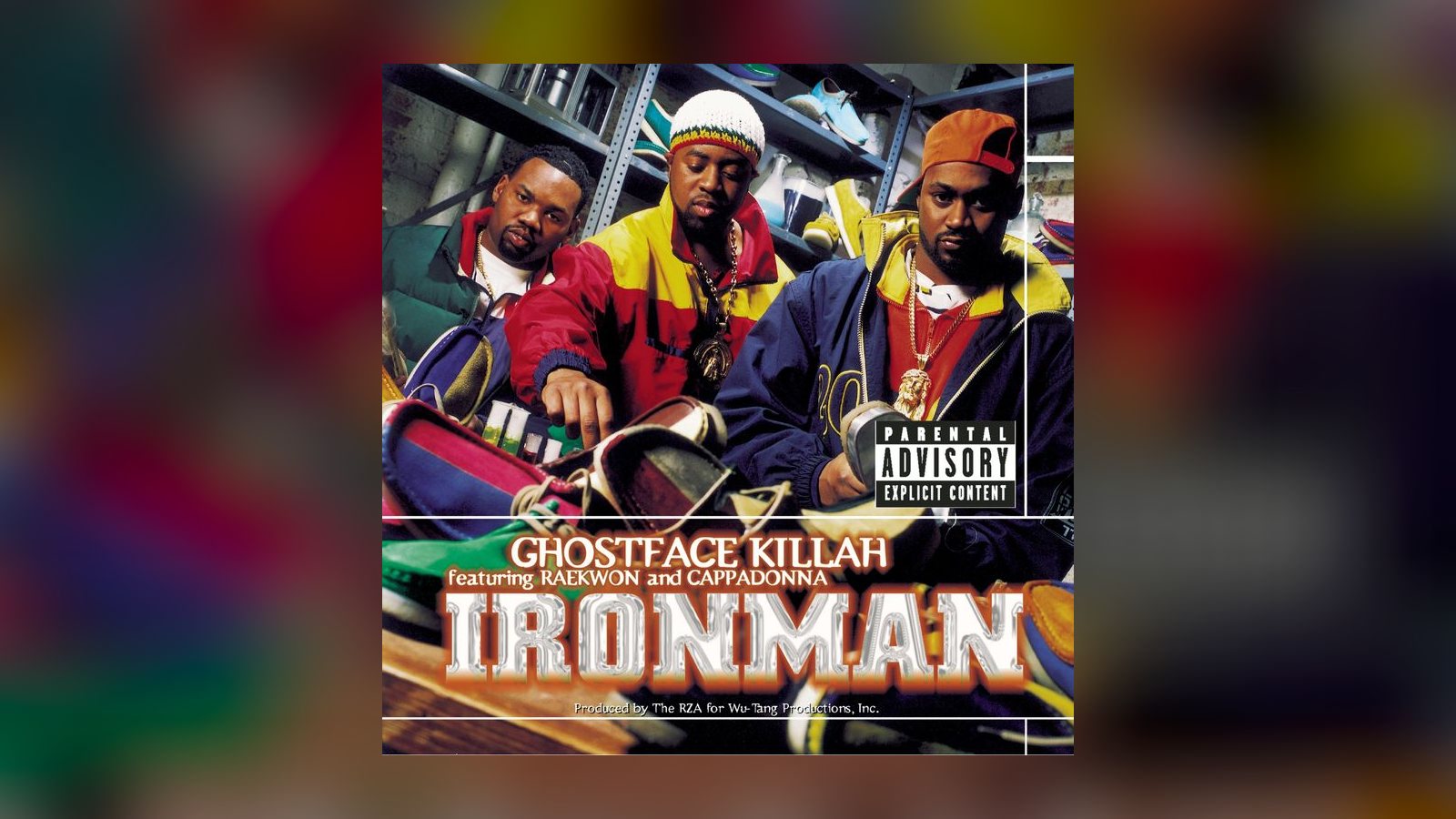
Artwork: Razor Sharp Records / Epic Street
Open Ghostface Killah's Ironman on a streaming service today and count the songs. There are sixteen. The CD that went on sale on 29 October 1996 had seventeen. The missing one is The Soul Controller, a near seven-minute closer built on a Bach concerto and a melody from Sam Cooke's A Change Is Gonna Come. We could find no public explanation for why it is gone; a dispute over its samples is the likeliest reason, though nobody involved has confirmed one. Either way, the hole in the tracklist is a good way into the record.
Ironman was the debut solo album by the Wu-Tang Clan member from Staten Island, produced by RZA and released on Razor Sharp and Epic Street. It entered the Billboard 200 at number two, topped the R&B and hip-hop albums chart, sold 156,000 copies in its first week and later went platinum. It was also a record made almost entirely out of other people's soul records, at a time when that was becoming legally dangerous.
That is the line we want to draw from 1996 to now. Ironman is remembered as the album where Wu-Tang's most vivid storyteller got tender over Al Green and the Jackson 5. Its longer legacy is what happened to that sound once the old records got too expensive to touch: hip-hop kept it alive by paying people to make the past again.
A record collection with a mother in it
Listen to how much of Ironman is borrowed feeling. The opener, Iron Maiden, rides Al Green's Gotta Find a New World. Wildflower sits on Johnny Mathis. Camay, the album's slow-motion seduction song, is cut from Teddy Pendergrass's Can't We Try. The Faster Blade reaches as far as Los Angeles Negros, a Chilean ballad group. Daytona 500, the album's fastest track, is Bob James's Nautilus, a 1974 jazz-funk tune that RZA dragged into a darker key until it sounded like a car chase.
Then there is All That I Got Is You. Over the Jackson 5's Maybe Tomorrow, from 1971, Ghostface raps about growing up poor with his mother and his brothers and sisters, and Mary J. Blige sings the hook. It is the softest song on a very hard album, and it works because the sample does half the crying. Michael Jackson at 12 singing about tomorrow is the sound of a childhood that did not have much in it.
This was RZA's method at full stretch. He did not chop soul records into anonymous drum hits. He let whole phrases play, strings and voices included, so the original singer became a second character in the song. For listeners who already knew the records, Ironman felt like a conversation with their parents' shelves.
The window that was closing
Ironman landed in a narrow window. In December 1991, a federal judge in New York ruled against Biz Markie for sampling Gilbert O'Sullivan's Alone Again (Naturally), opened the decision with "Thou shalt not steal" and referred the case for possible criminal prosecution. Biz Markie's album I Need a Haircut was pulled from shops. After that, every major label wanted samples cleared, which meant finding the owners of the recording and the song and paying both.
Rap producers spent the 1990s working out what they could still afford. Wu-Tang, operating at major-label scale but with a crate-digger's ear, kept flipping famous records anyway. The bill came later. In 2011 the composer Jack Urbont sued Ghostface and Sony over the theme from the 1966 Marvel Super Heroes cartoon, which Ghostface had sampled on his second album, Supreme Clientele, in 2000. A lower court threw the case out on the grounds that Marvel owned the song; in 2016 the federal appeals court in New York sent it back, saying Urbont's claim to ownership deserved a trial, and the case was later settled.
By then the rules had hardened further. In 2005 an appeals court in Cincinnati ruled that even a two-second Funkadelic guitar chord, looped on an N.W.A track, needed permission, and put the policy in one line: "Get a license or do not sample." A record like Ironman, with more than a dozen recognisable soul sources on one album, became something a major label would think twice about releasing in that form.
Bringing the Delfonics into the room
One song on Ironman pointed the way out, though nobody framed it like that in 1996. On After the Smoke Is Clear, the Delfonics are not sampled. They are there. The Philadelphia vocal group, whose falsetto records with producer Thom Bell, La-La (Means I Love You) in 1968 and Didn't I (Blow Your Mind This Time) in 1970, had been rap's favourite source of heartbreak, sang new parts for Ghostface over a Jimmy Ruffin loop. The past was in the studio, credited and singing.
Seventeen years later, that idea became a whole business model. Adrian Younge, a Los Angeles composer who records on analogue tape with live players, made a record with the Delfonics' lead singer William Hart: Adrian Younge Presents The Delfonics, released in 2013 and written for Hart's voice from scratch. "This is my top moment," Hart said in the notes Younge's label Linear Labs published for the album. "This album that I've done with the great Adrian Younge is the beginning of the rest of my life in music."
The same year, on 16 April 2013, Younge and Ghostface released Twelve Reasons to Die on RZA's Soul Temple label, a concept album played entirely by live musicians to sound like the sampled soul of Ironman. One of the sources it flips is Enemies, a brand new Delfonics song from Hart's album with Younge. Ghostface was sampling a 1960s group again, except the record was months old, and the people who made it were in the deal from the start.
Younge had already proved the trick worked at the top. JAY-Z's Picasso Baby, on Magna Carta Holy Grail in July 2013, is built on Sirens, a Younge composition from his album Something About April. Younge has said he wrote it hoping a rapper of that size would take it. Old soul, written new, with a clean chain of ownership. Hart died in July 2022, at 77.
The crate, rebuilt for sale
What Younge did by hand has since been industrialised. Producers now buy "vintage soul" loop packs recorded last month. The Toronto producer Frank Dukes built Kingsway Music Library out of compositions written to be sampled, and in 2021 put 200 masters and 800 stems from it on Tracklib, a Stockholm service that sells pre-cleared samples. Tracklib's own catalogue now lists more than 100,000 recordings, original old records included, licensable on terms set out before you press record. The thing that sank Biz Markie in 1991, not knowing who to pay or how much, is now a checkout page.
That is a better deal for the people who made the music, and it is fair to say so. The Delfonics were paid to be on Ironman. Hart got a late album built around his voice. Nobody can say that about every voice under every 1990s loop. The cost is something else: the shock of recognition. Part of what made All That I Got Is You hit was hearing a 1971 Jackson 5 record you knew carry a 1996 story you did not. A sample made to sound old has no memory in it. It can only pretend.
Ghostface himself has kept circling back. He returned in 2025 with Supreme Clientele 2, a sequel to the album that got him sued. Ironman will be 30 at the end of this month, and the most modern thing on it is still the one part nobody sampled: a vocal group from the 1960s, in the room, singing for a rapper who grew up on their records.
Share this story